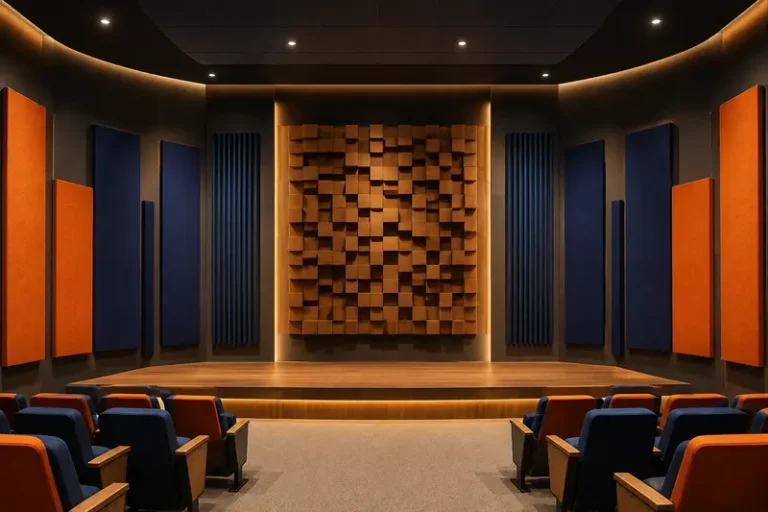
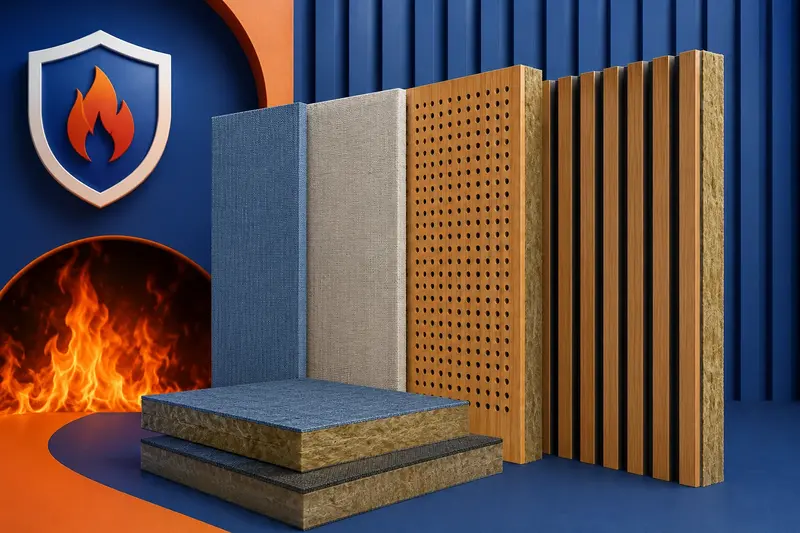
Summary: Choosing acoustic treatment for a commercial space involves more than sound quality. Safety compliance matters just as much, especially in buildings where people gather, work, or sleep. Fire-Rated Acoustic Panels combine sound absorption with tested flame-resistance performance, making them essential for offices, hospitals, schools, hotels, and auditoriums. This guide explains what these panels are, how they are tested, and how to choose the right ones for your project.
What Are Fire-Rated Acoustic Panels?
Fire-Rated Acoustic Panels are sound-absorbing wall or ceiling products manufactured or treated to resist flame spread and limit smoke development. Unlike standard foam or fabric panels, these are tested against recognized fire safety standards before being approved for use in commercial or high-occupancy buildings. They are not fireproof in the literal sense, but they significantly slow flame progression, which gives occupants more time to evacuate during an emergency.
How Are Fire Resistant Acoustic Panels Tested?
Most Fire Resistant Acoustic wall Panels are evaluated using ASTM E84, also called the Steiner Tunnel Test, which measures Flame Spread Index (FSI) and Smoke Developed Index (SDI). Class A is the highest fire safety classification under this standard, with flame spread ratings of 0 to 25 and smoke development under 450. In India, testing often references IS 1642 under the National Building Code, while European projects rely on EN 13501-1 classifications ranging from A1 to F. Always ask suppliers for original test certificates rather than generic claims, since panel thickness, substrate, and finish all affect the actual rating. Acousart
Why Do Fire Rated Acoustic Ceiling Panels Matter in Commercial Spaces?
Ceilings are often overlooked, yet they play a critical role in fire containment. Fire rated acoustic ceiling panels prevent flames from spreading rapidly across large open-plan areas such as auditoriums, cinemas, and office floors. Building codes in most countries mandate flame retardancy for interior finishes in public buildings, making this a compliance requirement rather than an optional upgrade. Combining sound control with fire safety in one product also simplifies procurement and reduces installation costs.
What Materials Are Used in Fire Retardant Panels?
Fire Retardant Panels are typically made from mineral wool, glass fibre, PET (recycled polyester fibre), or treated fabric-wrapped fiberglass. Mineral wool and glass fibre are naturally non-combustible, which helps them achieve Class A ratings without additional chemical treatment. PET panels, increasingly popular for their sustainability profile, usually require specific manufacturing processes to meet the same benchmark. Fabric-wrapped panels rely on flame-retardant backing and topical treatments, so their fire performance depends heavily on manufacturing quality.
How Do I Find Fire Rated Acoustic Panels Near Me?
When searching for fire rated acoustic panels near me, prioritize suppliers who provide documented test reports over those offering only verbal assurance. Ask three questions before purchasing: Does the certificate match the exact product configuration you are buying? Is the rating recognized by your local building authority? Does the supplier offer installation guidance suited to your space type? Packsound.in works with architects and facility managers across India to match project requirements with verified, code-compliant acoustic solutions. Also Check: Acoustic Panels for Temples & Prayer Halls.
Is Fireproof Soundproofing a Realistic Expectation?
No material is entirely fireproof, and marketing claims suggesting otherwise deserve scrutiny. The term fireproof soundproofing generally refers to panels engineered to resist ignition and limit flame travel, not eliminate fire risk altogether. A Class A rating indicates exceptional resistance, not immunity. Buyers should treat fire rating as one layer of a broader fire safety strategy that includes proper wall assemblies, sprinklers, and evacuation planning.
What Should You Check Before Buying?
Before finalizing any purchase, verify the NRC (Noise Reduction Coefficient) rating alongside the fire class, confirm the certificate covers your exact panel thickness and mounting method, and check whether your occupancy type requires Class A or if Class B is acceptable locally. Consulting your project’s authority having jurisdiction remains the safest way to avoid compliance issues after installation.
Conclusion
Fire-Rated Acoustic Panels are a practical intersection of safety and acoustic performance, essential for any commercial space where sound control and life safety both matter. Understanding testing standards, material types, and certification requirements helps buyers make informed, compliant decisions rather than relying on assumptions.
Frequently Asked Questions:
1. Do fire-rated acoustic panels completely stop fire from spreading?
No, they slow flame spread and reduce smoke generation, giving occupants more evacuation time, but they do not stop fire entirely.
2. What’s the difference between Class A and Class B fire-rated panels?
Class A panels have a flame spread index of 0 to 25, while Class B ranges from 26 to 75, making Class A the safer, more restrictive option.
3. Can I use regular acoustic foam in an office building?
Most commercial building codes require Class A fire-rated materials for offices, so untreated standard foam typically won’t pass inspection.
4. Are PET acoustic panels as fire-safe as mineral wool panels?
Quality PET panels can achieve Class A ratings, but mineral wool is naturally non-combustible, so always check individual test certificates.
5. How do I verify a supplier’s fire rating claims?
Request the original ASTM E84 or IS 1642 test report matching your exact product specification, not a generic marketing document.