
Acoustic FeatherLite Ceiling Tiles
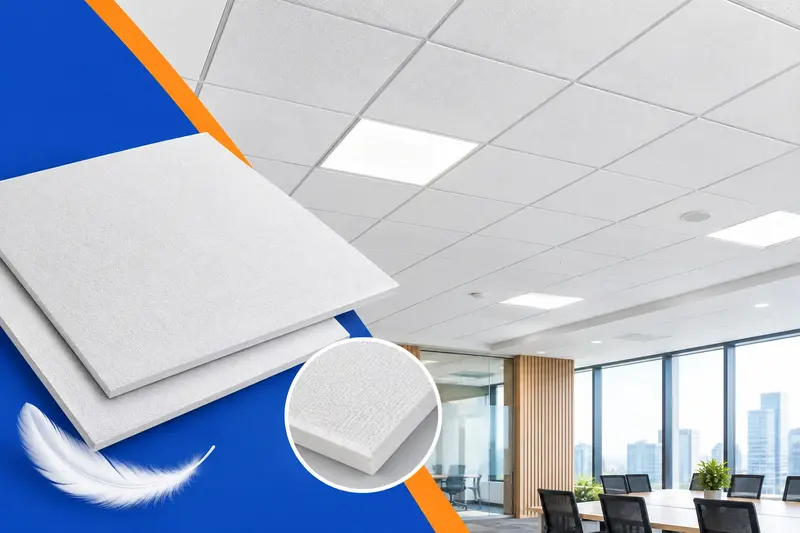
Acoustic FeatherLite ceiling tiles are lightweight, sound absorbing ceiling panels designed for suspended grid ceilings in offices, hospitals, studios, auditoriums, and commercial interiors. They reduce echo and reverberation, install into standard 2×2 and 2×4 grid systems without added structural load, and are best suited for spaces that need acoustic comfort without the weight or cost of mineral fiber or gypsum ceiling tiles.
What Are Acoustic FeatherLite Ceiling Tiles?
Acoustic FeatherLite ceiling tiles are a category of sound absorbing ceiling panels built from lightweight acoustic cores, engineered to sit inside standard T-grid suspended ceiling systems while actively absorbing sound rather than reflecting it back into a room. In plain terms, a normal ceiling bounces sound around a room, which is why open offices and lobbies feel noisy even when nobody is shouting. An acoustic ceiling tile has a porous, sound absorbing structure that traps sound energy inside the panel instead of throwing it back, which is what actually lowers perceived noise and improves speech clarity. That is the core job of any acoustic ceiling tile system, and it is the reason architects specify acoustic ceiling treatment in spaces where conversation, focus, or privacy matter.
What Problem Do Acoustic Ceiling Tiles Solve?
Untreated hard ceilings reflect sound, which raises background noise, reduces speech intelligibility, and increases listener fatigue in open-plan spaces. Acoustic ceiling tiles absorb a portion of that sound energy at the point of reflection, which is why they are specified in offices, hospitals, schools, studios, and auditoriums as the single highest-impact acoustic upgrade per rupee of ceiling area
FeatherLite Ceiling Tile: Specifications, Benefits, Applications and Installation
FeatherLite ceiling tiles are advanced lightweight acoustic ceiling panels designed to deliver effective sound absorption with minimal structural load. Engineered using optimized fiber technology, these tiles provide a balance of acoustic performance, ease of installation and clean ceiling aesthetics. They are ideal for modern commercial and institutional interiors where efficiency and performance are key.
Parameter
Typical Value
Size
2 ft x 2 ft (595 x 595 mm), 2 ft x 4 ft available
Thickness
12 mm to 15 mm
Weight
Ultra-lightweight, under 1.5 kg per tile
NRC Rating
0.55 to 0.70 (panel and mounting dependent)
Fire Rating
Class B / C1, as per applicable IS and ASTM norms
Edge Type
Square drop-in or tegular
Grid Compatibility
Standard 15 mm / 24 mm T-grid suspended systems.
Benefit
One-liner
Lightweight
Reduces load on grid and structure versus mineral fiber tiles
Sound Absorption
Cuts echo and reverberation for clearer speech
Fast Installation
Drop-in fit speeds up ceiling installation timelines
Cost Efficiency
Lower cost per square foot than premium acoustic panels
Design Flexibility
Fits 2×2 and 2×4 grid layouts and finishes
Low Maintenance
Wipeable, dust-resistant surface for daily upkeep
Consistent Performance
Uniform NRC across batches for predictable acoustic results.
Space Type
Why It Fits
Corporate offices
Reduces open-plan noise, supports focus and calls
Hospitals and clinics
Lowers ambient noise near patient care areas
Schools and training rooms
Improves teacher and student speech clarity
BPOs and call centers
Manages high-density conversation noise
Auditoriums and conference rooms
Controls echo during presentations and events
Hotels and lobbies
Balances acoustics with a clean ceiling finish
Retail and F&B outlets
Softens noise in busy, hard-surfaced interiors.
Step
Action
1
Confirm grid type and finalize 2×2 or 2×4 layout
2
Install or verify suspended T-grid at required level
3
Check plenum for services before tile placement
4
Lift and drop tiles into grid openings
5
Align tegular or square edges for a flush finish
6
Fit tiles around light fixtures and diffusers carefully
7
Inspect for level, gaps, and damaged edges.
2x2 vs 2x4: Which Size Actually Performs Better
Acoustically, tile size does not change the NRC of the material itself, but it changes coverage speed, joint count, and how forgiving the ceiling is around services. 2×2 acoustic ceiling tiles are easier to cut around dense MEP layouts (sprinklers, diffusers, detectors), which is why they dominate offices and hospitals. 2×4 acoustic ceiling tiles cover more area per piece, which speeds up installation in large, open floors like auditoriums or warehouses with fewer obstructions. If your ceiling has heavy service density, specify 2×2. If it is a large open span with light fixtures on a simple grid, 2×4 usually reduces installation time and joint lines.
Acoustic Performance
FeatherLite Ceiling Tiles: Acoustic Performance
Details
Sound Absorption
FeatherLite ceiling tiles provide reliable sound absorption through their
porous fiber structure, which allows sound waves to enter and dissipate
within the material. This helps reduce reverberation and control
background noise in enclosed spaces.
NRC Performance
The NRC typically ranges from 0.60 to 0.85, depending
on tile thickness and composition.
Frequency Performance
These tiles are most effective in mid-frequency absorption,
particularly for speech, making them suitable for offices, classrooms
and commercial environments.
Performance Improvement
Increase ceiling coverage area to provide more
sound-absorbing surface.
Higher Thickness
Using higher-thickness tiles can improve sound
absorption performance.
Combined Treatment
Combining ceiling tiles with wall-mounted acoustic treatments
can further improve overall room acoustics.
Customization Options
Feature
Details
Tile Sizes and Edge Profiles
Available in standard grid-compatible sizes with multiple edge options.
Surface Finishes
Smooth, textured or micro-patterned finishes available.
Performance Variants
Different acoustic and humidity resistance grades can be selected.
Color Options
Primarily available in white with limited custom color variations.
Grid Compatibility
Suitable for exposed, semi-concealed and concealed ceiling systems.
Acoustic FeatherLite ceiling tiles FAQ:
1. Are FeatherLite ceiling tiles good for office noise reduction? +
Yes, they absorb sound at the ceiling plane, cutting echo and improving speech clarity in open offices.
2. What is a good NRC rating for acoustic ceiling tiles? +
0.60 or higher suits most offices; auditoriums often need 0.70 and above for clarity.
3. Can I install acoustic ceiling tiles myself? +
Yes, drop-in tiles fit existing T-grids, but professional installation ensures proper alignment and service cutouts.
4. Do acoustic ceiling tiles work for soundproofing between floors? +
Not fully; they absorb room echo but don't block airborne sound transfer between floors.
5. What's the difference between 2x2 and 2x4 ceiling tiles? +
2x2 suits dense service layouts; 2x4 covers larger areas faster with fewer joints.
6. Are lightweight acoustic tiles as effective as mineral fiber ones? +
Often comparable in NRC, with the advantage of lower weight and easier handling.
7. How long do acoustic ceiling tiles last? +
Typically 8 to 12 years with proper humidity control and routine maintenance.
8. Can acoustic ceiling tiles be painted? +
Painting usually reduces porosity and lowers absorption, so it's generally not recommended.
9. Are these tiles fire safe for commercial buildings? +
Yes, Class B/C1 fire-rated tiles meet standard commercial building safety requirements.
10. What's the cost difference between acoustic and regular ceiling tiles? +
Acoustic tiles cost more upfront but reduce long-term noise complaints and rework.