
Metal Ceiling Tiles for False Ceiling Design
Quick Answer: Metal ceiling tiles are lightweight, factory-finished panels made from aluminium or galvanized steel, used to create modern, durable false ceilings in commercial and residential interiors. Unlike gypsum or mineral fibre boards, they resist moisture, don’t sag over years of use, and can be perforated for acoustic control. If you need a ceiling that survives Indian humidity, handles high foot-traffic zones like malls or airports, and still looks premium after a decade, this is the category to specify. This page covers specifications, types, installation, and acoustic performance for architects, contractors, and facility managers evaluating metal ceiling systems for a live project.
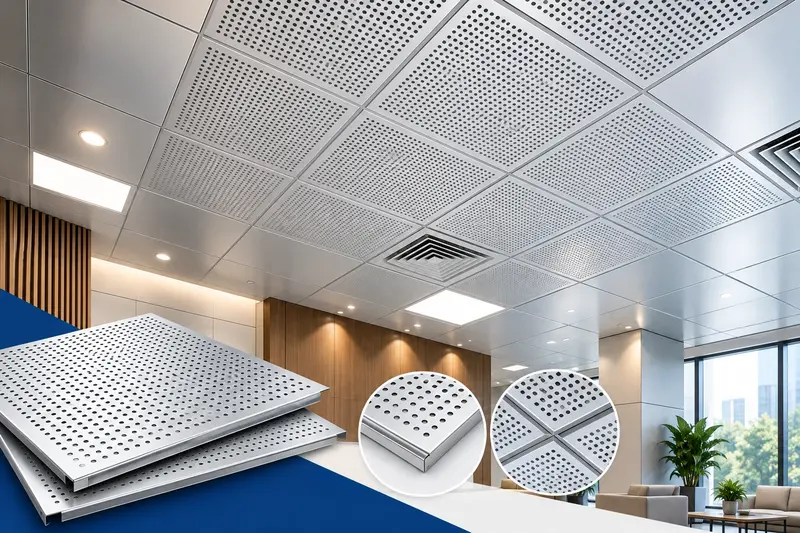
What Are Metal Ceiling Tiles Used For?
Metal ceiling tiles are used to create false ceilings that need durability, easy plenum access, and optional sound absorption, commonly in offices, metro stations, hospitals, and retail interiors.
Ordinary POP or gypsum ceilings crack in humid Indian climates and need repainting every few years. Metal tiles don’t. We’ve seen gypsum ceilings in coastal Mumbai properties fail within 18 months from moisture ingress, while aluminium metal ceiling planks in the same building line held finish and shape for over eight years. That’s the practical reason architects are shifting specs toward metal, not just aesthetics.
Types and Shapes of Metal Ceiling Tiles
Metal ceiling systems aren't one product; the shape and profile change what problem they solve.
| Type | Best Suited For |
|---|---|
| Flat tiles (600x600mm, 600x1200mm) | Offices, corridors, standard T-grid retrofits |
| Metal ceiling planks | Linear look, large-span commercial lobbies |
| Linear metal ceilings | Airports, metro stations, long open ceilings |
| Metal ceiling clouds | Floating design accents over reception or seating |
| Metal ceiling blades | Directional, architectural feature ceilings |
| Perforated metal ceiling tiles | Spaces needing sound absorption (auditoriums, offices) |
| Clip-on metal ceilings | Fast-access ceilings needing frequent maintenance |
Custom metal ceilings are also fabricated in curved, waved,
or brand-specific shapes when a project needs a look no catalogue tile offers.
This is where most premium retail and hospitality briefs land.
Do Metal Ceiling Tiles Reduce Reverberation?
Yes, perforated metal ceiling tiles reduce reverberation
when backed with an acoustic infill, absorbing echo instead of
reflecting sound back into the room.
| Panel Type | Reverberation Control |
|---|---|
| Solid Metal Tile | Reflects sound, no absorption |
| Perforated + Acoustic Backing | Absorbs sound, cuts echo |
Acoustic Performance Note:
According to ASTM's acoustical testing standards for ceiling systems
(ASTM C423), NRC ratings quantify exactly how much sound a perforated
panel absorbs versus reflects, which is the number to ask your supplier
for before signing off any acoustic metal ceiling specification.
| Specification | Detail |
|---|---|
| Material | Aluminium / Galvanized Steel |
| Thickness | 0.5mm to 1.2mm |
| Panel size | 600x600mm, 600x1200mm (custom on request) |
| Finish | Powder coated, anodized, wood-grain laminate |
| Perforation | 1.5mm to 3mm hole, 18 to 23% open area |
| Edge profile | Tegular, flush, lay-in |
| Fire rating | Class A / non-combustible metal core. |
| Benefit | Why It Matters |
|---|---|
| Moisture and rust resistant | Suited to humid and coastal Indian climates |
| High durability | Doesn't sag, crack, or yellow like gypsum |
| Lightweight | Reduces load on suspension grid and structure |
| Easy plenum access | Clip-on tiles lift out for cabling or AC repair |
| Acoustic control | Perforated panels cut echo in large halls |
| Design flexibility | Available as tiles, planks, blades, and clouds |
| Low maintenance | Wipeable surface, no repainting cycle needed. |
| Application | Common Use Case |
|---|---|
| Commercial Offices | Open-plan ceilings needing acoustic comfort |
| Retail and Malls | Linear metal ceilings over walkways |
| Metro and Airports | High-durability, high-footfall public ceilings |
| Hospitals | Hygienic, moisture-resistant ceiling surface |
| Auditoriums | Perforated acoustic metal ceilings for speech clarity |
| Exterior Soffits | Exterior metal ceilings for canopies, porticos |
| Industrial Buildings | Corrosion-resistant ceiling in wash-down areas |
| Step | Action |
|---|---|
| 1 | Survey site and mark suspension grid layout |
| 2 | Fix perimeter angle and main runner channels |
| 3 | Install cross-tees to form grid modules |
| 4 | Level the grid using laser or string line |
| 5 | Place or clip metal tiles into the grid |
| 6 | Cut tiles at edges for wall junctions |
| 7 | Inspect for level, gaps, and finish quality. |
| CUSTOM & ACOUSTIC METAL CEILING OPTIONS | COMMERCIAL & EXTERIOR METAL CEILING APPLICATIONS |
|---|---|
| Custom Metal Ceilings Packsound fabricates custom metal ceilings for projects where standard catalogue sizes don't fit the design brief, including curved auditorium ceilings, branded retail soffits, or blade patterns matching an architect's elevation drawing. | Commercial Metal Ceilings Commercial metal ceilings are specified where footfall, hygiene, and lifecycle cost outweigh initial material cost. Hospitals, metro corridors, and F&B kitchens are typical examples. |
| Acoustic Metal Ceilings For spaces where speech intelligibility matters, such as boardrooms, classrooms, and call centres, acoustic metal ceilings combine perforated facings with mineral wool or polyester fibre infill to pull NRC ratings up to 0.70–0.90, verified against recognised acoustic testing protocols. | Exterior Metal Ceilings Exterior metal ceilings used under canopies, porticos, and covered walkways need a different specification. Marine-grade aluminium, sealed fasteners, and drainage-aware profiles help the ceiling withstand monsoon exposure while reducing the risk of corrosion. |
Technical Data Sheet (TDS)
| Parameter | Value |
|---|---|
| Material | Aluminium alloy / Galvanized steel |
| Panel thickness | 0.5mm - 1.2mm |
| Standard sizes | 600x600mm, 600x1200mm |
| Weight | 3.5 - 5.5 kg/sqm (approx.) |
| Surface finish | Powder coat, anodized, laminate |
| Perforation options | Round, square, slotted |
| NRC (acoustic variant) | 0.70 - 0.90 |
| Fire performance | Class A, non-combustible |
| Grid compatibility | 15mm / 24mm T-grid |
| Warranty | As per project specification |
| Feature | Details |
|---|---|
| Acoustic Performance |
Metal ceiling tiles, when perforated and combined with
acoustic backing materials, provide effective sound absorption
and noise control. The perforations allow sound waves to pass
through the metal surface into the backing material, where
they are absorbed and dissipated.
With an NRC ranging from 0.60 to 0.95, these tiles can significantly reduce reverberation and improve speech clarity in large spaces. They are particularly effective in environments such as offices, airports and auditoriums where noise control is critical. |
| Key Acoustic Factors |
Key factors influencing acoustic performance include:
|
| Customization Options | Metal ceiling tiles offer extensive customization to meet both functional and design requirements. |
| Material Selection | Choice between aluminum, steel or stainless steel based on performance needs. |
| Surface Finishes | Wide range of finishes including matte, gloss, metallic and textured coatings. |
| Perforation Designs | Custom perforation patterns can be created for both acoustic performance and visual appeal. |
| Panel Sizes and Shapes | Custom sizes and shapes are available for unique architectural designs. |
| Color Options | Powder coating and anodizing allow a wide variety of colors to match architectural and interior design requirements. |
| Edge Profiles | Different edge types are available for exposed or concealed ceiling systems. |
| Acoustic Backing Options | Various acoustic backing materials can be used to enhance sound absorption performance. |
| Integration with Lighting and HVAC | Metal ceiling tiles can be designed to integrate seamlessly with lighting, HVAC and other building services. |
Perforated Acoustic Panels FAQ
1. What are metal ceiling tiles made of?
Mostly aluminium or galvanized steel, powder coated or anodized for corrosion resistance and finish durability.
2. Are metal ceiling tiles good for bathrooms?
Yes, aluminium tiles resist moisture well, making them suitable for bathrooms and humid utility areas.
3. Can metal ceiling tiles be painted after installation?
Powder-coated tiles generally shouldn't be repainted; order the exact finish colour during procurement instead.
4. Do metal ceiling panels sag over time?
No, unlike gypsum, metal panels hold shape for years without sagging under normal humidity conditions.
5. Are metal ceiling tiles fireproof?
Metal cores are non-combustible, giving them Class A fire performance compared to many organic ceiling materials.
6. What is the price range for metal ceiling tiles in India?
Prices vary by finish, perforation, and thickness; request a project-specific quote based on your specifications.
7. Can metal ceiling tiles be installed outdoors?
Yes, with marine-grade aluminium and sealed fasteners designed specifically for exterior metal ceiling applications.
8. Do perforated metal ceilings actually reduce noise?
Yes, when paired with acoustic infill, perforated tiles absorb sound and noticeably reduce room echo.
9. Are metal ceilings noisy during rain in exterior applications?
Proper insulation backing and correct fixing reduce rain noise significantly compared to unlined metal sheets.
10. Can metal ceiling tiles be removed for maintenance access?
Yes, clip-on and lay-in metal tiles lift out easily for cabling, ducting, or repair access.
Talk to Packsound About Your Metal Ceiling Project
Whether you're specifying metal ceiling tiles for a commercial fit-out, sourcing acoustic metal ceilings for an auditorium, or need custom metal ceilings fabricated to an architect's drawing, Packsound India's technical team can share samples, NRC test data, and project-matched quotes. Get in touch to discuss thickness, finish, and acoustic requirements for your specific site.