
3D Luxury Acoustic Wall Panels
3D Luxury Acoustic Wall Panels
Elevate your interiors with Auraluxe™ 3D Ultra Luxury Acoustic Ceiling Clouds by PackSound — where high-end design meets superior acoustics. These suspended panels are perfect for luxury auditoriums, flagship spaces, and prestige interiors, offering exceptional sound absorption while creating a striking 3D visual impact.
Crafted from premium acoustic core materials and eco-conscious components, Auraluxe™ Ceiling Clouds can be customised in shape, size, and finish to seamlessly integrate with your interior design, delivering a floating, artistic effect without compromising elegance or performance.
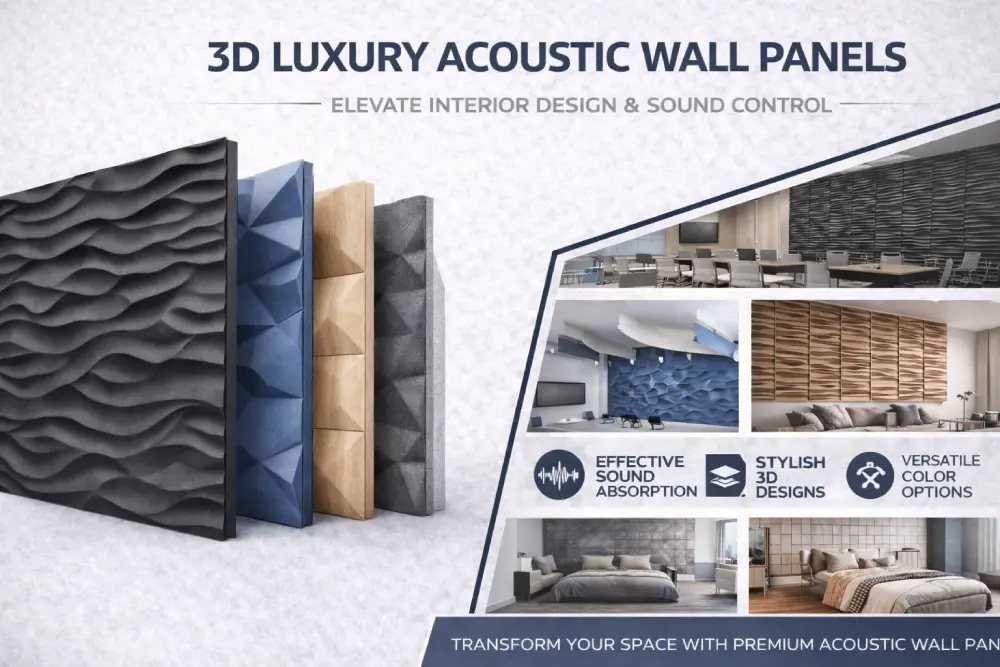
3D Luxury Acoustic Wall Panels Overview
3D luxury acoustic wall panels are high-end interior solutions designed to combine superior sound absorption with striking architectural aesthetics. Unlike flat acoustic panels, these panels feature three-dimensional surface designs that add depth, texture and visual movement to walls. They are engineered to enhance both the acoustic performance and the overall design appeal of a space, making them ideal for premium residential, commercial and hospitality environments.
These panels are typically manufactured using advanced materials such as PET fiber, MDF with acoustic backing, gypsum composites or fabric-wrapped fiberglass. The 3D surface patterns—ranging from geometric ridges to organic waves—help diffuse sound waves in addition to absorbing them, creating a more balanced acoustic environment. This dual functionality makes them more effective than traditional flat panels in many applications.
In modern architecture and interior design, 3D acoustic panels are increasingly used not just as functional elements but as focal design features. They transform plain walls into visually engaging surfaces while reducing noise, echo and reverberation. Whether used in offices, home theaters, luxury residences or commercial spaces, these panels deliver both performance and sophistication.
Material Composition
3D luxury acoustic wall panels are made from a variety of high-performance materials depending on design and acoustic requirements. Common materials include PET felt (recycled polyester), MDF with perforations and acoustic backing, gypsum-based panels, and fiberglass cores wrapped in fabric. Each material offers specific benefits such as sustainability, durability or enhanced acoustic absorption. PET panels are eco-friendly and lightweight, while MDF and gypsum options provide more rigid, sculptural designs.
Panel Dimensions
Standard panel sizes typically include 600 x 600 mm, 1200 x 600 mm and 2400 x 1200 mm. However, custom sizes are widely available to suit specific project needs. Large-format panels are often used for seamless feature walls, while smaller modules allow for intricate pattern combinations.
Thickness
Panel thickness generally ranges from 12 mm to 50 mm depending on the material and acoustic requirement. Thicker panels provide better low-frequency absorption, while thinner panels are often used for decorative applications with moderate acoustic needs.
3D Design Patterns
Panels are available in a wide variety of 3D patterns such as waves, ridges, pyramids, hexagons, slats and custom CNC designs. These patterns not only enhance visual appeal but also contribute to sound diffusion, improving overall acoustic performance.
Surface Finish
Surface finishes include fabric-wrapped, laminated, painted or natural wood veneer options. High-end finishes ensure durability, stain resistance and long-term aesthetic quality.
Edge Profiles
Panels come with straight, beveled or interlocking edges depending on installation requirements. Precision edge detailing ensures seamless alignment and a premium finish.
Sound Absorption (NRC)
The NRC typically ranges from 0.65 to 0.95 depending on material, thickness and installation method. Panels with acoustic backing or air gaps offer higher performance.
Fire Rating
Fire-retardant options are available to meet commercial and institutional safety standards.
Installation Type
Panels can be installed using adhesive fixing, mechanical fasteners or modular framing systems.
Superior Acoustic Performance
3D acoustic panels provide both sound absorption and diffusion. Their textured surfaces break up sound waves, reducing echo and improving clarity. This makes them highly effective in spaces where both aesthetics and acoustics are important.
Premium Aesthetic Appeal
The three-dimensional designs create visually striking walls that enhance interior spaces. These panels act as architectural features, adding depth and character to otherwise flat surfaces.
Versatile Design Options
Available in a wide range of patterns, colors and materials, 3D panels can be customized to match any interior theme—from modern minimalism to luxury decor.
Enhanced Speech Clarity
By reducing reverberation and background noise, these panels improve speech intelligibility in offices, conference rooms and public spaces.
Space Transformation
3D panels can transform plain walls into statement features, making them ideal for feature walls in living rooms, lobbies and commercial interiors.
Lightweight and Easy Installation
Many 3D panels, especially PET-based ones, are lightweight and easy to install, reducing labor costs and installation time.
Durable and Long-Lasting
High-quality materials ensure durability, resistance to wear and long-term performance.
Eco-Friendly Options
PET-based panels are made from recycled materials, supporting sustainable building practices
Residential Interiors
Used in living rooms, bedrooms and home theaters to improve acoustics and enhance interior design. Feature walls with 3D panels add a luxurious touch to modern homes.
Corporate Offices
Installed in conference rooms, cabins and open workspaces to control noise and improve productivity while maintaining a professional aesthetic.
Hospitality Spaces
Hotels, restaurants and lounges use 3D panels to create visually appealing interiors with controlled acoustics.
Retail and Showrooms
Enhance customer experience by reducing noise and creating visually engaging environments.
Auditoriums and Media Rooms
Improve sound clarity and reduce echo, making them ideal for performance and entertainment spaces.
Educational Institutions
Classrooms and lecture halls benefit from improved speech clarity and reduced noise distractions.
Surface Preparation
Ensure the wall surface is clean, dry and level. Proper preparation is essential for long-lasting installation.
Layout Planning
Plan the arrangement of panels to achieve the desired pattern and alignment. Mark reference lines for accurate placement.
Adhesive Application
Apply suitable adhesive evenly on the back of panels or directly on the wall.
Panel Fixing
Press panels firmly onto the surface, ensuring proper alignment and spacing.
Mechanical Fixing (Optional)
For heavier panels, screws or clips may be used for additional support.
Finishing
Check joints and edges for a seamless finish. Clean the surface if required.
Acoustic Performance
Sound Absorption and Diffusion
3D panels absorb sound through their material composition while their textured surfaces scatter sound waves, reducing reflections.
NRC Performance
With NRC values ranging from 0.65 to 0.95, these panels provide effective noise control in various environments.
Frequency Control
They perform well in mid and high frequencies and can be enhanced for low-frequency absorption with thicker panels or backing materials.
Reverberation Reduction
Significantly reduces echo, creating a more comfortable acoustic environment.
Customization Options
Design Patterns
Wide range of standard and custom 3D patterns available.
Colors and Finishes
Multiple color options including fabric, wood and painted finishes.
Panel Sizes
Custom sizes for seamless installations.
Material Choices
PET, MDF, gypsum or fiberglass options based on performance needs.
Branding and CNC Designs
Custom logos and patterns can be integrated.
Perforated Acoustic Panels FAQ
What are 3D acoustic wall panels?
They are sound-absorbing panels with textured surfaces designed for both acoustic performance and visual appeal.
Do 3D panels improve acoustics?
Yes, they reduce echo and improve sound clarity by absorbing and diffusing sound.
Where can they be used?
They are used in homes, offices, hotels, studios and commercial spaces.
Are they customizable?
Yes, they can be customized in design, size, color and material.
Are they easy to install?
Yes, most panels are easy to install using adhesive or mechanical fixing.
Do they require maintenance?
Minimal maintenance is required, usually cleaning with a dry or damp cloth.
Are eco-friendly options available?
Yes, PET panels made from recycled materials are available.