
Acoustic Panels for Walls & Ceilings
PackSound acoustic panels absorb echo and reverberation in offices, studios, auditoriums, classrooms and homes. Choose fabric, wood, PET, foam and ceiling systems with NRC 0.70 to 0.95, made in India and installed across 1,900+ projects.
NRC 0.70–0.95Sound absorption
Class A / Class 1Fire-rated options
12–100 mm thickWalls & ceilings
Get a Free QuoteReply within 1 working day
Your details stay private. No spam.

Acoustic Panels for Walls & Ceilings
By Packsound | Ecotone Acoustic Limited
Types of Acoustic Panels
India’s Leading Acoustic Panel Manufacturer | 1900+ Projects Delivered Across India
Sound absorptionNRC ratings from 0.70 to 0.95
Custom fitSizes, shapes & finishes
Wall + ceilingPanels, baffles & clouds
By Packsound | Ecotone Acoustic Limited
India’s Leading Acoustic Panel Manufacturer | 1900+ Projects Delivered Across India

Metal Ceiling Tile
- High-Performance Acoustics – Micro- or macro-perforated metal with acoustic backing delivers NRC 0.70–0.85, reducing echo in large spaces.
- Customisable & Eco-Friendly – Multiple sizes, finishes, and perforation patterns, fully recyclable with low-VOC coatings, compatible with T-grid systems.
- Durable & Safe – Made from galvanised steel or aluminum, with Class A fire resistance, humidity tolerance, and long-lasting performance.
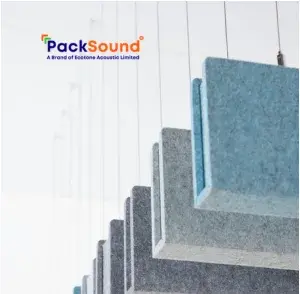
Acoustic Baffles
- Effective Sound Control – Ceiling-suspended baffles with NRC 0.70–0.95 reduce reverberation and enhance speech clarity in open spaces.
- Customizable Design – Available in curved shapes, branding prints, lighting integration, and finishes like powder coat, fabric, PET textures, and woodgrain.
- Flexible Installation – Mounted using wire hangers, adjustable cables, or T-rails, ideal for offices, auditoriums, and large-volume commercial interiors.
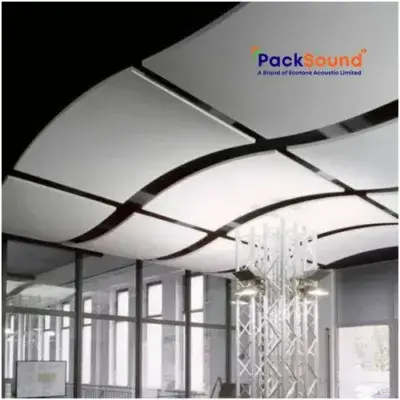
Acoustic Clouds
- Superior Sound Absorption – Horizontally suspended clouds with NRC 0.70–0.95 reduce reverberation while maintaining open, airy spaces.
- Customizable Design – Available in various shapes, sizes, and finishes (powder coat, fabric, PET textures, woodgrain) with options for curved forms, branding, and integrated lighting.
- Flexible Installation – Ceiling-suspended using wire hangers, adjustable cables, or T-rails, perfect for offices, commercial interiors, and large open spaces.
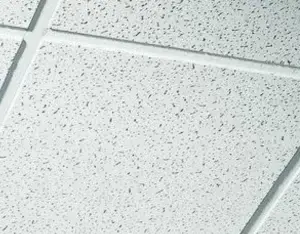
Soft Fiber Ceiling Tile
- Premium Acoustic Performance – Micro-perforated MDF/HDHMR with acoustic fleece backing delivers NRC 0.9, reducing echo and reverberation.
- Seamless & Customisable Design – Multiple tile sizes, thicknesses, edge profiles, and perforation patterns, with laminate or digital printed finishes.
- Safe & Eco-Friendly – Made from formaldehyde-free, low-VOC materials, with Class-1 fire resistance.

FeatherLite Ceiling Tile
- Effective Sound Absorption – Micro-perforated UHAVC core with NRC 0.85, reducing echo without extra backing.
- Seamless & Customisable Design – Multiple tile sizes, thicknesses, edge profiles, and perforation patterns, with laminate or digital printed finishes.
- Safe & Eco-Friendly – Made from formaldehyde-free, low-VOC materials, with Class-1 fire resistance.
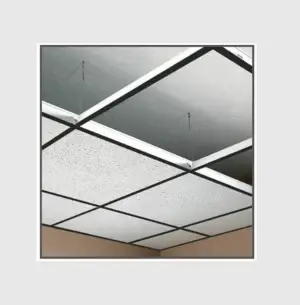
AirLite Ceiling Tile
- Efficient Acoustic Absorption – UHAVC core with NRC 0.85, reducing echo and improving sound clarity.
- Lightweight & Durable – Only 2.74 kg/m² with moisture resistance up to 95% RH and thermal conductivity ≤0.040 W/m·K.
- Safe & Versatile – Low-VOC, formaldehyde-free materials with Class A fire resistance and T-grid installation compatibility.
Acoustic panels are sound absorbing wall and ceiling boards made from glass wool, PET fibre, wood fibre, or perforated wood and metal cores that reduce echo, reverberation, and background noise inside a room. Packsound manufactures acoustic wall panels, acoustic ceiling panels, perforated acoustic panels, and PET acoustic panels with NRC ratings from 0.70 to 0.95, engineered for offices, studios, auditoriums, hospitals, and homes across India. If you need a fast answer: acoustic panels improve how a room sounds, they do not stop sound from entering or leaving that room. For that, you need soundproof acoustic panels or mass loaded construction, which Packsound also designs on a project basis.
What Are Acoustic Panels?
Acoustic panels are engineered boards fixed to walls or ceilings that absorb sound energy instead of reflecting it back into a room. When sound waves strike a porous or perforated surface, friction inside the material converts sound energy into a trace amount of heat, which lowers reverberation time and reduces perceived noise. This is the same absorption principle used in recording studios, cinemas, and concert halls, scaled down for offices, classrooms, and homes.
Acoustic Panels vs Soundproof Acoustic Panels: What's the Real Difference?
Acoustic panels treat sound quality inside a room. Soundproof acoustic panels, along with mass loaded barriers and sealed partitions, stop sound from crossing between rooms. Most professional projects need both, specified separately, because absorption and blocking are two different physics problems and no single thin panel solves both at once.
Types of Acoustic Sound Panels Packsound Manufactures
Perforated Acoustic Panels
Perforated acoustic panels use a wood, MDF, or metal face with a pattern of drilled holes over an absorbent backing. The perforation ratio (usually 10 to 23 percent open area) determines how much mid and high frequency sound the panel absorbs, while the backing material handles the rest. These are the most requested acoustic wall panels for corporate interiors because they combine visible wood grain with real acoustic performance.
PET Acoustic Panels
PET acoustic panels are made from recycled polyester fibre, compressed and thermoformed into rigid or semi rigid boards. They carry no glass fibre, are formaldehyde free, and suit schools, healthcare interiors, and eco certified green buildings such as LEED and IGBC rated projects. PET acoustic panels perform best above 500Hz and are frequently paired with a thicker bass trap in rooms with low frequency issues.
Acoustic Ceiling Panels and Ceiling Mounted Acoustic Panels
Acoustic ceiling panels, including baffles, clouds, and perforated tiles, are ceiling mounted acoustic panels suspended or grid mounted above the occupied space. In open plan offices and auditoriums, ceiling coverage frequently reduces reverberation faster than wall panels alone, since sound striking a hard ceiling reflects directly down onto occupants.
Compare Acoustic Panel Types
Use this table to compare PackSound acoustic panels by sound absorption (NRC), thickness, fire rating and best use. Click any panel to see full specifications.
| Acoustic panel | NRC | Thickness | Fire rating | Best for |
|---|---|---|---|---|
| Fabric Wrapped Panels | 0.85–0.95 | 25–50 mm | Class A core / FR fabric | Offices, auditoriums, studios |
| Grooved Wooden Slats | 0.70–0.95 | 14–32 mm | Fire-retardant grade | Lobbies, auditoriums, boardrooms |
| Perforated Panels | 0.65–0.95 | 12–18 mm | Fire-retardant grade | Conference rooms, halls |
| Micro Perforated Panels | 0.70–0.95 | 12–18 mm | Fire-retardant grade | Premium interiors, auditoriums |
| Composite Panels | 0.80–1.00 | 25–75 mm | Fire-retardant options | High-performance rooms |
| CNC PET Panels | 0.60–0.90 | 9–24 mm | Fire-retardant grades | Offices, schools, libraries |
| Wood Fiber Panels | 0.75–0.95 | 15–35 mm | B1 / Class B | Eco-friendly projects |
| Acoustic Foam Panels | Up to 0.95 | 25–100 mm | Class B (melamine) | Studios, home theatres |
| Acoustic Ceiling Tiles | 0.60–0.95 | 12–20 mm | Class A options | Offices with T-grid ceilings |
| Acoustic Baffles & Clouds | 0.70–0.95 | 12–75 mm | Fire-rated options | Exposed or high ceilings |
How to Choose the Right Acoustic Panels
1. Start with the roomOffices and classrooms need speech clarity; studios and home theatres need broadband and bass control.
2. Check the NRCChoose NRC 0.80 or higher for offices and studios so the panels make a clear difference.
3. Match the fire ratingPublic buildings, schools and hospitals need Class A or fire-retardant panels with test certificates.
4. Pick wall, ceiling or bothOpen offices and high ceilings often need ceiling tiles, baffles or clouds as well as wall panels.
5. Plan coverageMost rooms need 25–35% of wall area treated; an acoustic survey gives the exact layout.
6. Choose the finishFabric, wood veneer, PET colours or 3D designs let the panels match your interior.
| Parameter | Detail |
|---|---|
| NRC Range | 0.70 to 0.95 (tested to ASTM E1050 / ISO 354) |
| Panel Thickness | 12mm to 100mm depending on type |
| Core Materials | Glass wool, wood fibre, PET, UHAVC, MDF/HDHMR |
| Fire Rating | Class A / Class 1 (low-VOC, formaldehyde-free) |
| Standard Sizes | 600x600mm, 600x1200mm, custom up to 1200x2400mm |
| Finishes | Fabric, laminate, veneer, digital print, powder coat |
| Compliance | NBC 2016 Part 8, ASTM E1050, ISO 354 |
| Benefit | Detail |
|---|---|
| Echo Reduction | Cuts reverberation time by 40-70% in treated rooms |
| Speech Clarity | Improves STI (Speech Transmission Index) in offices and classrooms |
| Noise Level | Reduces perceived ambient noise by 6-12 dB in open-plan spaces |
| Productivity | Acoustically treated offices show measurable reduction in cognitive errors |
| Aesthetics | Available in premium finishes that enhance interior design, not compromise it |
| Durability | Panels rated for 10+ years with no acoustic performance degradation |
| Sustainability | PET panel range uses recycled polyester; wood fibre uses FSC-certified substrates |
| Application | Recommended Panel Type |
|---|---|
| Corporate Offices / Open Plans | Fabric-wrapped panels + ceiling baffles |
| Recording Studios | High-density glass wool + bass trap corners |
| Conference / Boardrooms | Fabric-wrapped panels + micro-perforated ceiling tiles |
| School / University Auditoriums | Grooved wooden slat + acoustic clouds |
| Hospitals / Healthcare Waiting | Soft fibre ceiling tiles + wall-mounted panels |
| Hospitality (Hotels / Restaurants) | 3D luxury wooden acoustic panels (Auraluxe range) |
| Industrial / Manufacturing | Metal perforated panels + acoustic baffles |
| Step | Action |
|---|---|
| 1 | Site Acoustic Assessment – PackSound team visits site, measures existing RT60 and ambient noise levels |
| 2 | Acoustic Design Report – Target RT60 calculated per room type; panel type, coverage, and layout specified |
| 3 | Product Fabrication – Panels manufactured at facility with custom dimensions and finishes |
| 4 | Installation – Panels mounted using Z-clips, French cleats, T-grid, or wire suspension per type |
| 5 | Post-Installation Measurement – RT60 and STI re-measured to verify performance against design targets |
| 6 | Handover Documentation – As-built layout, care guide, and warranty documentation provided |
| 7 | After-Sales Support – Dedicated contact for future panel additions, replacements, or expansions |
| Myth | Reality |
|---|---|
| Acoustic panels fully soundproof a room | They absorb internal echo, they do not block external noise |
| More panels always means better acoustics | Over-treatment kills natural sound, target RT60 matters |
| Foam egg-crate panels work as well as engineered panels | Foam targets only high frequencies, ignores bass and mid-range |
| Acoustic panels must look industrial or ugly | Premium wooden and fabric panels enhance interior design aesthetics |
| Any panel works for any frequency | Bass below 250Hz needs thick (75–100mm) or corner-mounted treatment |
| Acoustic panels are a luxury for studios only | Offices, schools, and hospitals benefit equally and often more |
| DIY installation gives same results as professional design | Placement, coverage area, and room geometry determine outcome quality |
Frequently Asked Questions
Do acoustic panels actually work for reducing noise in a room?
Yes, acoustic panels reduce internal echo and reverberation, not external noise transmission.
What is the difference between acoustic panels and soundproofing panels?
Acoustic panels absorb internal reflections; soundproofing panels block sound between rooms.
How many acoustic panels do I need for a 12x12 room?
Typically 25-35% wall coverage, around 8-12 panels of 2×4 feet size minimum.
Can I install acoustic panels on the ceiling instead of walls?
Yes, ceiling placement is often more effective for open-plan offices than wall-only treatment.
Are wooden acoustic panels better than foam panels for offices?
Wooden panels offer better broadband performance, durability, and aesthetics than foam.
What NRC rating should I look for when buying acoustic panels?
For offices and studios, choose panels with NRC 0.80 or above for meaningful results.
Do acoustic panels help with bass and low-frequency sound problems?
Only thick panels (75-100mm) mounted with an air gap effectively treat low frequencies.
Can acoustic wall panels be used outdoors or in humid environments?
Only panels with moisture-resistant substrates (HDHMR, metal) are suitable for humid areas.
How much do acoustic panels cost per square foot in India?
Professionally engineered panels range from Rs 90 to Rs 600 per square foot depending on type.
Is it worth hiring a professional for acoustic panel installation vs. DIY?
Professional acoustic design ensures correct coverage, placement, and measurable RT60 outcomes.