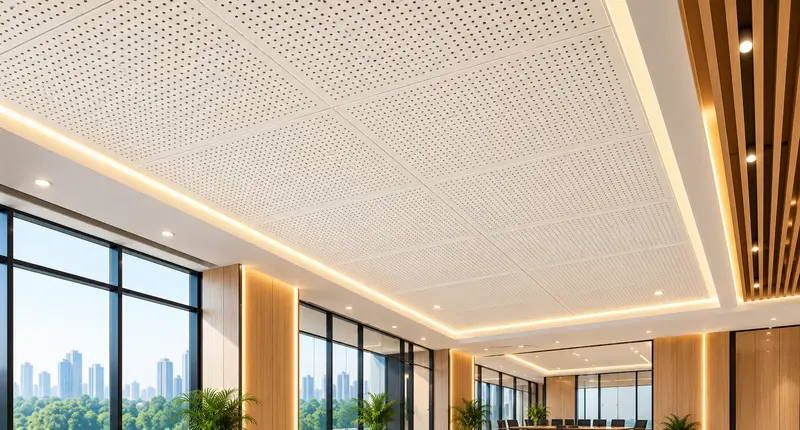
A perforated gypsum board ceiling is a drywall ceiling panel with evenly spaced holes punched into its surface, usually backed with an acoustic fleece or mineral wool layer. This structure allows sound waves to pass through the face, get trapped in the backing material, and dissipate instead of bouncing around the room. Builders and interior designers choose it when they need a clean, paintable ceiling finish that also controls noise, something a flat gypsum board cannot do on its own.
What Is a Perforated Gypsum Board Ceiling?
At its core, it is standard gypsum board that has been drilled or punched with a regular pattern of round or slotted holes, then laminated with a non-woven acoustic mat on the reverse side. The perforation ratio, hole size, and spacing determine how much sound the panel absorbs. This is different from plain acoustic ceiling tiles because the finished surface still looks like a smooth, seamless ceiling once painted, with the holes barely visible from standing height.
How Do Perforated Gypsum Acoustic Panels Work?
Perforated Gypsum Acoustic Panels function on a simple principle: sound enters through the perforations, loses energy as it moves through the backing material, and very little reflects back into the room. The result is measured using the Noise Reduction Coefficient, or NRC, with many perforated acoustic board options reaching values between 0.55 and 0.85 depending on perforation density and the insulation used behind them. A higher NRC means better sound absorption, which matters in spaces with hard floors, glass walls, or high ceilings where echo builds up quickly.
What Are the Key Benefits of a Perforated Gypsum Board Ceiling?
The main advantages include:
These benefits make it a practical upgrade over plain board in any space where sound quality and appearance both matter.
Where Are Perforated Acoustic Panels Used?
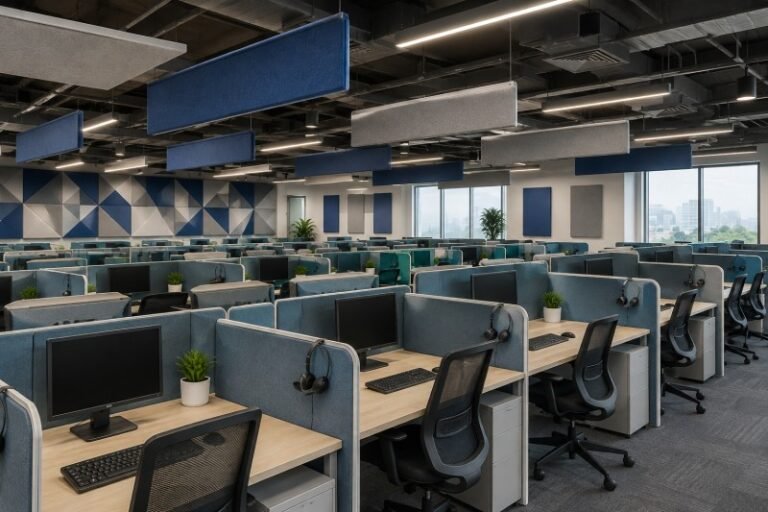
Perforated acoustic panels and perforated acoustic tiles are
common in auditoriums, conference rooms, recording
studios, classrooms, hospitals, and open-plan offices.
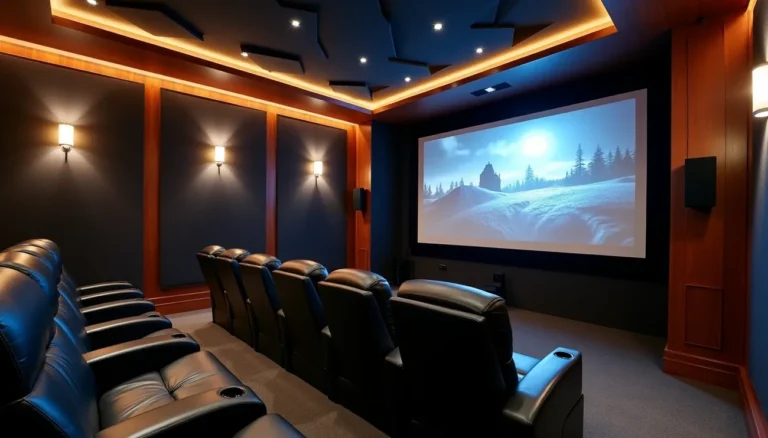
Home theaters, media rooms, and music practice spaces also
benefit, since reducing echo improves clarity without needing
heavy curtains or thick carpets.
In commercial interiors, a perforated gypsum board ceiling is
often specified alongside recessed lighting and HVAC diffusers,
since the acoustic backing does not interfere with standard
ceiling services.
How Does a Perforated Gypsum Board Ceiling Compare to Other Acoustic Options?
Several materials achieve similar acoustic goals, but each has trade-offs:
Choosing between these depends on budget, fire code requirements, humidity exposure, and the desired visual finish.
Is a Perforated Gypsum Board Ceiling Right for your spaces?
A perforated gypsum board ceiling works well in
offices, auditoriums and in other spaces
where echo from hard surfaces is noticeable. It is lighter and
easier to install than perforated metal ceiling systems, and it
blends naturally with standard false ceiling designs already
common in residential interiors.
For buyers evaluating acoustic drywall solutions, suppliers like
PackSound.in list specification sheets that help
match perforation patterns to the room’s actual noise control
needs.
Frequently Asked Questions
Does a perforated gypsum board ceiling actually reduce noise?
Yes, it absorbs sound through its perforations and backing layer, lowering echo and reverberation significantly compared to plain board.
Is perforated gypsum board the same as acoustic tiles?
Not exactly. It offers a seamless, monolithic finish, while acoustic tiles usually sit in a visible grid system.
Can perforated gypsum board get wet or be used in bathrooms?
Standard perforated gypsum board is not moisture rated, so humid areas need moisture-resistant variants or alternative materials.
How much does a perforated gypsum board ceiling cost compared to normal drywall?
It typically costs more due to the perforation process and acoustic backing, but less than premium wood or metal options.
Does painting affect the acoustic performance of perforated panels?
Heavy paint or spray coatings can clog the perforations and reduce sound absorption, so manufacturer guidance should be followed.
In short, a perforated gypsum board ceiling combines punched gypsum panels with an acoustic backing to absorb sound while keeping a smooth, paintable finish, and it remains a cost-effective alternative to perforated metal, wood, or MDF acoustic systems.