Summary: Acoustic Panels for Temples & Prayer Halls help devotees hear chants, mantras, and sermons clearly by controlling echo and reverberation inside sacred spaces. In large stone or marble halls, sound bounces endlessly off hard surfaces, turning prayers and aartis into a muddled wall of noise. This guide explains why temple acoustics matter and how to choose the right acoustic panels for your prayer hall.
Why Do Prayer Halls Face Unique Acoustic Challenges?
Most temples and prayer halls are built with marble floors, stone pillars, and high domed ceilings. These materials look magnificent, but they reflect sound rather than absorb it. When bells ring, mantras are chanted, or a priest speaks through a microphone, sound waves bounce repeatedly between hard surfaces. This creates long reverberation times, flutter echo, and poor speech clarity, especially in halls with large congregations. Devotees seated near the back often struggle to follow the recitation.
How Does Temple Soundproofing and Acoustics Work?
Temple soundproofing and acoustics work on two separate principles. Soundproofing blocks noise from entering or leaving a space using dense materials, sealed doors, and heavy curtains. Acoustics deals with how sound behaves inside the room once it is already there. Acoustic Panels for Temples address the second concern by absorbing sound energy on walls and ceilings, shortening reverberation time, and keeping chants and speech intelligible even in a packed hall.
What Makes Church and Temple Soundproofing and Acoustics Different from Regular Rooms?
Church and temple soundproofing and acoustics differ from office or home acoustics because worship spaces balance two competing needs. Music and choral chanting benefit from slightly longer reverberation, giving depth and reverence. Spoken prayers need shorter reverberation for clarity. A well-planned treatment strikes a middle ground, targeting a reverberation time between 1.2 and 1.8 seconds depending on the hall’s size and use. Also check: Acoustic Panels for Call Centers.
How Do Acoustic Panels Improve Temple Acoustics?
Acoustic panels are fabric-wrapped boards filled with sound-absorbing cores such as mineral wool or high-density foam. Mounted on walls, pillars, or ceilings, they intercept sound waves before they reflect back into the room. This reduces echo, flutter, and background hum from fans or HVAC systems, giving cleaner audio for microphones and speakers. Improved temple acoustics also mean less strain on the ear, so devotees stay focused during longer ceremonies without fatigue.
Which Acoustic Panels Are Best Suited for Temples and Prayer Halls?
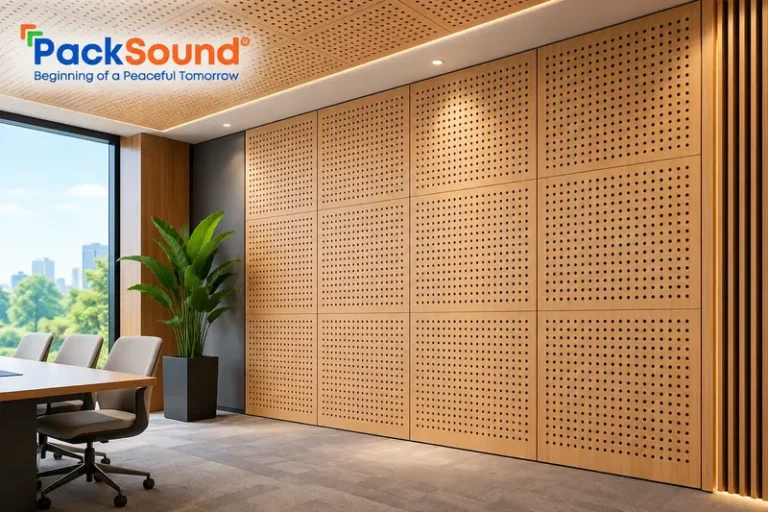
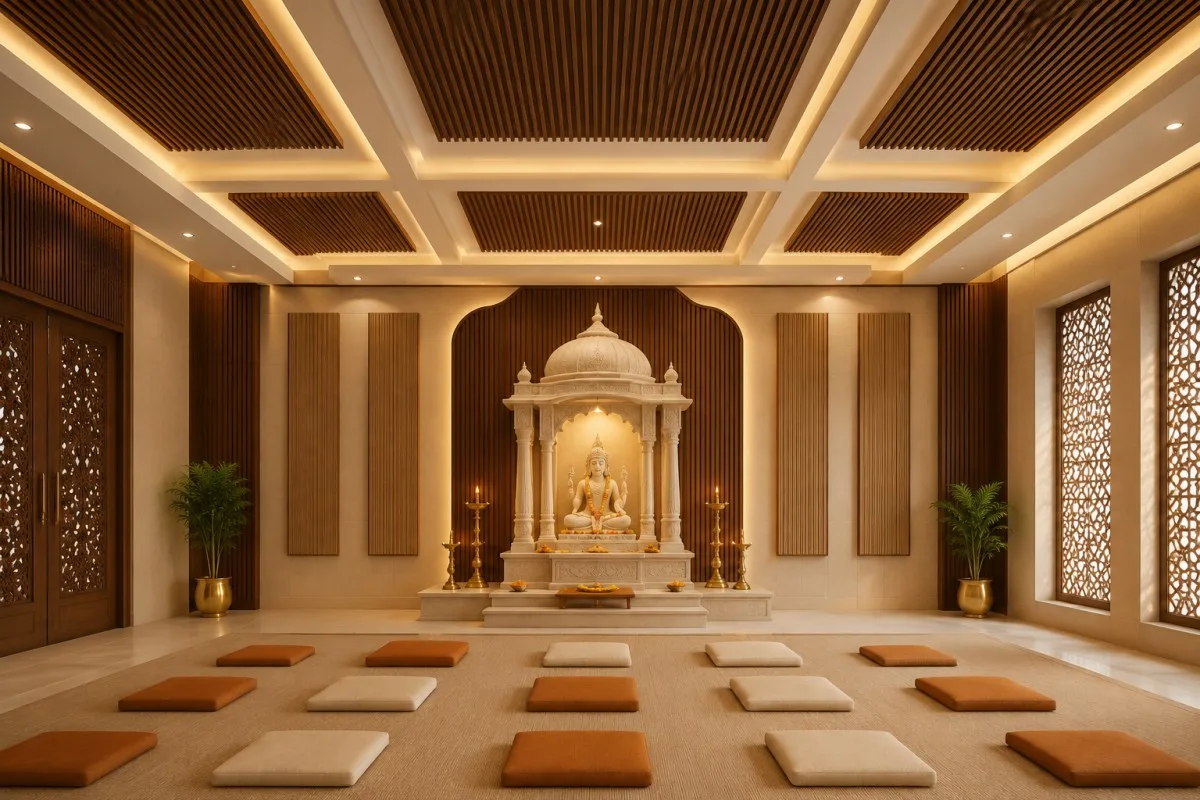
The best acoustic panels for temples combine performance with aesthetics, since these spaces are visually significant. Fabric-wrapped panels in traditional colours blend into existing architecture, while perforated wooden panels suit halls with carved wood interiors. Ceiling clouds and baffles work well where wall space is limited by murals or idols. Packsound designs panels customised to match temple interiors while meeting absorption needs for large, high-footfall spaces.
How to Choose the Right Acoustic Panels for Your Prayer Hall?
Start by identifying problem areas, usually the rear wall, side walls, and ceiling above the seating area. Measure the hall’s square footage and treat at least 25 to 40 percent of hard surface area for noticeable improvement. Consider fire-rated, washable, termite-resistant materials, since prayer halls see continuous use. A short consultation with a specialist like Packsound can help identify the right coverage before installation.
Conclusion
Clear sound in a place of worship is not a luxury, it is essential to a meaningful spiritual experience. By addressing reverberation, echo, and background noise, acoustic panels help every devotee hear chants and prayers clearly. Thoughtful temple acoustics planning, paired with panels suited to the hall’s architecture, turns a noisy space into one of calm.
Frequently Asked Questions:
Do acoustic panels reduce echo completely in a large temple hall?
No treatment removes echo entirely, but well-placed acoustic panels shorten reverberation and improve speech clarity.
Can acoustic panels be installed without damaging temple walls or murals?
Yes, panels mount on frames or hang from ceilings, avoiding direct damage to painted or carved surfaces.
Are acoustic panels different from soundproofing foam used in studios?
Yes, temple panels focus on absorption and aesthetics, while studio foam targets sound control in small rooms.
How many panels does a mid-sized prayer hall usually need?
It depends on size, but treating 25 to 40 percent of wall and ceiling area gives noticeable results.
Do these panels help with outside traffic or construction noise too?
Acoustic panels mainly control internal echo; blocking outside noise needs sealed doors and glazing as well.