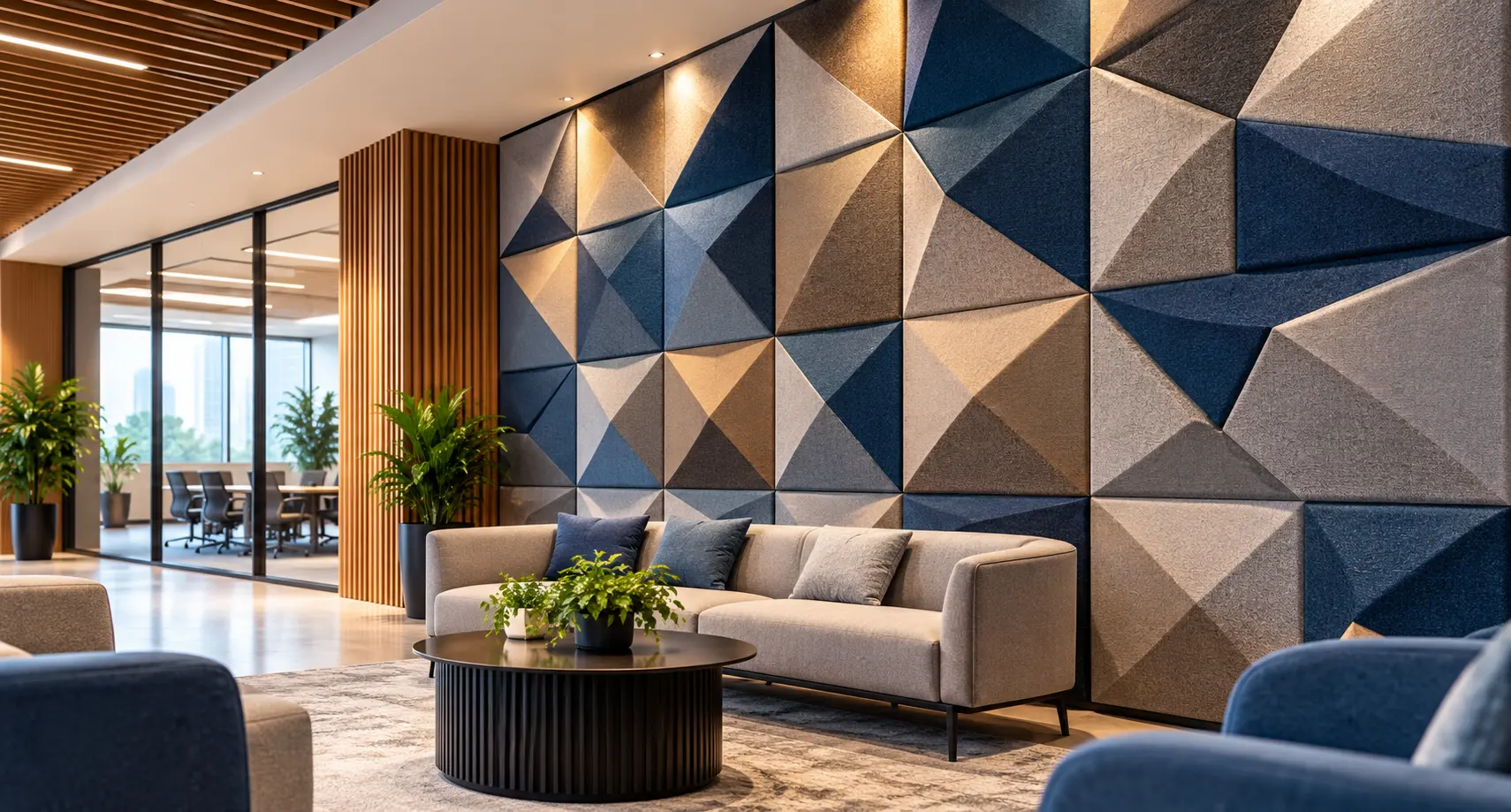
Walk into a modern office lobby or a hotel ballroom and the walls are often the first thing you notice. Flat paint and plain boards are giving way to waves, ridges and sculpted patterns. Many of these feature walls look good but do nothing for sound. A real 3D acoustic wall panel does both jobs: it gives the wall depth and character, and it absorbs the echo that hard surfaces create.
This guide explains what 3D acoustic wall panels are, how they differ from decorative 3D wall panels sold for homes, which materials and designs work best, and how to plan them for a commercial project. The figures come from the Auraluxe 3D Luxury Acoustic Wall Panels that PackSound designs, manufactures and installs across India.
What Are 3D Acoustic Wall Panels?
3D acoustic wall panels are sound absorbing panels with a three dimensional face. Instead of a flat surface, the panel has a raised or carved pattern such as waves, ridges, pyramids, hexagons or slats. Behind that face sits a porous acoustic core that soaks up sound energy.
The 3D surface does two things. The core absorbs sound, and the uneven face scatters part of the sound that is not absorbed, so reflections are spread out instead of bouncing straight back. That mix of absorption and diffusion is why 3D panels often sound more natural in a room than a wall of flat absorbers. If you want to understand the difference, our guide to acoustic diffusers vs absorbers covers it in detail.
3D Acoustic Panels vs Decorative 3D Wall Panels
Search for 3D wall panels in India and most results show PVC, gypsum or plastic sheets sold for living rooms and TV units. They look similar, but they behave very differently.
| Feature | Decorative 3D Wall Panel | 3D Acoustic Wall Panel |
|---|---|---|
| Main Purpose | Looks only | Looks and sound absorption |
| Core Material | PVC, plastic, solid gypsum | PET felt, perforated MDF with backing, fabric wrapped fiberglass |
| Sound Absorption | Close to zero, often adds echo | NRC 0.65 to 0.95 |
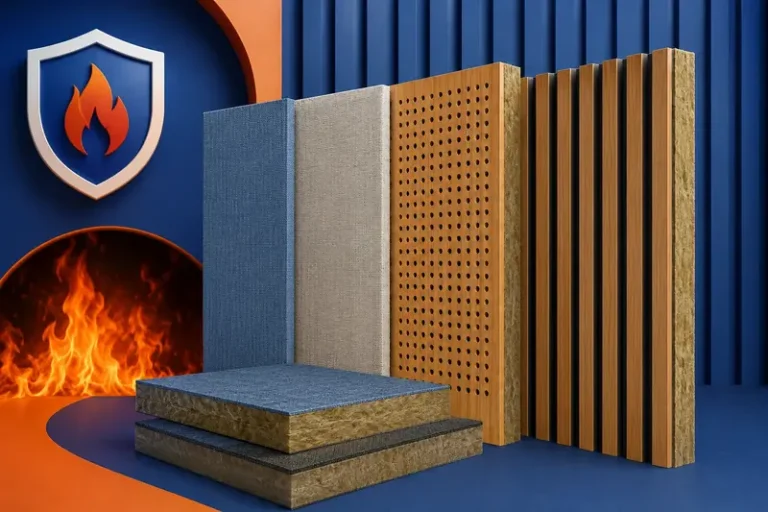
| Fire Performance | Often not rated | Fire retardant options for commercial use |
| Best For | Homes, small decor areas | Offices, hotels, auditoriums, institutions |
A hard plastic 3D sheet is still a hard reflective surface. In a meeting room or a lobby it can make echo worse. For any commercial space, ask for the NRC test result before you buy, the same way you would for flat acoustic wall panels.
Materials Used in 3D Acoustic Wall Panels
The material decides how the panel sounds, how it looks and how long it lasts. These are the four options we use most in commercial projects.
- PET felt: made from recycled polyester fibre. It is light, comes in many colours and is easy to shape with CNC cutting. 3D PET acoustic panels are the most popular choice for offices. You can read more in our guide to polyester acoustic panels.
- Perforated MDF with acoustic backing: gives sharp, rigid sculpted forms and a timber look. The backing behind the perforations does the absorbing. Our perforated acoustic panels use the same principle.
- Fabric wrapped fiberglass: a soft finish over a high density core, ideal where high NRC matters. See our fabric wrapped acoustic panels.
- Gypsum composites: used for large seamless sculpted walls with a painted finish, usually with acoustic backing.
For a side by side comparison of the most common cores, read PET felt vs fabric wrapped vs wood wool acoustic panels.
Popular 3D Designs and Where They Fit
- 3D wave wall panels: smooth flowing curves that soften long walls in lobbies, lounges and reception areas.
- Ridges and fluted forms: strong vertical lines that suit boardrooms and corporate entrances.
- Pyramids and hexagons: geometric modules that create a bold feature wall in cafeterias, co-working spaces and retail stores.
- 3D slats: a timber slat look with depth, popular in auditoriums and hotel corridors. For a flat slat option, see our grooved wooden slat panels.
- Custom CNC patterns: company logos, brand motifs or one-off designs cut into PET. Our CNC PET acoustic panels are made this way.
If you need artwork or photography on the wall instead of a carved pattern, printed acoustic wall panels give you a printed face with an acoustic core behind it.
Technical Specifications
| Parameter | Typical Value |
|---|---|
| Sound Absorption (NRC) | 0.65 to 0.95, depending on material, thickness and mounting |
| Panel Thickness | 12 mm to 50 mm |
| Standard Sizes | 600 x 600 mm, 1200 x 600 mm, 2400 x 1200 mm (custom sizes available) |
| Materials | PET felt, perforated MDF with backing, fabric wrapped fiberglass, gypsum composite |
| 3D Patterns | Waves, ridges, pyramids, hexagons, slats, custom CNC designs |
| Surface Finish | Fabric, laminate, paint, natural wood veneer, PET colours |
| Edge Profiles | Straight, bevelled or interlocking |
| Fire Rating | Fire retardant options for commercial and institutional projects |
| Installation | Adhesive, mechanical fasteners or modular framing |
Where 3D Acoustic Wall Panels Work Best
- Corporate offices: reception walls, boardrooms and breakout zones where the brand and the acoustics both matter.
- Hotels and banquet halls: lobbies, ballrooms and restaurants with high ceilings and hard floors. Our guide to acoustic treatment for hotel banquet halls covers full layouts.
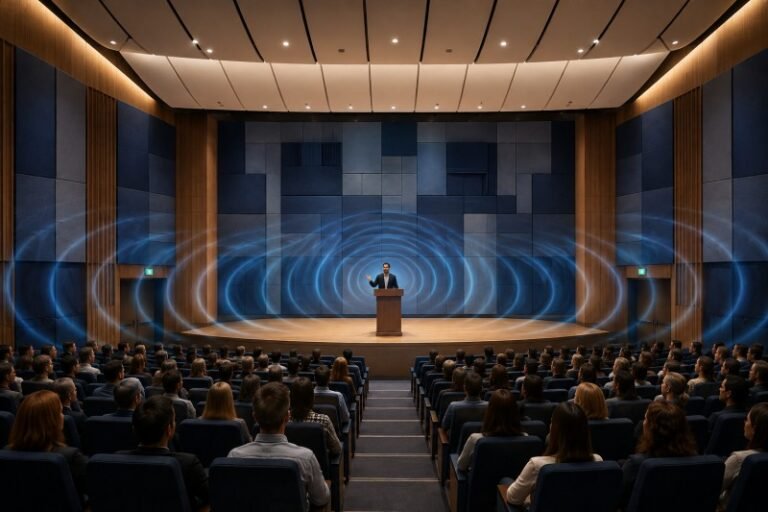
- Auditoriums and conference centres: side and rear walls where diffusion and absorption keep speech clear. See our auditorium acoustic treatment
- Restaurants and cafes: feature walls that cut the clatter of a busy dining room.
- Retail showrooms and experience centres: branded walls that make a space feel premium and quieter.
- Educational institutions: libraries, seminar halls and campus lobbies.
How to Plan 3D Acoustic Wall Panels for Your Space
Good results start with a plan, not a catalogue. Follow these steps before you place an order.
- Measure the problem: note the room size, ceiling height and surface finishes. Large glass walls, stone floors and high ceilings need more treatment.
- Set the coverage: most offices and meeting rooms need treatment on 20 to 40 percent of the wall area. Our guide on how many acoustic panels you need explains the calculation.
- Pick the material: PET for colour and CNC shapes, perforated MDF for a timber look, fabric for the highest absorption.
- Check fire performance: commercial buildings need fire retardant materials. Ask for the certificate. Our guide to fire rated acoustic panels lists what to look for.
- Combine walls and ceiling: in large spaces, pair 3D walls with 3D luxury acoustic ceiling clouds or 3D acoustic blades
What Affects the Price?
The cost of 3D acoustic wall panels depends on the material, thickness, pattern complexity, finish, quantity and site conditions. Custom CNC designs and wood veneer finishes cost more than standard PET patterns. Because every project is different, we price each one after a site survey. Our acoustic panel price guide explains how pricing works.
Common Mistakes to Avoid
- Buying decorative PVC 3D sheets for a commercial space. They look similar but add little or no absorption.
- Choosing design first and acoustics later. Pick a pattern that also meets your NRC target.
- Covering one small wall in a large hall. A single feature wall rarely fixes echo in a big room.
- Ignoring the fire certificate. Always check fire performance for offices, hotels and institutions.
Frequently Asked Questions
Yes, when they have a real acoustic core. PackSound 3D acoustic wall panels reach NRC 0.65 to 0.95. Decorative PVC or plastic 3D sheets do not absorb sound in a useful way.
They absorb sound like flat panels and also scatter part of the reflected sound, which can make a room sound more natural. They also double as a design feature, so you get acoustics and an architectural wall in one product.
For most offices, 3D PET acoustic panels are the best balance of colour, weight and cost. Perforated MDF suits a timber look, and fabric wrapped panels give the highest absorption.
Standard sizes are 600 x 600 mm, 1200 x 600 mm and 2400 x 1200 mm, with thickness from 12 mm to 50 mm. Custom sizes are available.
Fire retardant options are available for commercial and institutional buildings. Ask for the test certificate for your chosen material.
Yes. Custom CNC patterns, logos and brand motifs can be cut into PET panels, or printed onto acoustic panels with a printed face.
They are fixed with adhesive, mechanical fasteners or a modular framing system, depending on the wall and the panel material. Our team handles installation across India.
Get 3D Acoustic Wall Panels for Your Project
PackSound manufactures 3D acoustic wall panels for offices, hotels, auditoriums and institutions across India, with in-house design, production and installation. Share your drawings or room details and our team will suggest the right pattern, material and coverage. Explore the Auraluxe 3D Luxury Acoustic Wall Panels range or contact PackSound for a free quote.