
Ever tried to take a call in an open office while three meetings happen around you? Noise is one of the most common complaints in modern workplaces, and hard surfaces make it worse. Glass, concrete, and plasterboard bounce sound around until every conversation turns into a low roar. This is where Acoustic Wall Panels earn their place. They soak up sound before it turns into echo, and they make a space feel calmer almost straight away.
Acoustic Panels fix this by soaking up sound before it echoes. But the material you pick makes a big difference to how well they work, how they look, and how long they last. Here is a plain guide to the options, and how to choose the right one for your space.
What to Know Before Comparing Materials
Two numbers come up in almost every product sheet.
NRC (Noise Reduction Coefficient) tells you how much sound a material absorbs, on a scale from 0 to 1. Higher is better. Most good acoustic wall panels for offices fall somewhere between 0.6 and 1.0.
Fire rating matters just as much in commercial buildings. Always check that the panel meets the fire safety requirements for your project and local building codes.
Thickness also counts. A thin panel handles high frequencies like voices well, but needs more depth to deal with low, boomy sounds.
The Best Materials for Acoustic Wall Panels
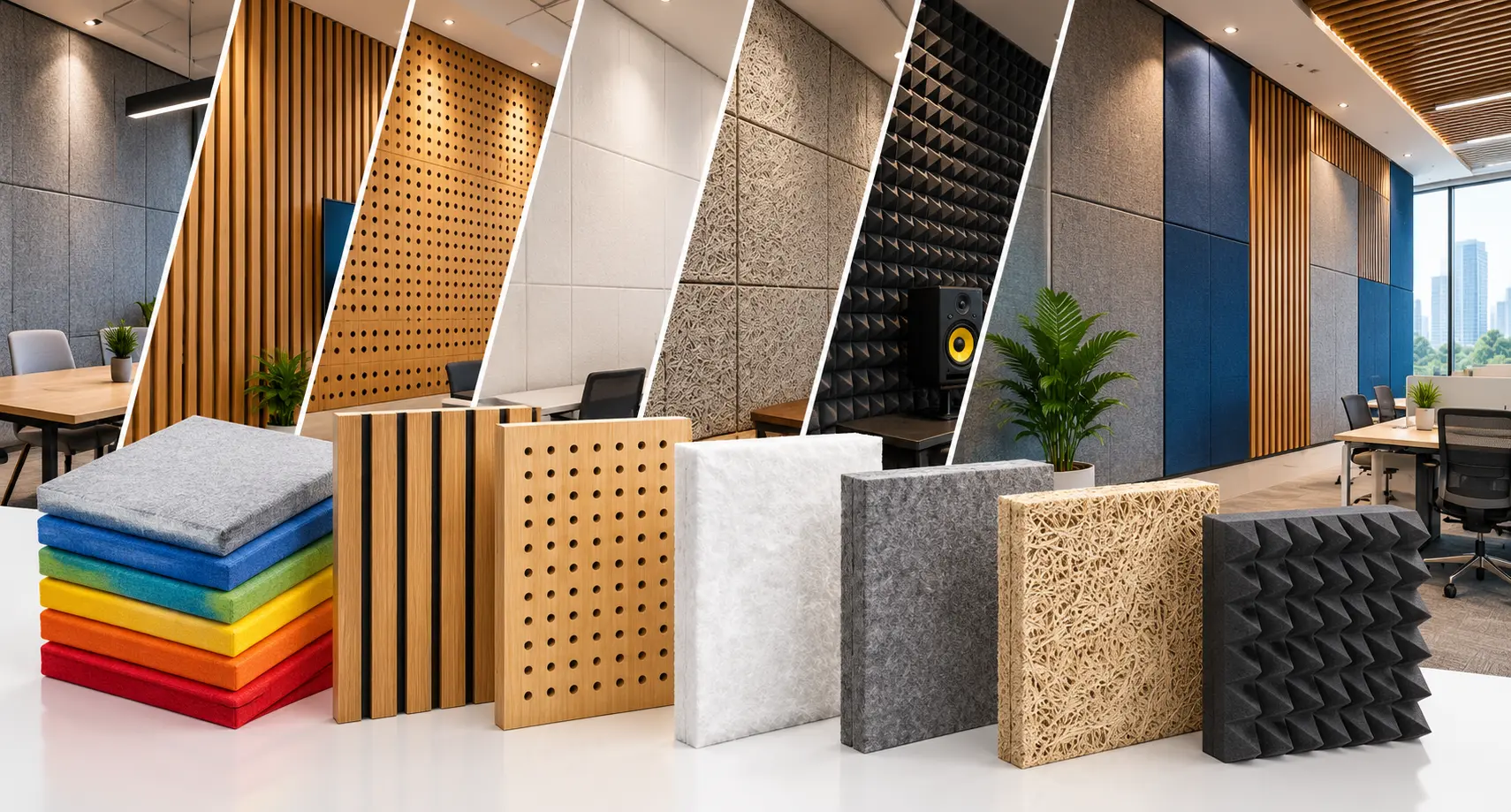
1. Fabric-Wrapped Mineral Wool or Fiberglass
This is the workhorse of commercial acoustics. A dense core of mineral wool or fiberglass is wrapped in a woven fabric finish. It absorbs sound very well across a wide range of frequencies and usually offers good fire performance.
Best for: conference rooms, call centres, auditoriums, and open-plan offices where performance is the priority.
2. PET Felt (Recycled Polyester)
PET felt panels are made from compressed polyester fibres, often from recycled bottles. They are light, easy to cut, and come in lots of colours. They also look clean and modern, which is why designers like them.
Best for: reception areas, meeting pods, and creative offices where looks matter as much as sound.
3. Acoustic Foam
Foam is affordable and absorbs mid and high frequencies decently. The catch is that it can look out of place in a corporate setting, and some foams do not meet fire requirements. Check the certification before buying.
Best for: studios, small recording rooms, and podcast corners.
4. Wood Slat Panels with Acoustic Backing
Timber slats mounted over an absorbent layer give you warmth and sound control together. The slats add character, while the backing does the actual work. Without the backing, wood alone reflects more sound than it absorbs.
Best for: lobbies, executive offices, restaurants, and boardrooms.
5. Perforated Wood or Metal Panels
These have small holes or slots that let sound pass into an absorbing layer behind. They look sharp and hold up well in busy areas.
Best for: corridors, atriums, and high-traffic public zones.
6. Wool Felt and Cork
Natural materials with a soft, tactile finish. Wool felt absorbs well and looks premium. Cork is a little less absorbent but durable and sustainable.
Best for: design-led offices and spaces with a green building focus.
Quick Comparison
| Material | Sound Absorption | Look | Typical Use |
|---|---|---|---|
| Mineral Wool or Fiberglass (Fabric Wrapped) | Very High | Clean, Formal | Meeting Rooms, Call Centres |
| PET Felt | High | Modern, Colourful | Open Offices, Reception |
| Acoustic Foam | Medium | Basic | Studios, Small Rooms |
| Wood Slat with Backing | Medium to High | Warm, Premium | Lobbies, Boardrooms |
| Perforated Panels | Medium to High | Sleek | Corridors, Atriums |
| Wool Felt and Cork | Medium to High | Natural | Eco-Focused Spaces |
How to Choose the Right Panels
Start with the problem. Is it echo, speech privacy, or general noise? Echo needs wide coverage. Privacy between rooms needs a mix of absorption and proper wall construction.
Think about coverage. Covering around 15 to 25 percent of wall area often makes a noticeable difference in an office. Heavily echoing rooms may need more.
Match the finish to the room. A call centre can lean towards performance. A client lobby needs to look good first.
Check durability. In busy areas, choose panels with tough edges and fabrics that can be cleaned.
Do not forget installation. Panels perform best when fixed properly and spread across more than one wall. Putting them all in one spot wastes most of their benefit.
Why Work with PackSound
Picking from this many materials can feel like guesswork. PackSound helps you narrow it down based on your room size, noise level, budget, and design plan, so you get acoustic wall panels that actually solve the problem rather than just fill a wall. Whether you need a single meeting room treated or a full office fit-out, you get guidance that is practical and honest.
Final Thoughts
There is no single best material. Mineral wool and fiberglass lead on pure performance, PET felt wins on flexibility and style, and wood or perforated panels shine where design matters. The right choice depends on your space and what you want it to feel like.
Planning an office or commercial project? Talk to PackSound about the right Acoustic Panels for your space and get a recommendation built around your needs.



2 Comments