Summary: Choosing between acoustic diffusers vs absorbers auditorium spaces is one of the most common dilemmas architects, acousticians, and facility managers face while planning sound treatment. Both materials improve listening quality, but they solve very different acoustic problems, and using the wrong one can leave a hall sounding either dull or harsh. This guide breaks down the sound diffuser vs absorber debate in simple, practical terms so you can make an informed, EEAT-friendly decision for your project.
What Is the Real Difference Between Sound Diffuser vs Absorber?
A sound absorber captures sound energy and converts it into a small amount of heat, reducing echo and reverberation. Porous materials like acoustic foam, mineral wool, and fabric-wrapped panels are typical absorbers. A diffuser, on the other hand, does not remove sound energy. It scatters reflections in multiple directions using patterned or uneven surfaces, keeping the room lively while breaking up harsh echoes. In short, absorption reduces sound; diffusion redistributes it.
How Does Absorption vs Diffusion Work in an Auditorium?
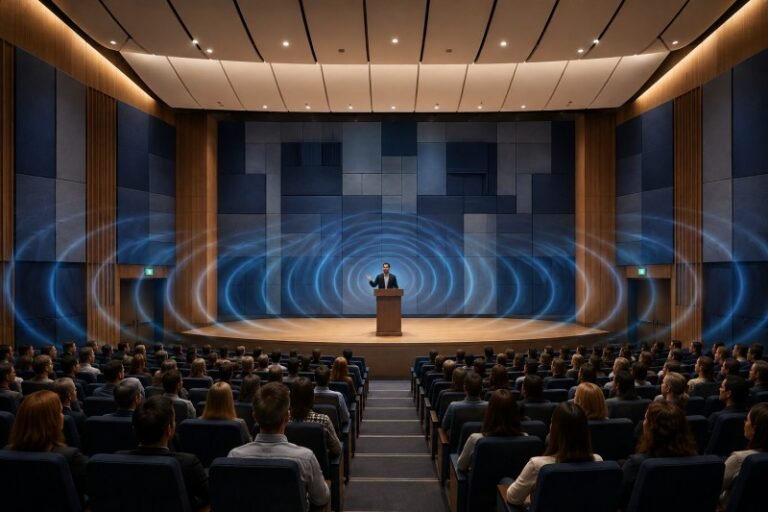
In large auditoriums treatment, sound behaves differently than in small rooms because of long travel distances and high ceilings. Absorption vs diffusion here is not an either-or choice; it is a balancing act. Absorbers are usually placed on rear walls and ceiling zones to control excessive reverberation, while diffusers are positioned on side walls and behind the stage to spread sound evenly to every seat, including the back rows. This combination helps speech stay intelligible and music retain natural depth.
Acoustic Diffusers vs. Absorbers: Which One Suits Your Auditorium?
The right choice depends entirely on room use. A lecture hall or conference auditorium, where speech clarity matters most, usually needs more absorption to cut down echo. A concert hall or performance auditorium benefits more from diffusion, since it preserves musical warmth and energy across the audience. When comparing acoustic diffusers vs. absorbers for such spaces, consider these three factors:
- Room purpose: Speech-focused spaces favor absorption; music or multi-purpose halls favor diffusion.
- Room size: Diffusers need adequate distance from listeners to work effectively, so smaller auditoriums may rely more heavily on absorption.
- Reverberation time: Measure existing RT60 values before deciding the ratio of treatment needed.
Sound Absorption vs. Diffusion: What Should You Prioritize First?
Most acoustic consultants recommend starting with absorption. Sound absorption vs. diffusion planning typically begins by controlling excess reflections and flutter echo first, then introducing diffusion to restore natural liveliness once the room is no longer harsh or boomy. Skipping straight to diffusion in an untreated, highly reflective auditorium rarely solves clarity issues, since uncontrolled reflections will still overwhelm the room. Also Check: Common Auditorium Acoustic Mistakes.
Absorption or Diffusion: How Do You Decide for a Large Auditorium?
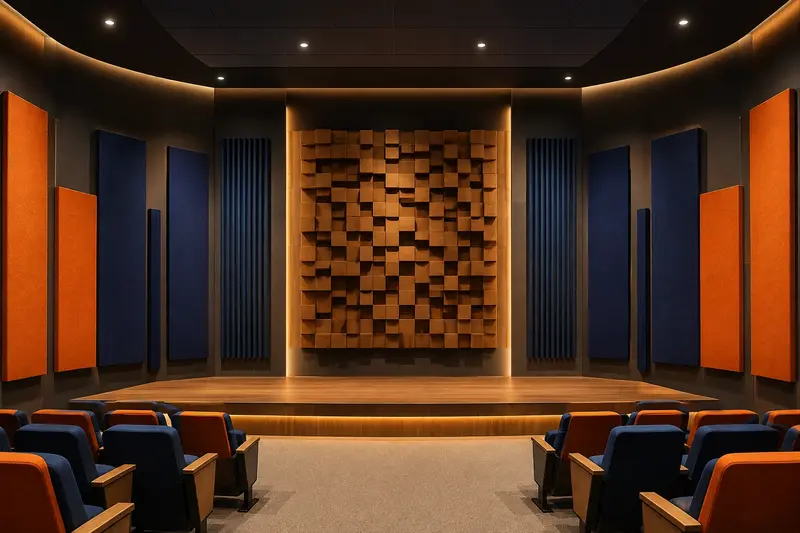
For a definitive answer on absorption or diffusion, auditorium planners should map the room acoustically. Rear walls facing the stage are prime candidates for absorption to prevent slap echo reaching performers. Side walls, ceiling clouds, and areas behind seating benefit from diffusers to maintain even sound distribution. Many modern auditoriums use a hybrid diffsorber panel that combines both functions in a single surface, offering flexibility where wall space is limited. Packsound.in designs such hybrid acoustic solutions for institutions seeking balanced, code-compliant treatment without compromising interior aesthetics.
Conclusion
There is no universal winner in the acoustic diffusers vs absorbers auditorium comparison. Absorbers control unwanted reverberation and improve speech clarity, while diffusers preserve natural sound energy and even coverage across large seating areas. The best-performing auditoriums combine both strategically, based on room function, size, and desired listening experience. A proper acoustic assessment before installation remains the most reliable way to get the ratio right.
Frequently Asked Questions:
Do auditoriums need both diffusers and absorbers?
Yes, most large auditoriums perform best with a mix, since absorbers control echo and diffusers maintain natural liveliness across seating rows.
Which is better for a lecture hall, diffuser or absorber?
Absorbers are usually better for lecture halls because speech intelligibility depends on reducing reflected sound rather than spreading it.
Can too many absorbers make a room sound dead?
Yes, over-absorption removes too much natural reflection, making the space feel flat, muffled, and acoustically lifeless.
Where should diffusers be placed in an auditorium?
Diffusers work best on side walls, rear walls, and ceiling areas positioned away from the primary listening zone for even scattering.
Is diffusion better than absorption for music halls?
Diffusion is generally preferred in music halls since it retains reverberant energy while still breaking up disruptive echo patterns.