Summary: Common Auditorium Acoustic Mistakes include excessive reverberation, uncontrolled sound reflections, flutter echo, and background noise, all of which stem from poor auditorium acoustics causes rooted in room shape and surface material choices. Addressing these common acoustic problems with absorption, diffusion, and proper measurement restores clarity for both speech and music, making the auditorium usable for its full range of intended purposes.
What Causes Poor Auditorium Acoustics in the First Place?
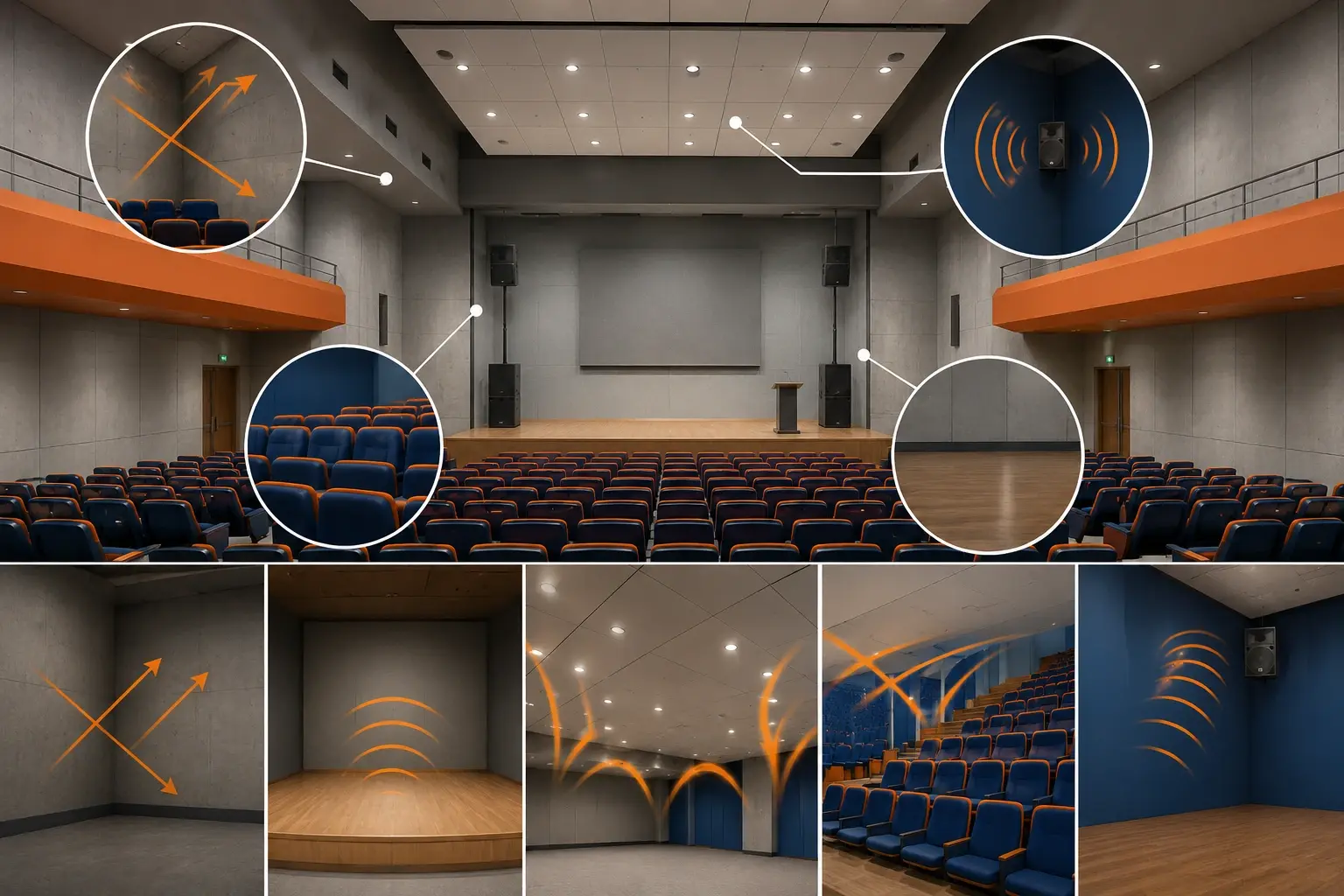
Most poor auditorium acoustics causes trace back to a mismatch between room geometry, surface materials, and intended use. Parallel walls, high flat ceilings, and hard flooring allow sound to bounce repeatedly instead of settling. Add in oversized volumes built for one purpose but used for another, such as a hall designed for concerts also hosting lectures, and intelligibility suffers. HVAC systems, projector fans, and untreated stage machinery raise background noise, which further reduces the signal-to-noise ratio audiences depend on to follow speech.
Why Do Sound Reflections in Auditoriums Create Echo and Confusion?
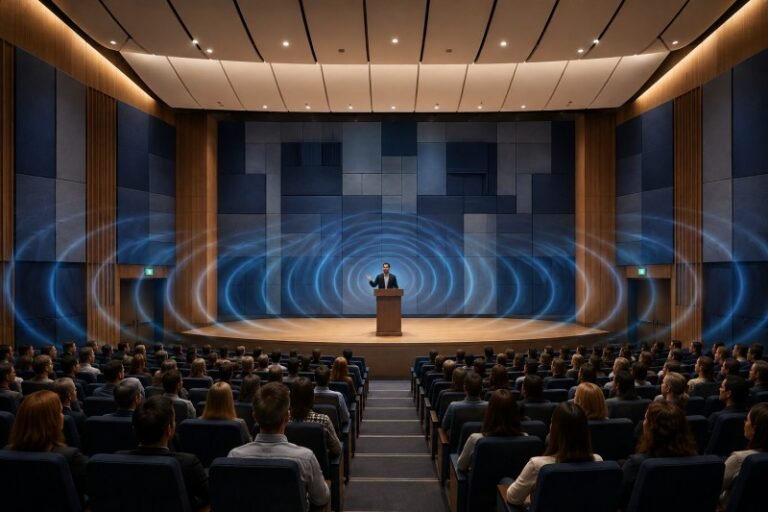
Sound reflections in auditoriums are not inherently bad. Early reflections, arriving within about 50 milliseconds of the direct sound, actually help listeners perceive speech and music as fuller. The trouble begins when late reflections and echoes bounce off distant hard surfaces and reach the ear after a longer delay. These late arrivals blur consonants, overlap words, and make speech feel muddy. Curved rear walls or domed ceilings often focus these reflections into hot spots, creating noticeable echo in specific seating zones while leaving others acoustically dead.
What Are the Most Common Acoustic Problems in Auditoriums?
Among the most common acoustic problems are excessive reverberation, flutter echo between parallel walls, sound shadows caused by balconies or structural obstructions, and inconsistent loudness across the seating area. Reverberation times that stretch beyond 2.5 seconds in a speech-focused hall make announcements hard to follow. Flutter echo, a rapid back-and-forth bounce between opposing flat surfaces, adds a metallic ringing quality. Dead spots near the rear or under overhangs leave some listeners straining to hear, while front rows may feel overwhelmed by direct sound.
How Can You Fix Common Auditorium Acoustic Mistakes with Better Design Choices?
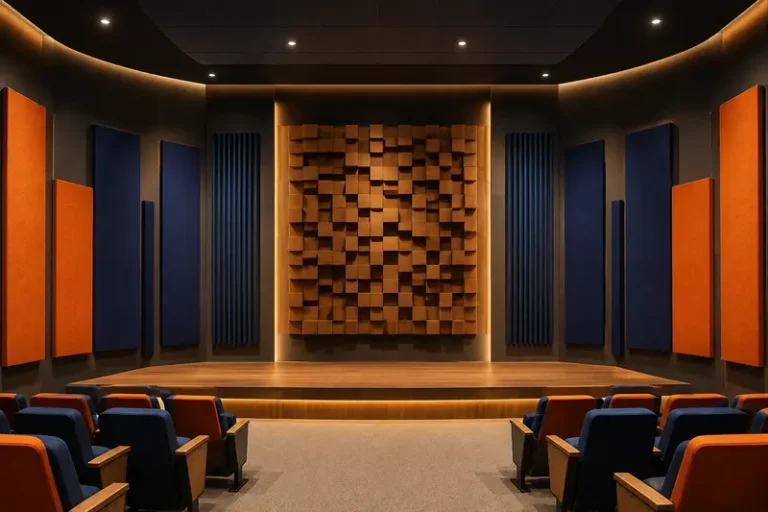
Fixing these issues usually starts with targeted absorption and diffusion rather than a full architectural overhaul. Lining the rear wall with absorptive panels reduces the secondary reflections that travel back toward the stage. Adding diffusers along side walls scatters sound energy instead of allowing it to bounce directly back, which controls flutter echo without deadening the room. Bass traps placed in corners manage low-frequency buildup that standard panels miss. For background noise, sealing gaps around doors and isolating mechanical equipment can noticeably improve clarity. Acoustic wall panels and ceiling clouds, positioned based on a proper reverberation time calculation, bring most halls back into the ideal 1.2 to 1.6 second range for combined speech and music use.
How Do You Choose the Right Acoustic Treatment for Your Auditorium?
The right fix depends on measured data, not guesswork. A basic acoustic assessment, checking reverberation time, identifying echo zones, and mapping surface materials, should guide any treatment plan. Spaces used mainly for speech need more absorption and less liveliness, while multipurpose halls need a balance of absorption and diffusion. Consulting with acoustic material suppliers such as Packsound.in during the planning stage helps match panel type, thickness, and placement to the room’s actual dimensions rather than applying a one-size-fits-all solution.
Conclusion
Common Auditorium Acoustic Mistakes rarely stem from a single flaw. They usually build up from untreated reflective surfaces, mismatched room use, and background noise left unaddressed during design. The good news is that most of these problems respond well to targeted, measurable fixes rather than expensive rebuilds. A short assessment of reverberation time, reflection patterns, and noise sources is often enough to identify exactly where treatment is needed.
Frequently Asked Questions:
Why does my auditorium sound echoey even with a working sound system?
The issue is usually late sound reflections, not the speakers. Hard parallel surfaces bounce sound repeatedly, creating echo regardless of audio equipment quality.
What is a good reverberation time for a multipurpose auditorium?
Most experts recommend 1.2 to 1.6 seconds for halls used for both speech and music, staying below 1.5 seconds keeps clarity intact.
Can carpet alone fix poor auditorium acoustics?
Carpet helps with floor reflections but cannot resolve wall and ceiling issues. Panels and diffusers are needed for full-room treatment.
Why do some seats sound worse than others in the same hall?
Sound shadows from balconies or obstructions, along with focused reflections from curved surfaces, create uneven coverage across seating zones.
Is expensive equipment enough to fix bad auditorium sound?
No. If the room itself has untreated reflective surfaces, even premium speakers will sound unclear until acoustic treatment is added.