Intro: Every auditorium manager knows that a packed hall means little if the audience cannot hear clearly. Acoustic Ceiling Clouds for Auditoriums solve this exact problem by hanging sound-absorbing panels overhead, cutting echo, and giving speech and music the clarity they deserve without disturbing the architecture below.
What Are Acoustic Ceiling Clouds for Auditoriums?
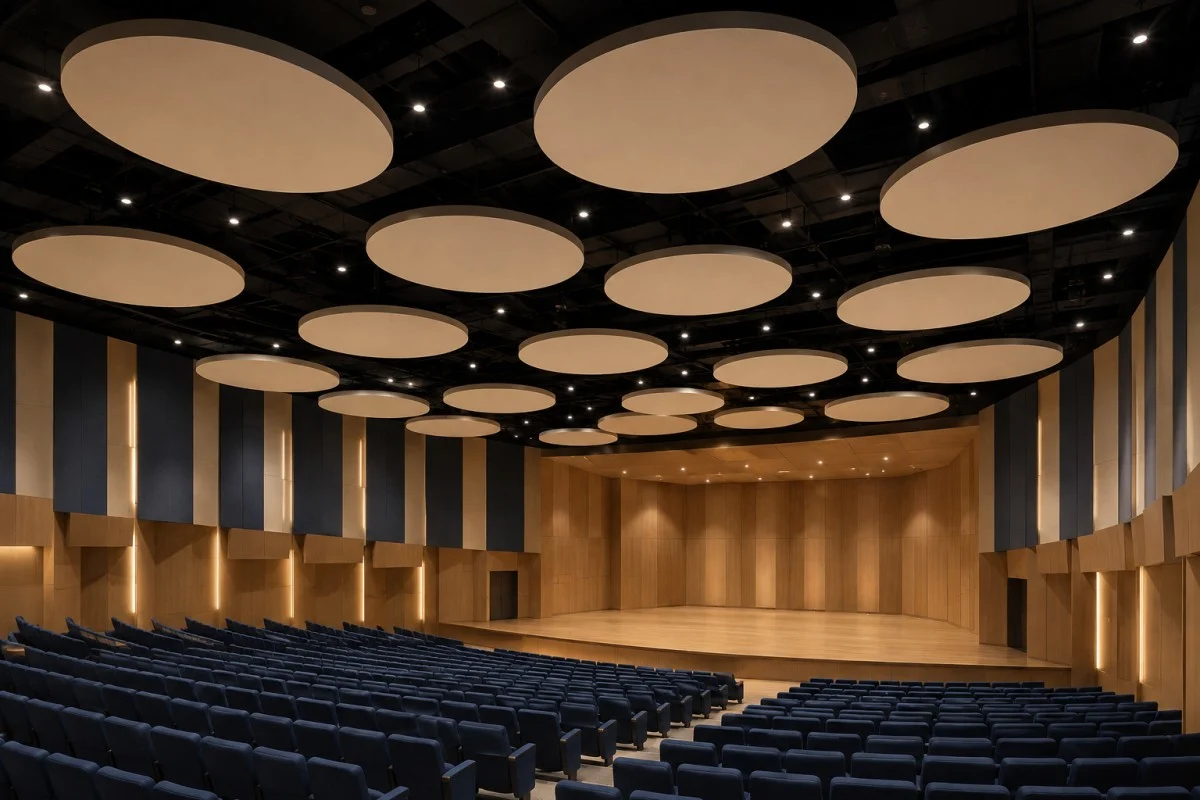
An Auditorium Acoustic Ceiling Cloud is a suspended panel, usually made of fiberglass, PET felt, or melamine foam, mounted horizontally or at an angle below the main ceiling. Unlike a flat suspended ceiling, these clouds leave gaps for HVAC and lighting while absorbing sound from multiple directions, reducing reverberation without blocking airflow or visibility.
Why Do Auditoriums Need Acoustic Clouds for Auditoriums?
Large auditoriums often have high ceilings and hard, reflective surfaces such as concrete, glass, or plaster. These materials reflect sound rather than absorb it, causing echo and reduced speech intelligibility. Acoustic Clouds for Auditoriums shorten the decay time of sound, so dialogue, lectures, and performances remain crisp even in the back rows.
How Do Acoustic Wall Panels for Auditoriums in India Complement Ceiling Clouds?
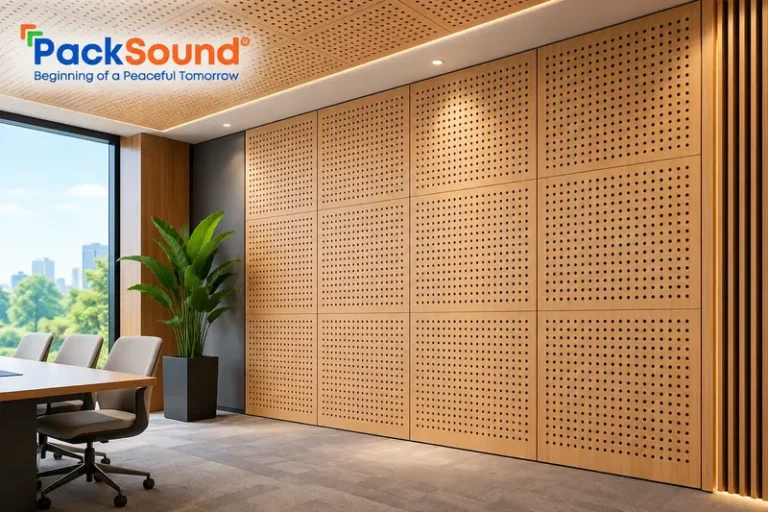
While ceiling clouds handle overhead reflections, Acoustic Wall Panels for Auditoriums in India target sound bouncing off side and rear walls. Combining both creates balanced absorption across all surfaces. In Indian auditoriums, where budgets and humidity vary widely, this dual approach is often more cost-effective than treating the ceiling alone.
What Should You Check Before Installing Acoustic Panels in Auditorium Spaces?
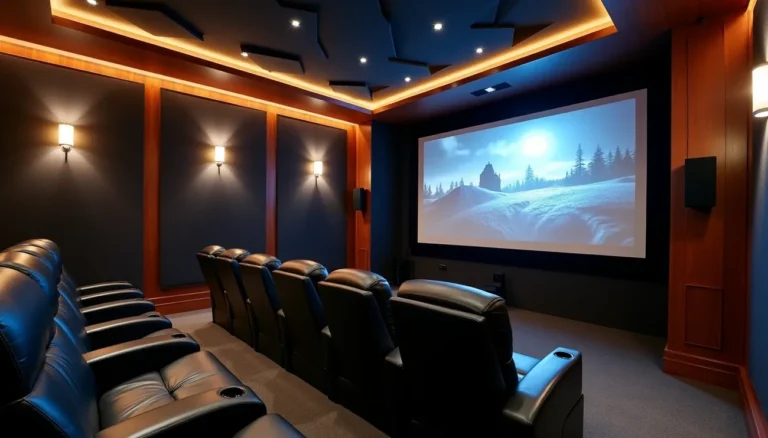
Before installation, assess room volume, seating capacity, and intended use, whether for speech, music, or mixed events. Fire rating, NRC (Noise Reduction Coefficient) value, and ease of maintenance matter as much as appearance. Auditorium Acoustics Panels with an NRC above 0.85 typically deliver noticeable clarity improvements. Working with an experienced acoustic consultant, such as the team at Packsound.in, helps match panel type to the venue’s exact requirements.
Reverberation Time in Auditoriums: Reverberation time (RT60) measures how long sound takes to decay by 60 dB after the source stops. Most auditoriums perform best between 0.8 and 1.4 seconds, depending on use. Ceiling clouds and wall panels together help bring oversized or overly live rooms into this comfortable range.
Conclusion
Acoustic Ceiling Clouds for Auditoriums offer a practical, visually flexible way to control echo and improve speech clarity without major structural changes. Paired with wall treatments and a clear understanding of reverberation targets, they turn acoustically challenging halls into spaces where every word and note is heard as intended.
Frequently Asked Questions:
Q1: Do acoustic ceiling clouds actually reduce echo in large halls?
Yes, they absorb sound before it reflects off hard ceilings, noticeably shortening echo and improving speech clarity in most mid to large auditoriums.
Q2: How many ceiling clouds does a typical auditorium need?
Coverage depends on room volume and desired RT60; acoustic consultants usually calculate coverage as 20-40% of ceiling area for balanced absorption.
Q3: Are ceiling clouds better than a full acoustic ceiling?
Clouds allow HVAC and lighting access while still absorbing sound, making them more practical than a solid acoustic ceiling in most retrofit projects.
Q4: Can acoustic panels be installed without renovating the whole auditorium?
Yes, most ceiling clouds and wall panels are surface-mounted or suspended, requiring minimal structural work compared to full renovations.
Q5: What materials are commonly used in Indian auditorium acoustic panels?
Fiberglass, PET felt, and fire-rated foam are widely used, chosen for durability, humidity resistance, and compliance with local fire safety norms.