
By PackSound | Updated 2026 | 10-min read
Are you tired of noisy offices? Do echoes in your studio ruin every recording? Does your conference room feel loud and tiring after just one meeting?
You are not alone.
Thousands of people across India deal with bad room acoustics every single day. And most of them do not know that the fix is actually quite simple.
The answer is acoustic panels. But here is the real challenge — finding the right acoustic panel supplier.
Not every supplier is trustworthy. Some sell cheap foam that falls apart within months. Others throw big numbers at you but deliver poor results. And a few — the genuinely good ones — actually solve your problem from start to finish.
This guide will help you understand everything. What acoustic panels are. How they work. Which types exist. How to pick a supplier you can trust. And why PackSound stands out as one of the most reliable acoustic panels manufacturers in India today.
Let us start from the beginning.
What Is an Acoustic Panel?
An acoustic panel is a specially made board designed to absorb sound. When placed on a wall or ceiling, it stops sound from bouncing around the room.
Think of it like a sponge for sound. Drop water on a hard floor — it splashes everywhere. Drop it on a sponge — it disappears. Acoustic panels in India work the same way with sound waves.
Without panels, sound bounces off hard walls, floors, and ceilings. This creates echo and reverberation — that hollow, muddy sound you hear in empty rooms. It makes voices hard to understand. Music sounds bad. Phone calls become frustrating. And long meetings feel exhausting.
With the right panels from a trusted acoustic company, a room sounds clean, clear, and comfortable.
Why Room Acoustics Matter More Than Most People Realise
Most people think about noise coming from outside. Traffic sounds. Neighbours. Construction. That is soundproofing — and it is a completely different thing.
Acoustic treatment controls how sound behaves inside a room. Here is why this matters in real life.
In offices, poor acoustics kill focus. Employees lose up to 86 minutes a day to noise-related distractions. When voices, keyboards, and phone calls echo around an open floor plan, concentration falls apart completely.
In recording studios, bad acoustics ruin recordings. Even the most expensive microphone picks up echo and room noise in an untreated space. What sounds fine during recording sounds terrible in playback.
In conference rooms, echo causes speech to overlap. People repeat themselves. Video calls become painful. Meetings go longer because communication keeps breaking down.
In classrooms, students at the back of the room cannot hear clearly. Research shows that poor acoustics India — particularly in classrooms — reduces learning outcomes, especially for younger children.
In home theatres, your ₹2 lakh speaker system will sound like a ₹20,000 one without treatment. The room is always part of the audio chain.
In hospitals and hotels, acoustic comfort is part of the experience. Patients need quiet to heal. Guests need quiet to rest.
The point is simple: almost every indoor space benefits from good acoustic panels. And the first step is finding the right acoustic panel supplier who understands your specific space.
Types of Acoustic Panels Available in India
A good acoustic panel supplier does not sell just one thing. They offer options for different spaces, budgets, and styles. Here are the main types you will come across when shopping for acoustic panels in India.
1. Fabric-Wrapped Acoustic Panels
These are the most common type used in offices, studios, and conference rooms. A dense core — usually glass wool, rock wool, or polyester fibre — is wrapped in acoustic-transparent fabric.
The fabric lets sound in. The core absorbs it.
They come in a wide range of fabric colours and can be cut to any custom size. They look clean and professional. PackSound’s fabric-wrapped acoustic panels are available in over 20 fabric colours and achieve NRC values between 0.75 and 0.95 — meaning they absorb up to 95% of sound that hits them.
Best for: Offices, conference rooms, recording studios, podcast studios, home theatres.
2. Wooden Acoustic Panels — Slat and Perforated
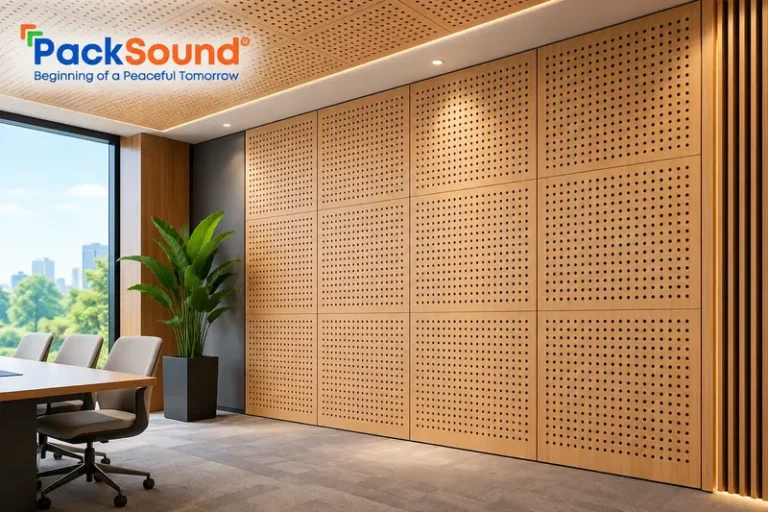
These panels have a wooden face — either with thin slats (grooves) or small holes (perforations). Behind the wood sits a sound-absorbing core. The openings let sound pass through into the absorber.
They look stunning. They add warmth and elegance to any space. Many architects and interior designers choose them when the acoustic solution needs to be beautiful, not just functional.
PackSound offers the grooved wooden slat panel and the perforated panel — both part of the EchoStop® Series, engineered for NRC up to 0.95.
Best for: Auditoriums, home theatres, premium offices, hotels, restaurants.
3. PET Felt Acoustic Panels
PET panels are made from recycled plastic bottles — the same ones you throw in the bin. They are eco-friendly, lightweight, and very flexible. They can be cut into any shape — circles, triangles, hexagons, or completely custom designs.
Because they are thin and colourful, they double up as wall art that also treats the room acoustically. PackSound’s CNC PET panels are available in 30+ colours with custom CNC-cut patterns.
Best for: Co-working spaces, creative agencies, schools, children’s rooms, cafes.
4. Acoustic Ceiling Baffles and Clouds
Not all acoustic panels go on walls. In open-plan offices, large halls, and auditoriums, hanging panels from the ceiling works better — especially when wall space is limited.
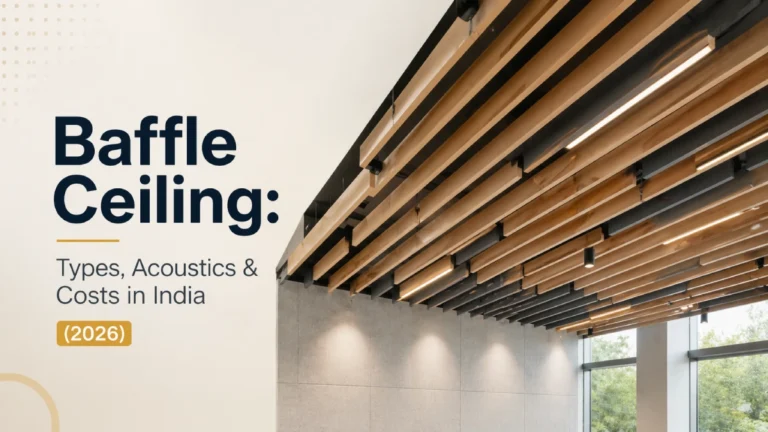
Acoustic baffles hang vertically like fins. Acoustic ceiling clouds hang horizontally like low-floating platforms above the room. Both dramatically reduce noise in large spaces.
Best for: Open offices, cafeterias, restaurants, gyms, warehouses, auditoriums.
5. 3D Luxury Acoustic Wall Panels
For spaces where design and performance must both be exceptional, PackSound’s Auraluxe™ 3D luxury acoustic wall panels deliver a level of visual impact no standard panel can match. These premium systems are used in executive boardrooms, luxury hotels, high-end studios, and flagship retail spaces.
Best for: Premium commercial spaces, luxury interiors, design-forward projects.
Understanding NRC Rating — The Most Important Number in Acoustics
When you talk to any acoustic panel supplier or acoustic company, you will hear the term NRC very quickly. It stands for Noise Reduction Coefficient.
The NRC is a number between 0 and 1.
- NRC 0.00 = the panel absorbs nothing. All sound bounces back.
- NRC 1.00 = the panel absorbs everything. Nothing bounces back.
Most quality acoustic panels in India have an NRC between 0.70 and 0.95.
A panel with NRC 0.85 absorbs 85 out of every 100 sound waves that hit it. Only 15 bounce back. That is excellent performance.
Always ask your acoustic panel supplier for the NRC rating — and ask for a third-party test certificate. Any serious acoustic panels manufacturer in India will have their products tested by a certified lab. If a supplier cannot show you a test report, be careful.
PackSound panels carry NRC values from 0.75 to 0.95 depending on product type and thickness. All test reports come from accredited Indian laboratories.
What a Good Acoustic Panel Supplier Actually Does
Here is something most buyers miss: purchasing acoustic panels is not like buying furniture. You cannot pick ten panels, nail them up, and expect perfect results.
Acoustics is a science. The wrong placement, the wrong coverage, or the wrong panel type gives you mediocre results — even with expensive panels.
A truly great acoustic panel supplier does much more than just supply. Here is what to look for:
Free Site Assessment
Before recommending anything, a good supplier visits your space — or at minimum reviews dimensions, photos, and drawings. They look at room size, construction materials, existing furniture, and how the space is used. All of this affects what you actually need.
Acoustic Design and Planning
Once they understand your space, they plan the treatment. How much coverage? Which walls or ceilings? Which product types? What NRC values to target?
This is where experience separates great acoustic companies from average ones.
Custom Manufacturing
Indian commercial spaces are rarely standard dimensions. If a supplier only sells fixed-size panels, you end up with gaps, odd offcuts, and a weaker result.
A manufacturer-supplier makes panels in any size you need — no compromises.
Professional Installation
Even the best acoustic panels underperform when installed incorrectly. The right mounting method, the correct air gap behind the panel, proper placement at first-reflection points — all of this matters. Professional installation ensures you get the performance you paid for.
After-Sales Support
What happens if a panel gets damaged two years later? A supplier who disappears after delivery is a problem. Look for one who stands behind their work long after installation day.
Questions to Ask Before Choosing an Acoustic Panel Supplier
Before you pay a single rupee, ask these questions:
Do you have NRC test certificates for your products?
This separates genuine acoustic panels manufacturers in India from traders selling uncertified imports.
Do you offer a free site assessment?
You should not pay for an initial consultation from a serious acoustic panel supplier.
Can you make custom sizes?
Almost every real project needs non-standard dimensions. A good acoustic company handles this as routine.
Do you handle installation end-to-end?
Dealing with a separate installer who did not design the system is a recipe for poor results.
What fire safety rating do your panels carry?
Acoustic panels in Indian commercial spaces must meet fire-retardant standards. Ask for certification.
How do your panels perform in high humidity?
Critical if your project is in Mumbai, Chennai, Kochi, or any coastal city. Not all panels hold up equally.
Can I see a portfolio of completed projects?
Past work tells you more than any brochure or catalogue.
What warranty do you offer?
Quality acoustic panels should last 10 to 15 years. Ask what the warranty covers and what happens if something goes wrong.
Why Choosing an Indian Acoustic Panel Supplier Is Smarter
You may have seen international brands at higher prices. Global names are available in India through distributors — but here is the honest picture for most Indian buyers.
Faster delivery.
A local acoustic company can supply panels in days or weeks. Imported panels can take months for custom orders.
Better customisation.
International brands sell fixed sizes in fixed colours. Indian acoustic panels manufacturers like PackSound make any size, any fabric colour, matching your exact interior.
Lower total cost.
Import duties, freight, and distributor margins all sit on top of the actual panel price. A comparable Indian-made panel delivers the same NRC performance at significantly less cost.
Climate-matched products.
Indian acoustic panel suppliers design for Indian conditions — high humidity in coastal cities, variable temperatures, and the specific requirements of Indian concrete construction.
One team, full accountability.
A manufacturer-supplier-installer handles the whole job under one contract. You have one point of contact from site assessment to project handover.
Easier communication.
Local teams, your time zone, your language, site visits on short notice — this is a practical advantage that numbers on a brochure cannot reflect.
PackSound serves projects across Delhi NCR, Mumbai, Bengaluru, Hyderabad, Chennai, Pune, and cities nationwide. Over 1900+ completed projects across studios, offices, auditoriums, schools, hospitals, hotels, and cinema halls.
Acoustic Panels for Different Spaces: What You Actually Need
Every space is different. Here is a practical guide matched to the most common use cases.
Corporate Offices and Open-Plan Workspaces
The biggest challenge in modern offices is ambient noise. Open-plan layouts are great for collaboration but terrible for concentration.
The winning combination: fabric-wrapped wall panels combined with suspended acoustic ceiling baffles. This pairing can reduce noise levels by 6 to 10 dB — roughly the difference between a noisy restaurant and a quiet library.
PackSound delivered a full acoustic treatment for a 12,000 sq. ft. open-plan office in Gurugram, combining wall panels and ceiling baffles to cut ambient noise by over 8 dB. Speech clarity improved across every workstation.
Recording Studios and Podcast Studios
Studio acoustics demand precision. You need broadband absorption across all frequencies — not just the high frequencies that foam handles. You also need some diffusion so the room does not sound unnaturally dead.
A typical studio treatment includes: fabric-wrapped panels on primary walls, bass traps in all four corners, a ceiling cloud above the mixing position, and diffuser panels on the rear wall.
PackSound designed and installed a complete studio soundproofing system for a premier podcasting studio in Mumbai — achieving near-zero reverberation and professional-grade sound isolation.
Conference Rooms and Meeting Rooms
The goal is speech clarity. Panels should target the mid-frequency range where voice intelligibility lives. A reverberation time (RT60) of around 0.4 to 0.6 seconds is ideal for a standard meeting room.
Fabric-wrapped panels on two or three walls, combined with a ceiling cloud, typically hits this target.
Auditoriums and School Halls
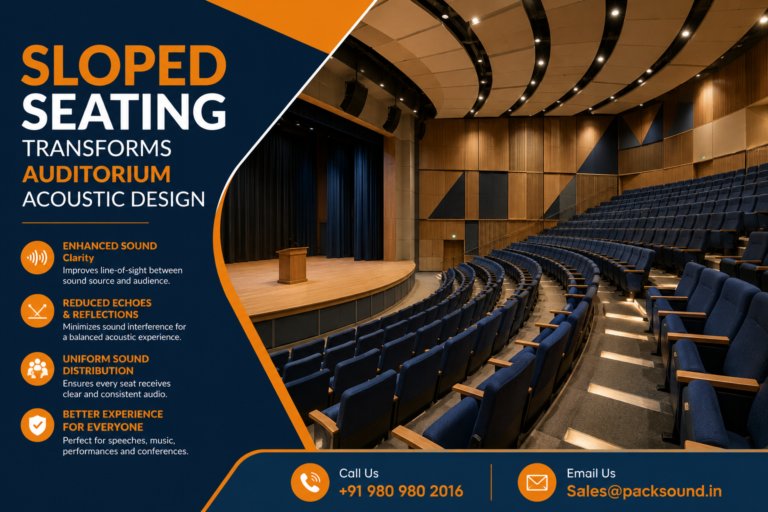
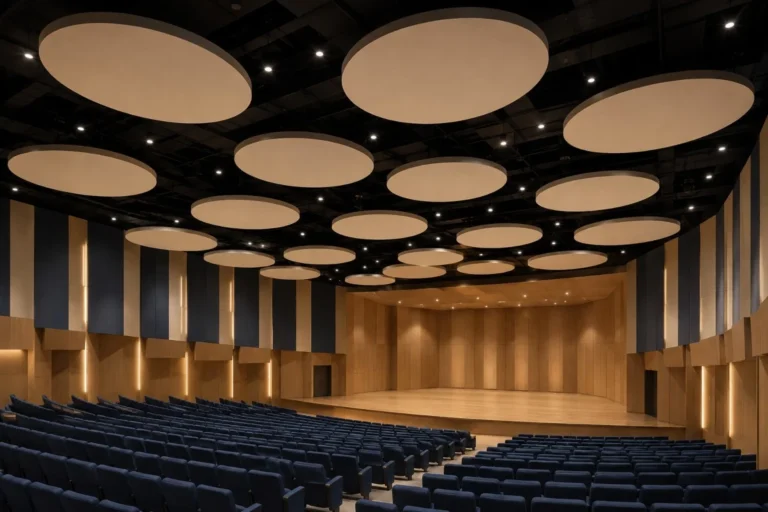
Large spaces need large-scale treatment. Our dedicated auditorium acoustics service covers the full picture — wooden perforated panels or fabric panels on side and rear walls, combined with suspended baffles, bring reverberation down to the right level for speech or music.
PackSound transformed a 450-seat school auditorium in Bengaluru using perforated wooden panels and suspended baffles, delivering optimal RT60 for both speech and musical performances — as per IS:4954 guidelines.
Home Theatres
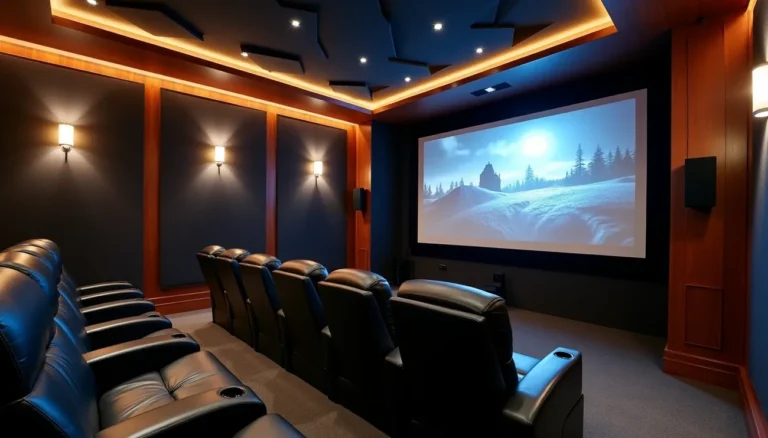
Cover 30 to 40% of your wall surface area with panels. Focus on the first reflection points — the side walls at the spot where sound from your speakers first bounces toward your seat. A ceiling cloud above the seating position makes a huge difference.
Fabric-wrapped panels work well for performance and looks. For a premium finish, grooved wooden slat panels on the front wall behind the screen add elegance alongside excellent sound absorption.
Restaurants, Cafes, and Hotels
Hospitality spaces have a unique challenge: they need to control noise without making the place feel dead. Light absorption combined with some diffusion maintains a lively ambience while reducing the uncomfortable din of a busy dining room.
Acoustic ceiling clouds are often the smartest solution here — they treat the space effectively without covering walls the owner wants kept visible.
Acoustic Panel Price in India: What Should You Expect to Pay?
Pricing for acoustic panels in India varies based on material, thickness, finish, and supplier. Here is a general guide:
| Panel Type | Price Range (per sq. ft.) | Best For |
|---|---|---|
| Acoustic Foam | ₹150 – ₹400 | Basic home setups |
| PET Felt Panels | ₹350 – ₹700 | Eco-friendly, design-led spaces |
| Fabric-Wrapped Panels | ₹500 – ₹1,000 | Offices, studios, commercial |
| Wooden Acoustic Panels | ₹800 – ₹1,500 | Premium spaces, auditoriums |
One important note: always think about cost per year of service, not just the upfront price per sq. ft.
A panel costing ₹700/sq. ft. that lasts 15 years is far cheaper than a ₹300/sq. ft. panel that deteriorates in 3 years — especially in humid Indian conditions. Ask every acoustic panel supplier about expected service life before making a decision based on price alone.
Why PackSound Is One of India’s Most Trusted Acoustic Panel Suppliers
PackSound is not just a panel seller. It is a complete acoustic company — manufacturing, designing, supplying, and installing acoustic systems across the country.
Made in India, engineered for India. All panels are manufactured in Greater Noida. Products are built for Indian climate conditions — including humidity resistance for coastal locations.
NRC-certified products. Every panel range is independently tested. NRC values from 0.75 to 0.95, backed by third-party lab certificates you can read and verify.
Fire-retardant as standard. All commercial panels meet Indian fire safety standards. FR certification is provided without asking.
Custom sizes as standard. No extra charges for non-standard dimensions. This is how every project should work.
Free site assessment and acoustic consultation. PackSound’s technical team visits your space, assesses existing conditions, and recommends the right solution — before any order is placed and with no obligation.
End-to-end service. Contact us and get design, supply, and professional installation under one roof. One team. One contract. Full accountability.
Pan-India reach. Projects completed across Delhi NCR, Mumbai, Bengaluru, Hyderabad, Chennai, Pune, and cities nationwide.
1900+ completed projects. Offices, recording studios, podcast studios, schools, auditoriums, hospitals, hotels, restaurants, cinemas, and places of worship.
4.9/5 customer satisfaction rating. Consistent feedback from architects, interior designers, studio owners, and corporate facility managers.
Common Mistakes People Make When Buying Acoustic Panels
Avoid these costly errors.
Buying without a site assessment. Every room is different. A supplier who sells you panels without understanding your space does not have your best interests in mind. Always insist on a consultation first.
Choosing on price alone. The cheapest acoustic panels in India almost always carry poor NRC ratings, low-quality materials, and short service lives. Replacing cheap panels in three years costs far more than buying quality ones upfront.
Treating only the walls and forgetting the ceiling. The ceiling is often the most reflective surface and the most commonly ignored. A ceiling cloud above a desk or listening position can deliver more improvement per rupee than adding more wall panels.
Skipping bass traps. Low-frequency problems are the most damaging and hardest to fix after the fact. If your space has a boomy or muddy sound, wall panels alone will not solve it. Corner bass traps are essential in any serious installation.
Not asking for test certificates. Any acoustic panels manufacturer in India who cannot produce an NRC test certificate from an accredited lab is either selling uncertified products or cannot prove what they claim. Always ask.
Working with a product-only supplier. A supplier who delivers panels and walks away leaves you responsible if placement is wrong or performance disappoints. Choose an acoustic panel supplier who owns the full project.
How to Get Started With PackSound
Getting the right acoustic treatment for your space is simple when you work with the right acoustic panel supplier.
Step 1: Free Consultation. Contact PackSound and share your space details — room size, how it is used, what problems you are facing. The team responds quickly.
Step 2: Site Assessment. PackSound’s technical team visits your site — or reviews drawings and photos for remote projects. They measure, evaluate, and identify exactly what is needed.
Step 3: Acoustic Design. You receive a clear recommendation — which panels, where they go, how much coverage, and what NRC to target. Everything is explained before any money changes hands.
Step 4: Custom Manufacturing. Panels are made to the exact dimensions your project needs. Custom sizes, custom fabric colours, custom finishes — all in-house.
Step 5: Professional Installation. PackSound’s installation team handles every detail — correct mounting, proper air gaps, precise placement for maximum performance.
Step 6: Project Handover. Installation complete. The team walks you through the results. You get a space that sounds exactly as it should — and a supplier you can call if anything ever needs attention later.
Explore the full product range or get in touch today for a free consultation.
Frequently Asked Questions
How much of my wall space needs acoustic panels?
For most offices and conference rooms, 25 to 40% wall coverage is a solid starting point. Your acoustic consultant will calculate the exact amount for your specific space.
Can acoustic panels block sound from entering my room?
No. Acoustic panels reduce echo and reverberation inside a room — they do not block sound transmission from outside. Soundproofing requires different products like mass-loaded vinyl and acoustic doors. Many spaces need both.
How long do acoustic panels last?
Quality fabric-wrapped panels from a reputable acoustic panel supplier last 10 to 15 years or more. Cheap foam panels may need replacement within 2 to 3 years, especially in humid conditions.
Do acoustic panels damage walls when removed?
Properly installed panels cause minimal wall damage. Most mounting systems use brackets or French cleats. Your installer should advise on the best method for your wall type.
Are acoustic panels safe for children’s spaces?
Yes. PackSound’s panels use safe, non-toxic materials. FR-rated fabric-wrapped panels meet fire safety standards and are used in schools and children’s facilities across India.
Can I choose the colour and finish?
Yes. Fabric-wrapped panels come in 20+ fabric colours. Wooden panels come in multiple wood grain finishes. CNC PET panels are available in 30+ colours with custom-cut patterns.
Final Thoughts
Sound is invisible. But its impact on your daily life is very real.
A noisy office drains productivity. A badly treated studio kills creativity. A reverberant classroom makes teaching exhausting. A boomy conference room makes decisions harder than they need to be.
Acoustic panels are not a luxury. For any professional, creative, or educational space, they are a necessity.
But the panels alone are only half the story. The other half is choosing the right acoustic panel supplier — one who understands your space, designs a proper solution, manufactures the right products, and installs everything correctly.
PackSound does all of that. From free consultation to finished installation, the team handles every step. Over 1900+ completed projects across acoustic panels India — offices, studios, auditoriums, schools, hospitals, hotels, and cinemas.
As one of the leading acoustic panels manufacturers in India, PackSound combines NRC-certified products, pan-India service, custom manufacturing, and end-to-end project support — all under one roof.
If you want a space that sounds as good as it looks, get in touch today.
PackSound is a Made-in-India acoustic solutions company. All panels are NRC-certified, fire-retardant, and backed by professional installation across India. Visit packsound.in for a free consultation.