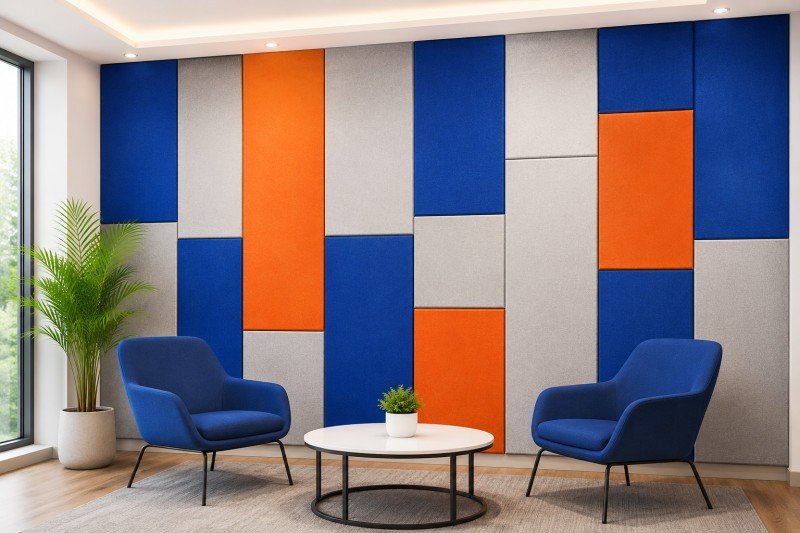
Walk into a busy open-plan office, a recording studio, or a hospital waiting room, and you will immediately sense the difference between a space that is acoustically managed and one that is not. Noise fatigue, reduced concentration, and poor communication are not just minor inconveniences; they directly affect productivity, well-being, and brand perception.
Acoustic panels are one of the most effective, science-backed solutions to address these challenges. At Packsound.in, we have worked with hundreds of commercial clients across India, and the evidence is clear: investing in acoustic treatment is investing in performance.
What Are Acoustic Panels and How Do Acoustic Panels Work?
Acoustic panels are purpose-built sound-absorbing surfaces installed on walls, ceilings, or as free-standing units to reduce unwanted noise, control reverberation, and improve speech clarity within a space. When sound waves travel through a room, they bounce off hard surfaces like concrete, glass, and drywall, creating echoes and a buildup of ambient noise called reverberation. Acoustic panels interrupt this cycle by absorbing those waves into their porous or structured core material, converting sound energy into negligible heat energy.
The effectiveness of a panel is measured by its Noise Reduction Coefficient (NRC), where a rating of 1.0 means the panel absorbs 100% of sound at a given frequency. High-quality panels from Packsound.in typically achieve NRC ratings between 0.75 and 1.0, making them highly suitable for demanding commercial environments.
Acoustic Panels for Offices and Studios: Where They Matter Most
Acoustic Panels for Offices
In modern open-plan offices, a single loud conversation can disrupt an entire floor. Studies show that workplace noise is one of the top three productivity killers for knowledge workers.
Acoustic panels for offices are typically installed as:
- Wall-mounted fabric panels behind workstations
- Ceiling baffles above collaborative zones
- Partition panels between desks
- Decorative feature walls in reception or meeting rooms
A client case from our portfolio: a 150-seat BPO center in Noida reported a 34% drop in employee error rates after Packsound.in installed a combination of wall-mounted and ceiling-hung acoustic panels throughout their operations floor.
Acoustic Panels for Studios
For recording studios, podcasting booths, and broadcast environments, acoustic panel placement is even more critical. The goal shifts from simply reducing noise to precisely shaping the sonic environment. Flutter echo, comb filtering, and low-frequency buildup can compromise audio quality entirely.
Acoustic panels for studios are strategically placed at:
- First reflection points on side walls
- Behind the mix position for bass trapping
- On the ceiling cloud above the recording area
Packsound.in provides studio-grade panels with customized NRC profiles tailored to room dimensions and usage type.
Acoustic Panels Wooden: Combining Aesthetics with Performance
One of the most popular product categories at Packsound.in is acoustic panels wooden. These are perforated or slatted wood panels backed by an absorptive layer, offering a premium aesthetic without sacrificing functionality.
Acoustic metal panels work on a resonant absorption principle. Sound enters through the perforations or gaps between slats, is absorbed by the backing material, and a portion is reflected back in a controlled manner, creating a balanced room sound rather than a dead, over-absorbed environment.
They are ideal for:
- Corporate boardrooms and executive offices
- Hotel lobbies and restaurant dining areas
- Auditoriums and conference halls
- High-end retail interiors
The visual warmth of natural wood finishes makes acoustic panels wooden a preferred choice for architects and interior designers who need solutions that are both functional and distinctive.
Key Benefits of Acoustic Panels in Commercial Spaces
| Key Benefit | Why It Matters |
|---|---|
| Improved Speech Clarity | Critical in conference rooms, courtrooms, and classrooms where communication accuracy is non-negotiable. |
| Reduced Stress and Fatigue | Lower ambient noise levels are directly linked to reduced cortisol levels in employees. |
| Regulatory Compliance | Many commercial spaces in India are now expected to meet minimum acoustic standards, particularly in healthcare and education sectors. |
| Brand and Experience Enhancement | A well-designed acoustic environment communicates professionalism and attention to detail to clients and visitors. |
Conclusion: Acoustic Panels Are a Strategic Investment
Noise is not just a comfort issue; it is a business issue. Whether you are outfitting an office, studio, restaurant, or public building, acoustic panels deliver measurable improvements in productivity, communication, and user experience.
At Packsound.in, our team of acoustic engineers and interior design specialists works with you from assessment through installation, ensuring every panel is placed for maximum impact. With options spanning fabric-wrapped panels, wooden slat systems, and custom printed designs, there is a solution for every space and every budget.
Contact Packsound.in today to schedule a free acoustic assessment for your commercial space.
Frequently Asked Questions
Q1. What is the difference between soundproofing and acoustic panels?
Soundproofing prevents sound from entering or leaving a room, typically requiring structural changes like mass-loaded vinyl or double-glazed windows. Acoustic panels control sound within a room by reducing echo and reverberation. Most commercial spaces need both to varying degrees.
Q2. How many acoustic panels do I need for my office?
A general rule is to treat 15 to 25 percent of the total wall and ceiling surface area for typical offices. Packsound.in provides free room analysis to give you an exact recommendation based on your room dimensions, ceiling height, and usage type.
Q3. Are acoustic panels wooden suitable for humid environments?
Properly sealed and finished acoustic panels wooden can be used in moderately humid environments. However, for areas like kitchens or outdoor-adjacent spaces, we recommend polyester fiber panels with moisture-resistant fabric wrapping.
Q4. How do acoustic panels work in open-plan spaces?
In open-plan offices, panels work by reducing the reverberation time (RT60) of the room. Shorter reverberation means speech does not linger and mix with new sound, making conversations cleaner and reducing the overall noise level that accumulates during the workday.
Q5. What acoustic wall panels material is best for fire safety?
Mineral wool core panels with Class A fire-rated fabric coverings are the preferred choice for commercial spaces with strict fire safety requirements. All Packsound.in commercial panels comply with relevant IS and international fire rating standards.
Q6. Can acoustic panels be customized in appearance?
Yes. Packsound.in offers custom printed acoustic panels, a wide range of fabric colors, and acoustic panels wooden in multiple wood veneer finishes so that acoustic treatment can be seamlessly integrated into your interior design scheme.+

Similar Posts
Polyester Acoustic Panels: Benefits, Cost & Where to Use Them
100% Recycled PET Fiber | NRC up to 0.95 | 30+ Colours | Fire-Retardant | Supply & Installation PAN India Walk into most Indian offices, co-working spaces, and meeting rooms today and you will encounter one of two acoustic realities: either the room echoes so badly that every conversation bleeds into the next, or someone…
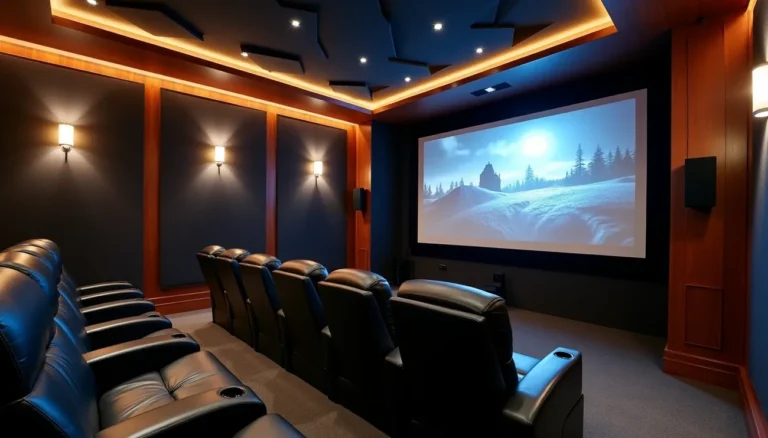
Acoustic Panels for Home Theater – Cinema Sound at Home | India
Acoustic panels for home theater rooms make all the difference in creating truly immersive cinematic experiences at home. Most enthusiasts spend their money on high-end speakers and amplifiers, but your viewing space\’s acoustics is a vital part of sound quality. Sound waves bounce off hard surfaces in untreated rooms. This creates echoes and reverberations that make…
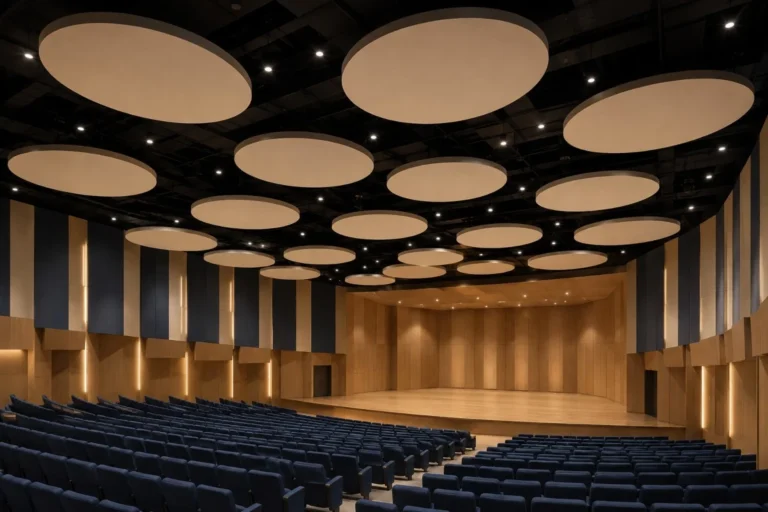
Acoustic Ceiling Clouds for Auditoriums
Intro: Every auditorium manager knows that a packed hall means little if the audience cannot hear clearly. Acoustic Ceiling Clouds for Auditoriums solve this exact problem by hanging sound-absorbing panels overhead, cutting echo, and giving speech and music the clarity they deserve without disturbing the architecture below. What Are Acoustic Ceiling Clouds for Auditoriums? An…
Best Baffle Ceiling Material for Soundproofing Offices – Detailed Guide
Modern offices are becoming increasingly open, collaborative, and visually appealing. Unfortunately, open layouts often create one major problem: noise. Conversations, phone calls, HVAC systems, and movement across large floor plates generate excessive reverberation that affects productivity and speech clarity. This is where a well-designed Baffle Ceiling system becomes one of the most effective acoustic solutions…
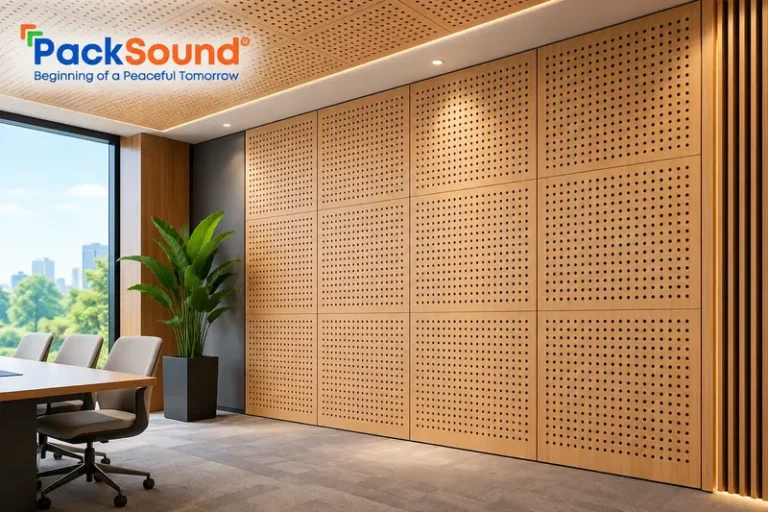
Perforated Acoustic Panels: Types, Uses | Packsound
Perforated Acoustic Panels are engineered building materials designed to control echo, reverberation, and unwanted noise inside a room. Their surface is punched with evenly spaced holes that let sound waves pass through to an absorptive backing layer, where the energy is trapped instead of bouncing back into the space. Widely used across offices, auditoriums, studios,…