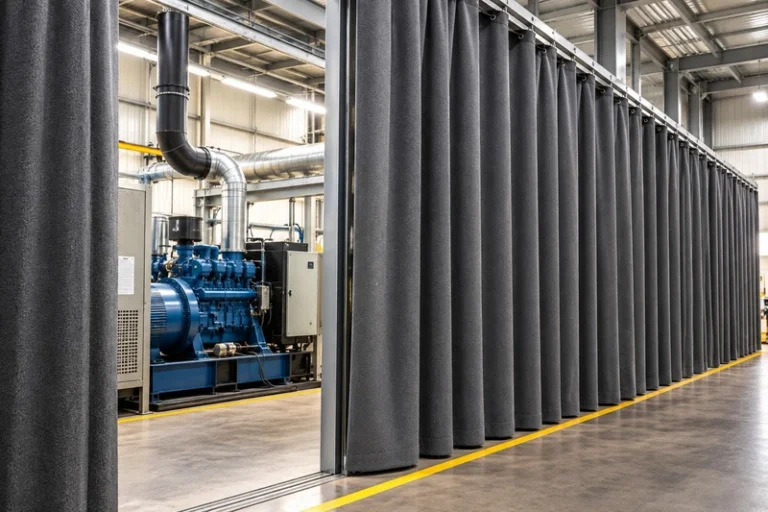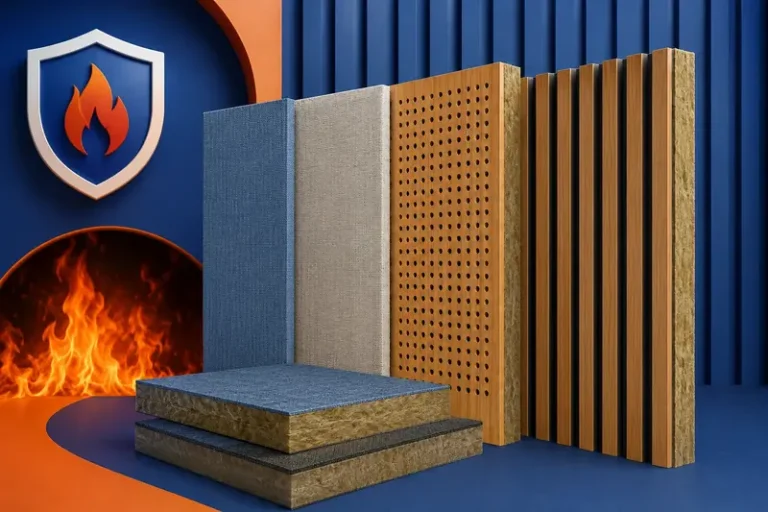
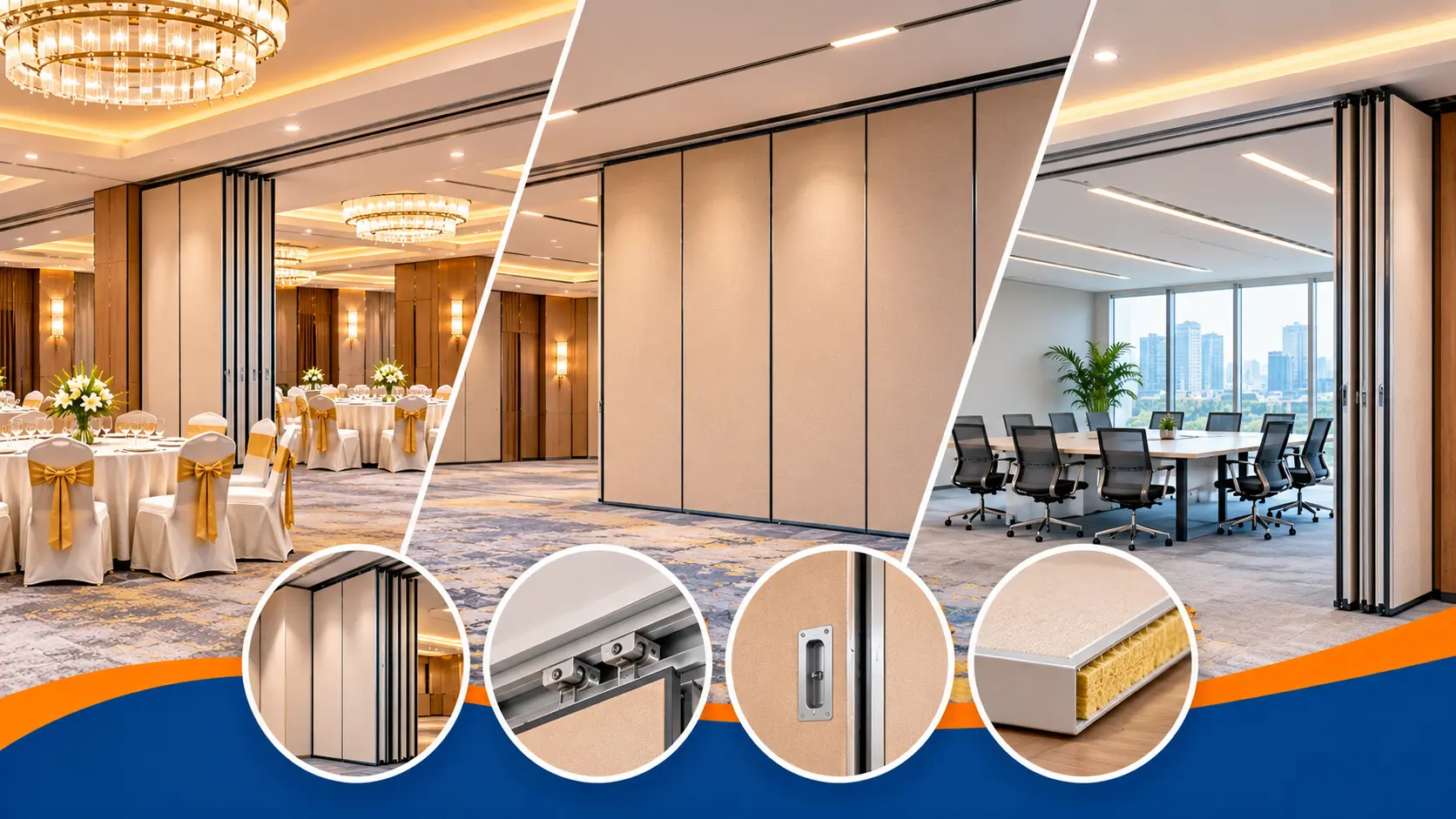
A hotel sales team gets two enquiries for the same Saturday evening: a 400 guest reception and a 60 person corporate dinner. With one fixed ballroom, they can only say yes to one. With a collapsible wall partition, they can take both.
That is the simple promise of a collapsible wall. It turns one large room into two or more smaller ones, and back again, in a matter of minutes. This guide from PackSound explains how these walls work, how much sound they really stop, and what to check before you buy one for a commercial space in India.
What Is a Collapsible Wall Partition?
A collapsible wall partition is a full height movable wall made from a row of panels hung from a ceiling track. When the wall is needed, the panels are pulled out and locked together. When it is not, they collapse back into a compact stack at the side of the room or in a hidden parking bay.
The same product is also called a retractable partition wall, an operable wall, a movable wall partition or a sliding folding partition. Different suppliers use different names, but they describe the same idea: a real wall that you can open and close whenever the space needs to change.
How a Collapsible Wall Works
Every commercial collapsible wall has four main parts.
- Ceiling track. A heavy aluminium track is fixed to the slab or to steel support above the false ceiling. Top hung systems carry all the weight from above, so there is no track on the floor to trip over.
- Each panel is usually 800 to 1200 mm wide and 85 to 100 mm thick, with a strong frame and an acoustic core inside.
- Carriers with ball bearing rollers let one person move each panel smoothly along the track.
- Retractable seals press against the ceiling and the floor once a panel is in place. This is what turns a line of panels into a wall that blocks sound.
If you want more detail on the mechanism, our post on how sliding partitions work walks through each part.
Collapsible Wall vs Other Partition Options
| Option | Moves? | Sound Insulation | Best For |
|---|---|---|---|
| Acoustic collapsible wall | Yes, in minutes | High, up to STC 55 | Banquet halls, ballrooms, conference centres |
| Glass collapsible wall | Yes | Low to medium | Offices and restaurants that want light |
| Lightweight room divider | Yes | Low | Quick zoning of open areas |
| Drywall partition | No | High | Permanent cabins and meeting rooms |
| Acoustic screen | Free standing or hung | Absorbs, does not block | Open office desk zones |
The table makes one point clear. If two groups need to use the space at the same time without hearing each other, only an acoustic collapsible wall or a fixed drywall will do the job. Lightweight dividers and screens help with privacy and echo, but not with blocking sound.
Where Collapsible Walls Are Used
Banquet Halls and Hotel Ballrooms
This is the most common use. A ballroom that can be split earns more from the same floor area, because it can host a wedding, a product launch and a board dinner on the same day. Read how hotels plan these spaces in our post on sliding partitions in hotel banquet halls.
Conference and Training Centres
Training centres use collapsible walls to switch between one big session and several breakout rooms. Here the wall moves often, so smooth rollers and easy handling matter as much as the acoustic rating.
Colleges and Institutions
Seminar halls in colleges can be divided for exams, parallel lectures or departmental meetings, and opened up again for convocations and events.
Corporate Offices
Offices divide cafeterias and large meeting rooms so the same space can host a town hall in the morning and team meetings in the afternoon.
How Much Sound Does a Collapsible Wall Stop?
Sound insulation is measured as STC, or Sound Transmission Class. The higher the number, the less sound passes through.
- STC 40 to 45 blocks normal speech but loud voices are still heard.
- STC 48 to 50 suits training rooms and meeting rooms.
- STC 52 to 55 suits banquet halls and ballrooms where one side may have music or a microphone.
PackSound acoustic collapsible walls reach up to STC 55. Keep in mind that the wall is only as good as the weakest path around it. If the space above the false ceiling is left open, sound simply travels over the top. Our guide to the STC rating of sliding partitions explains how to avoid this.
What Affects the Cost
Prices for collapsible wall partitions in India vary widely, and the difference usually comes from a few factors.
- Acoustic rating. A wall built for STC 55 needs a denser core, more seals and a stronger frame.
- Taller walls need stronger panels, heavier tracks and more steel above the ceiling.
- Laminate is the most affordable. Fabric, veneer and PET felt cost more.
- Stacking layout. Remote parking bays and curved tracks add hardware and labour.
- Pass doors, vision panels and locks are priced separately.
- Support steel. Check whether the structure above the ceiling is included. Low quotes often leave it out.
For a detailed look at pricing, see our sliding folding partition buyer’s guide.
Five Questions to Ask Before You Buy
- What STC rating does the wall achieve, and is there a test reference?
- Is the support steel above the false ceiling included in the quote?
- How will the space above the track be sealed to stop sound travelling over?
- Where will the panels stack, and will that area stay clear of exits and doors?
- Who installs the wall, and what warranty covers the track, rollers and seals?
Why PackSound
PackSound designs, manufactures and installs acoustic partitions for commercial and institutional buildings across India. Our collapsible walls use 100 mm panels, reach STC 55, stand up to 7000 mm high and come in side, centre or remote parking layouts. Every panel is made to order at our own factory in Greater Noida, in laminate, fabric, veneer or PET finishes.
Our partitions are installed in hotels, banks and institutions across the country. You can see examples on our projects page, and pair the partition with acoustic wall panels or acoustic ceiling tiles so each smaller room still sounds clear.
Frequently Asked Questions
What is a collapsible wall partition?
It is a full height movable wall made of panels that slide on a ceiling track and collapse into a stack when not in use, so one room can become two or more.
Is a collapsible wall soundproof?
An acoustic collapsible wall rated STC 52 to 55 blocks most speech and greatly reduces music. Lightweight and glass versions offer much less sound insulation.
Is a collapsible wall the same as an operable wall?
Yes. Collapsible wall, operable wall, movable wall partition and sliding folding partition all describe the same type of product.
Does a collapsible wall need a floor track?
Top hung systems do not. The ceiling track carries the weight and retractable seals close the gap at floor level.
Can a collapsible wall include a door?
Yes. A pass door can be built into one panel so people can move between rooms without opening the whole wall.
How tall can a collapsible wall be?
PackSound panels can go up to 7000 mm high, depending on the structure above.
Plan Your Collapsible Wall
If you are planning a banquet hall, ballroom, training centre or conference floor, bring in your partition supplier at the design stage. Share your drawings and ceiling height with the PackSound team through our contact page or on WhatsApp, and we will suggest the right panel, STC rating and layout for your space.