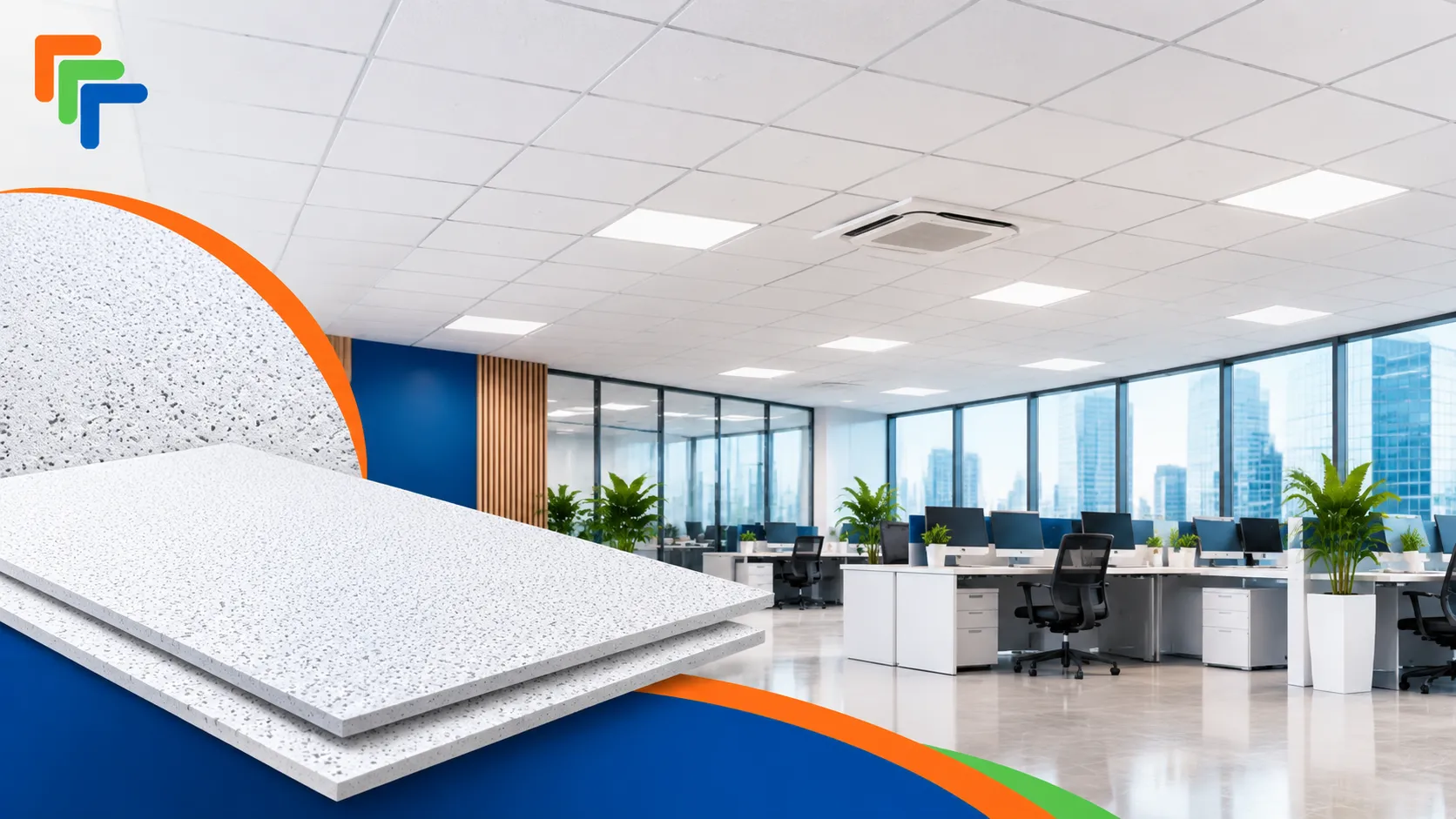
Quick answer: Lightweight ceiling tiles are false ceiling tiles that weigh roughly 2 to 4 kg per square metre, about half the weight of a typical mineral fiber tile. They drop into a standard T-grid, put less load on the structure and can still absorb sound well. PackSound FeatherLite tiles weigh under 4 kg/m² with NRC 0.85, and AirLite tiles weigh just 2.74 kg/m² with NRC 0.85. Both are made in India by PackSound for offices, showrooms, classrooms and retail spaces.
A ceiling is rarely the first thing a project team thinks about, but it ends up being one of the biggest surfaces in any commercial interior. Heavy tiles sag over time, load the grid, slow down installation and make maintenance harder. That is why more architects and facility managers now ask for lighter tiles that still look premium and control noise.
This guide covers what these tiles are, the main types, NRC and fire ratings, and how to pick the right one for your project.
What Are Lightweight Ceiling Tiles?
Lightweight ceiling tiles are modular tiles, usually 600 x 600 mm or 600 x 1200 mm, made from low density cores such as UHAVC (ultra high absorption vegetal composite), PET felt or thin laminated boards. They sit in a suspended T-grid like any other grid ceiling tile, but they are much lighter to lift, carry and fix.
In a commercial building with thousands of tiles, that difference adds up quickly. A lighter ceiling means less load on hangers and slab, faster work at height and easier access to services above.
Why Weight Matters in a Commercial Ceiling
- Less load on the structure: useful on upper floors, mezzanines and retrofit projects where extra load is a concern.
- Less sagging: light tiles hold their shape better over years of service, especially in humid cities.
- Faster installation: installers handle more tiles per hour with less fatigue and lower risk.
- Easy maintenance: a light tile lifts out in seconds for AC, fire and electrical access.
- Lower transport and handling costs: fewer breakages and lighter loads on site.
Types of Lightweight Ceiling Tiles
| Type | Typical Weight | NRC | Best For |
|---|---|---|---|
| UHAVC Acoustic Tiles | 2.5 to 3 kg/m² | Up to 0.85 | Offices, classrooms, retail |
| Mica Laminate Micro Perforated Tiles | Under 4 kg/m² | Up to 0.85 | Boardrooms, showrooms, studios |
| PET Felt Tiles | 1.5 to 3 kg/m² | 0.5 to 0.8 | Budget offices, coloured ceilings |
| Mineral Fiber Tiles (For Comparison) | 5 to 7 kg/m² | 0.5 to 0.85 | Large standard grid ceilings |
| Gypsum Tiles (For Comparison) | 8 to 10 kg/m² | Low unless perforated | Basic false ceilings |
1. UHAVC Ceiling Tiles
UHAVC tiles have a high-density fibre core that traps sound inside the tile. PackSound AirLite ceiling tiles are 10 mm thick, 595 x 595 mm, and weigh only 2.74 kg/m². They reach NRC 0.85, stay flat up to 95% RH and carry a Class A / B-s1, d0 fire rating. They are also low VOC and formaldehyde free as per ISO 16000.
Best for: open offices, classrooms, retail stores and humid coastal cities.
2. Micro Perforated Laminate Tiles
These tiles combine a decorative face with a sound absorbing core. PackSound FeatherLite ceiling tiles have a 25 mm UHAVC core with a mica laminate face and 1 to 1.8 mm micro perforations. They weigh under 4 kg/m², reach NRC 0.85 without any extra backing and come in 595 x 595 mm or 595 x 1195 mm modules with a concealed square edge.
Best for: boardrooms, showrooms, studios and premium auditoriums where the ceiling needs to look high end.
3. PET Felt Tiles
PET felt tiles are made from recycled polyester fibres. They are light, colourful and easy to cut, though their NRC is usually lower than UHAVC tiles at the same thickness.
Best for: budget office fit-outs, cafeterias and branded colour ceilings.
NRC Explained: Light Does Not Mean Weak
NRC, or Noise Reduction Coefficient, runs from 0 to 1 and shows how much sound a surface absorbs. An NRC of 0.85 means the tile absorbs about 85 percent of the sound that hits it.
Many people assume heavy tiles absorb more sound. In practice, absorption depends on the porous core and perforations, not on weight. Well made light tiles can match or beat heavier mineral fiber tiles on NRC.
| Space | Recommended Ceiling NRC |
|---|---|
| Open Office | 0.75 or higher |
| Meeting Rooms and Cabins | 0.7 or higher |
| Classrooms and Training Rooms | 0.8 or higher |
| Retail and Showrooms | 0.6 to 0.8 |
| Call Centres | 0.85 or higher |
For more on ratings, read our guide on NRC vs STC rating.
Lightweight vs Mineral Fiber Ceiling Tiles
| Feature | Lightweight UHAVC / Laminate | Mineral Fiber |
|---|---|---|
| Weight | 2.5 to 4 kg/m² | 5 to 7 kg/m² |
| NRC | Up to 0.85 | 0.5 to 0.85 |
| Humidity Resistance | Up to 95% RH (AirLite) | Varies, can sag |
| Finish | Painted, laminate, micro perforated | Textured white |
| Handling | Easy, low breakage | Brittle edges |
Soft fiber and mineral fiber ceiling tiles are still a good budget choice for very large standard ceilings. Lighter tiles make more sense where load, humidity, finish or speed of work matter.
Benefits of Lightweight Ceiling Tiles in Commercial Spaces
- Strong sound absorption: NRC up to 0.85 for calmer offices and clearer speech.
- Structural ease: lower dead load on the slab and grid.
- Humidity resistance: stable tiles in kitchens, gyms and coastal cities.
- Fire safety: Class A and B-s1, d0 options for commercial compliance.
- Healthier interiors: low VOC and formaldehyde free options.
- Clean look: painted, laminate and micro perforated finishes.
- Quick access: tiles lift out easily for service work.
Where to Use Lightweight Ceiling Tiles
- Corporate offices and co-working spaces
- Boardrooms and conference rooms
- Classrooms, colleges and training centres
- Showrooms and retail stores
- Hospitals, clinics and diagnostic centres
- Hotel lobbies, cafeterias and food courts
How to Choose the Right Tile
- Check the grid: most Indian offices use a 600 x 600 mm T-grid. Confirm tile size and edge profile before ordering.
- Set an NRC target: use the table above based on how the room is used.
- Check humidity: choose tiles rated up to 95% RH for wet or coastal areas.
- Confirm fire rating: ask for Class A or B-s1, d0 test reports.
- Pick a finish: painted white for large floors, laminate for premium rooms.
- Ask for test data: NRC should be tested as per ISO 354, ASTM C423 or IS 8225.
Lightweight Ceiling Tiles Price: What Affects Cost
The final cost per square foot depends on the core material, thickness, finish, edge profile, grid type and order size. Laminate and micro perforated tiles cost more than plain painted tiles. Large orders and standard sizes usually bring the price down. For an accurate quote, share your ceiling area and drawings with the PackSound team.
Complete the Room Acoustics
A good ceiling handles most of the echo, but walls matter too. Pair your ceiling with acoustic wall panels for meeting rooms and auditoriums. You can explore the full range of acoustic ceiling tiles for other options such as metal, baffles and clouds.
Frequently Asked Questions
What are lightweight ceiling tiles?
They are modular false ceiling tiles that weigh about 2 to 4 kg/m², made from cores such as UHAVC or PET, and designed for standard T-grid ceilings.
Do lightweight ceiling tiles absorb sound well?
Yes. Absorption depends on the core and perforations, not weight. PackSound FeatherLite and AirLite tiles both reach NRC 0.85.
Which is the lightest acoustic ceiling tile from PackSound?
AirLite is the lightest at 2.74 kg/m². FeatherLite weighs under 4 kg/m² and adds a premium mica laminate face.
Are lightweight ceiling tiles fire rated?
Yes. AirLite is Class A / B-s1, d0 rated. FeatherLite is Class B-s1, d0, with ASTM E84 Class A on request.
Can lightweight ceiling tiles be used in humid areas?
Yes. AirLite tiles stay flat and stable up to 95% RH, which suits kitchens, gyms and coastal cities.
Do they fit a standard 600 x 600 mm grid?
Yes. Both AirLite and FeatherLite come in 595 x 595 mm modules for a standard 600 x 600 mm T-grid.
Get Lightweight Ceiling Tiles from PackSound
PackSound manufactures FeatherLite and AirLite tiles in India and supplies them for commercial projects across the country. Share your ceiling plan, room use and NRC target, and get a quick recommendation and quote for the right lightweight ceiling tiles for your space.