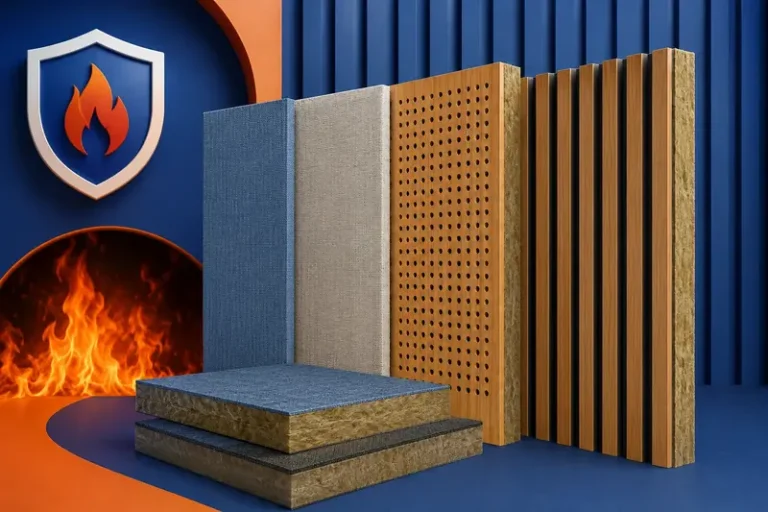
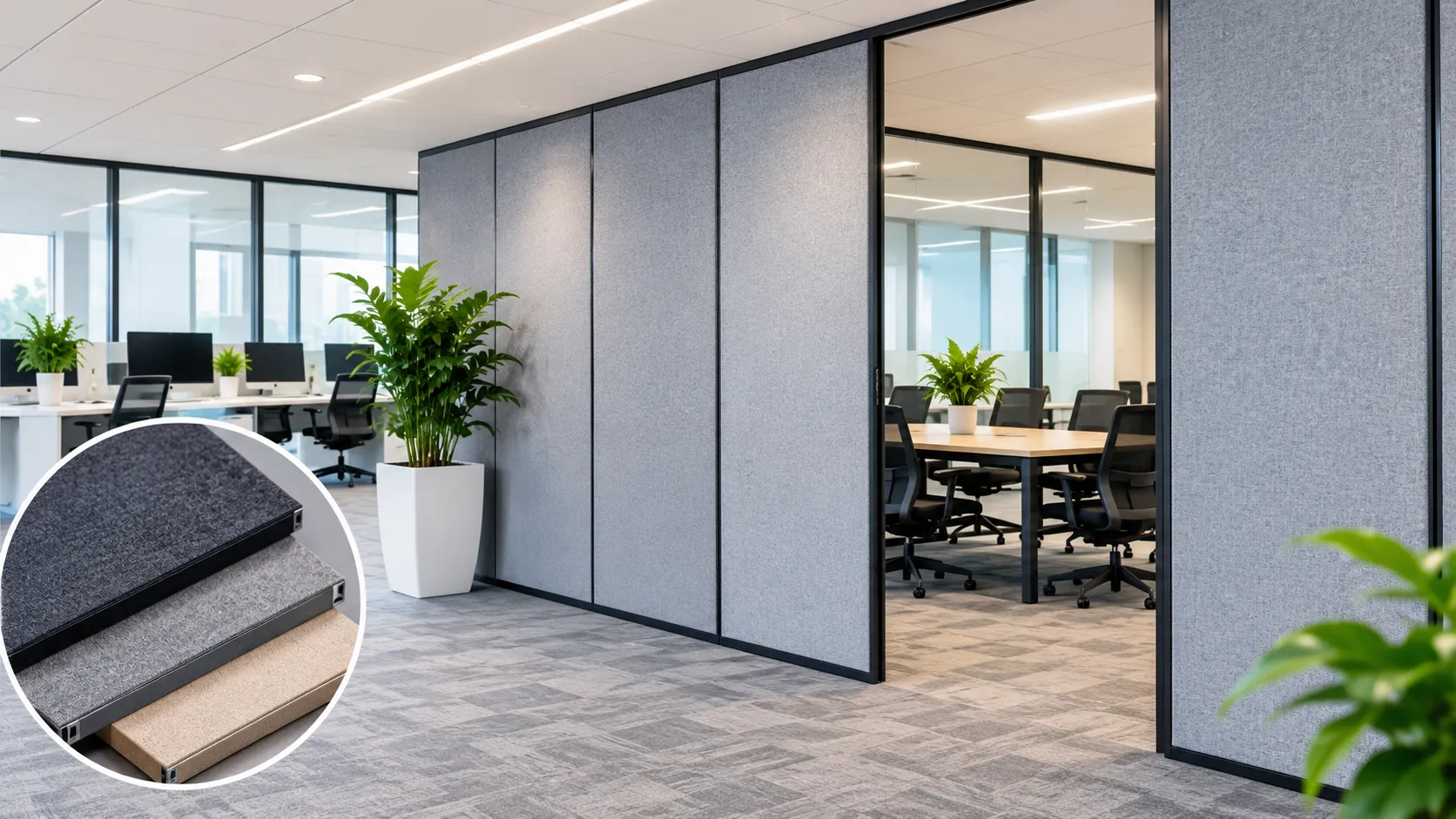
Quick answer: An acoustic partition is a wall or panel system that divides a commercial space and controls sound at the same time. Movable sliding partitions and drywall partitions block sound between rooms and are rated by STC, usually up to STC 55. Dividers and screens absorb noise inside open areas and are rated by NRC, usually up to 0.9. PackSound is an acoustic partitions manufacturer in India that designs, builds and installs all four types for offices, hotels, banquet halls, schools and hospitals.
Most buyers start with one simple need. A hotel wants to split its ballroom for two events on the same evening. An IT company wants quiet cabins without waiting months for brick walls. A co-working space wants calmer open desks. Each of these needs a different kind of partition, and choosing the wrong one is an expensive mistake. This guide explains the types, the ratings that matter, and what to check before you place an order.
What Is an Acoustic Partition?
An acoustic partition is a dividing system built with sound control in mind. A normal partition only blocks sight. An acoustic one either stops sound from passing into the next room, or soaks up sound so the space feels quieter, and sometimes both.
There are two jobs a partition can do:
- Sound insulation: stopping noise from travelling through the partition into another room. This is measured by STC.
- Sound absorption: reducing echo and chatter on the same side of the partition. This is measured by NRC.
Knowing which job you need is the first step in picking the right system.
STC and NRC Explained in Simple Words
What is STC?
STC stands for Sound Transmission Class. It tells you how well a wall blocks sound from passing through it. The higher the number, the less you hear from the other side.
| STC Rating | What You Hear Through the Wall | Typical Commercial Use |
|---|---|---|
| STC 35 to 40 | Loud speech is heard but not fully understood | General office cabins |
| STC 45 to 50 | Loud speech is faint | Meeting rooms, hotel rooms |
| STC 50 to 55 | Loud speech is barely heard or not heard | Banquet halls, boardrooms, studios |
What is NRC?
NRC stands for Noise Reduction Coefficient. It runs from 0 to 1 and tells you how much sound a surface absorbs instead of reflecting. An NRC of 0.9 means the material absorbs about 90 percent of the sound that hits it. NRC does not tell you how well a wall blocks sound between rooms. That is the job of STC.
In short, use STC when you need privacy between two rooms, and use NRC when you need a quieter, less echoey open space.
Types of Acoustic Partitions
PackSound makes four types of partitions under the AcoFascia™ range. Each one solves a different problem.
| Type | Main Job | Rating | Max Height | Best For |
|---|---|---|---|---|
| Sliding folding partition | Blocks sound, movable | Up to STC 55 | Up to 7000 mm | Banquet halls, hotels, conference centres |
| Drywall partition | Blocks sound, fixed | Up to STC 55 | Up to 4500 mm | Cabins, hospitals, studios, schools |
| Acoustic divider partition | Absorbs sound, freestanding | NRC up to 0.9 | Up to 2430 mm | Open offices, training rooms |
| Acoustic screen | Absorbs sound, ceiling hung | NRC up to 0.9 | Up to 2430 mm | Open plan offices, co-working spaces |
1. Sliding Folding Partitions
A sliding partition is a row of acoustic panels that hang from a ceiling track. Pull them out and they lock into a solid wall. Push them back and they stack neatly at the side. One large hall becomes two quiet rooms in a few minutes.
PackSound sliding folding partitions use 100 mm panels, 800 to 1200 mm wide and up to 7000 mm high, hung on a heavy-duty aluminium track. Retractable top and bottom seals press against the ceiling and floor, which is what allows the closed wall to reach up to STC 55. There is no floor track, so nothing to trip over. Finishes include laminate, fabric, veneer and PET in more than 250 shades.
Where it works best: banquet halls, hotel ballrooms, convention centres, training halls and large boardrooms.
2. Drywall Partitions
A drywall partition is a fixed wall built from gypsum or cement board on a galvanised steel frame, with acoustic infill inside. It goes up much faster than a brick wall and weighs far less, which helps on upper floors and in retrofits.
PackSound drywall partitions are 75, 100 or 125 mm thick and up to 4500 mm high, with mineral wool, glass wool or PU infill. They reach up to STC 55 and fire resistance up to 120 minutes, tested as per IS 3614 and BS 476. The surface can take paint, laminate, veneer or acoustic fabric.
Where it works best: private cabins, doctor consultation rooms, recording rooms, classrooms and hotel rooms.
3. Acoustic Divider Partitions
An acoustic divider partition is a freestanding or desk mounted panel with a porous core that soaks up speech and background noise. It zones an open floor without building a single wall.
PackSound dividers come in 9, 12, 25 or 50 mm thickness, up to 1200 mm wide and 2430 mm high, with NRC up to 0.9. They can be fixed, clamped onto workstations or fitted on lockable wheels, in laminate, fabric, printed or PET finishes with CNC, printed or 3D patterns.
Where it works best: open offices, call centres, training centres, hotel lounges and co-working spaces.
4. Acoustic Screens
Acoustic screens hang from the ceiling and divide a space from above, so the floor stays completely clear. They can be fixed or run on a track and wheel system so they slide as layouts change.
Panels are 9 to 50 mm thick, up to 1200 mm wide and 2430 mm high, with NRC up to 0.9 and more than 30 shades. Recycled PET options keep the carbon footprint low.
Where it works best: open plan offices, reception areas, cafeterias and collaborative zones.
Benefits of Acoustic Partitions for Commercial Spaces
- Privacy where it counts: STC 50 to 55 systems keep boardroom and HR conversations inside the room.
- More revenue from the same floor area: hotels and banquet halls can run two events at once with a sliding partition.
- Faster than masonry: drywall and modular systems go up in days, not weeks, with less dust and mess.
- Flexible layouts: dividers and screens move when teams grow or change.
- Better focus and speech clarity: absorbing partitions cut background chatter in open offices.
- Fire safety: drywall partitions offer up to 120 minutes fire resistance.
- Design freedom: laminate, fabric, veneer, PET, printed and custom finishes match any interior.
How to Choose the Right Acoustic Partition
Ask these five questions before you buy:
- Do I need to block sound or absorb it? Blocking needs STC (sliding or drywall). Absorbing needs NRC (dividers or screens).
- Will the space change often? Choose sliding partitions, dividers on wheels or sliding screens.
- What is the ceiling height and structure? Sliding partitions need a strong structure above for the track.
- Is fire rating required? Choose drywall for rated walls.
- What finish suits the interior? Ask for samples in laminate, fabric, veneer or PET.
For complete room acoustics, pair partitions with acoustic wall panels and acoustic ceiling tiles. For halls and auditoriums, an RT60 reverberation time test shows exactly how much treatment is needed.
What to Look for in an Acoustic Partitions Manufacturer
- Own manufacturing: PackSound makes its partitions at its own factory in Greater Noida, so quality and timelines stay in control.
- Tested ratings: ask for STC and fire test data, not just brochure claims.
- Custom sizing: every opening is different. Panels should be made to the exact site measurement.
- Installation team: a partition only performs as well as it is installed, especially the seals.
- After-sales support: check service and maintenance for tracks, rollers and seals.
- Pan-India reach: PackSound designs, supplies and installs acoustic partitions in India across major cities.
Applications by Commercial Space
| Space | Recommended Partition | Why |
|---|---|---|
| Banquet halls and hotels | Sliding folding partition | Split halls for parallel events |
| Corporate offices | Drywall plus dividers | Private cabins and calmer open floors |
| Hospitals | Drywall partition | Patient privacy and fire safety |
| Schools and colleges | Sliding or drywall | Flexible classrooms and quiet exam halls |
| Co-working spaces | Dividers and screens | Quick, movable zoning |
| Conference centres | Sliding folding partition | Rooms of any size on demand |
Frequently Asked Questions
PackSound is an acoustic partitions manufacturer in India with its own factory in Greater Noida. It makes sliding folding partitions, drywall partitions, acoustic dividers and acoustic screens under the AcoFascia™ range and installs them across India.
For general offices, STC 40 to 45 is usually enough. For boardrooms, hotel rooms and banquet halls, aim for STC 50 to 55.
STC measures how well a wall blocks sound between rooms. NRC measures how much sound a surface absorbs inside the same room.
A sliding folding partition is the best choice. It closes into a sealed wall up to STC 55 and stacks away when you need one large hall.
A well built acoustic drywall partition with acoustic infill and sealed joints can reach STC 55, which blocks most normal speech. Full soundproofing also depends on doors, ceilings and gaps.
With proper care and maintenance, PackSound partitions are designed to last up to 10 years or more.
Get a Quote from PackSound
If you are planning a hotel, office, hospital or banquet project, talk to PackSound, a trusted acoustic partitions manufacturer in India. Share your drawings and room sizes, and the team will suggest the right partition type, STC or NRC level and finish for your space.