
Fabric Wrapped Panels - Acoustic Wall Panels | PackSound
Quick Answer: Fabric wrapped panels are sound-absorbing wall or ceiling panels built from a high-density mineral wool, fiberglass or polyester core, wrapped in acoustically transparent acoustic panel fabric. Sound passes through the fabric, enters the porous core, and converts to heat instead of reflecting back into the room. PackSound EchoStop fabric wrapped acoustic panels deliver NRC 0.85 to 0.95 and are specified by architects, acoustic consultants, facility heads and AV integrators for offices, auditoriums, studios, classrooms and hospitality interiors across India.
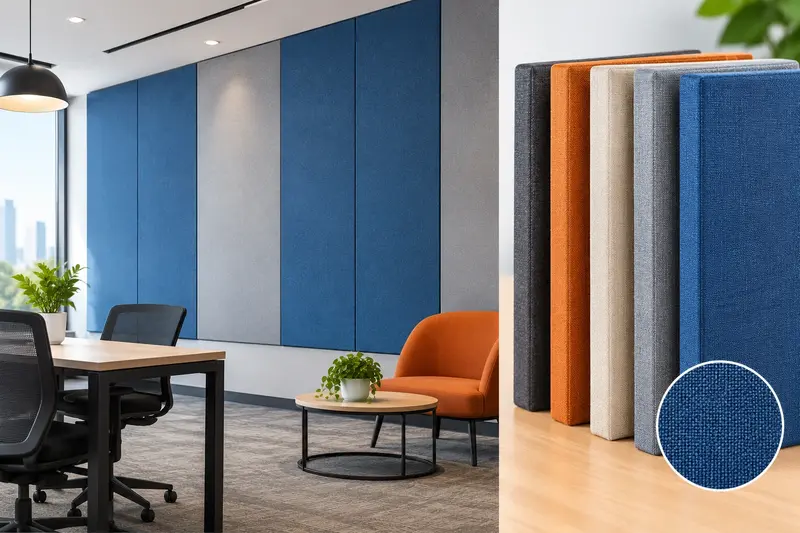
Why Specify Fabric Wrapped Acoustic Panels in 2026
Most Indian commercial interiors now run on glass, gypsum, vitrified tile and exposed concrete, all of which are acoustically reflective. The result is a room that measures fine on paper but fails in use: meetings become unintelligible, call quality drops, and open floors get louder as people raise their voices. Fabric wrapped wall panels are the fastest corrective layer because they are thin, retrofittable into an occupied floor over a weekend, and available in fabric ranges that interior designers will actually approve. Across 1900+ delivered projects, fabric wrapped panels remain the single most repeat-ordered product in our EchoStop range.
EchoStop™ Fabric Wrapped Acoustic Panels
#
Specification
Detail
1
Core material
Mineral wool, fiberglass or PET polyester fiber
2
Core density
48 to 96 kg/m³
3
Thickness
25 mm, 40 mm, 50 mm (75 mm on request)
4
Standard sizes
600 × 600, 1200 × 600, 2400 × 1200 mm, custom cut
5
Surface
Acoustically transparent acoustic fabric, 20+ shades
6
Edge profile
Square, bevelled, radius or resin-hardened edge
7
Fire performance
FR fabric and Class A core options available.
#
Benefit
One-line outcome
1
High absorption
NRC 0.85 to 1.00 across speech frequencies
2
Fast retrofit
Installed on live floors without civil work
3
Design freedom
Fabric, shape and print matched to interiors
4
Broadband control
Thicker cores extend absorption below 250 Hz
5
Low maintenance
Vacuum clean; damaged fabric re-wrapped, not replaced
6
Safety compliance
Fire-retardant build for commercial occupancy
7
Acoustic comfort
Improves speech intelligibility and reduces vocal fatigue.
#
Application
Typical Use
1
Corporate Offices
Meeting rooms, town halls, open workstations
2
Auditoriums
Rear and side wall reflection control
3
Recording Studios
First-reflection points and corner acoustic panels
4
Education
Classrooms, lecture theatres, libraries
5
Hospitality
Restaurants, lobbies, banquet halls
6
Healthcare
Consultation rooms requiring speech privacy
7
Home Theatres
Side walls plus fabric acoustic ceiling panels
#
Step
Action
1
Survey
Measure existing RT60 and mark reflection points
2
Layout
Set out grid, joints and service cut-outs
3
Substrate prep
Clean, dry, level and moisture-checked surface
4
Fixing choice
Adhesive, impaler clips, Z-clips or modular track
5
Mounting
Fix panels level with consistent 0 to 3 mm joints
6
Air cavity
Optional 25 to 50 mm gap for low-frequency gain
7
Handover
Alignment check, fabric cleaning, performance sign-off.
Acoustic Performance
Section
Details
Acoustic Performance
Fabric wrapped acoustic panels are designed to deliver high sound absorption by using a porous core material such as fiberglass, mineral wool or polyester fiber. These materials trap and dissipate sound energy as it passes through the fabric surface, reducing reflections and controlling reverberation within a space.
NRC Performance
The acoustic performance of these panels is measured using the Noise Reduction Coefficient (NRC), which typically ranges from 0.80 to 0.95 depending on panel thickness, density and installation method. Higher NRC values indicate excellent sound absorption, making these panels an effective acoustic solution.
Frequency Performance
Fabric wrapped panels perform efficiently across a wide frequency range, including mid and high frequencies such as speech. They can also provide low-frequency absorption when thicker panels or air gaps are used behind them.
Core Material Density
Higher density materials improve sound absorption efficiency and consistency.
Panel Thickness
Thicker panels absorb more sound, especially at lower frequencies.
Fabric Type
Acoustically transparent fabric allows sound to pass through easily without reflection.
Air Gap Behind Panel
Introducing a cavity between the panel and wall enhances low-frequency absorption.
Installation Method
Proper fixing and alignment ensure maximum surface coverage and acoustic performance.
Environmental Benefit
By reducing echo and reverberation, fabric wrapped panels create a quieter and more comfortable environment.
Suitable Applications
They are especially effective in offices, studios, auditoriums and home theaters where sound clarity and acoustic balance are essential.
Customization Options
Customization Area
Details
Fabric Choices and Colors
A wide range of acoustic fabrics is available in different colors, patterns and textures. This allows panels to either blend seamlessly with interiors or stand out as a design feature.
Panel Sizes and Shapes
Panels can be manufactured in custom sizes and shapes such as square, rectangular, circular or even bespoke geometric designs. This enables creative wall layouts and feature installations.
Thickness and Core Density
Panel thickness and core material density can be adjusted to achieve the required level of sound absorption, especially for targeting specific frequency ranges.
Core Material Options
Different core materials like fiberglass, mineral wool or polyester fiber can be selected based on performance, safety and environmental requirements.
Edge Profiles
Panels can have square edges, beveled edges or customized edge detailing for a more refined and seamless appearance.
Printed and Branded Panels
Custom printing options allow graphics, artwork or branding elements to be applied directly onto the fabric surface, making them ideal for commercial and corporate spaces.
Mounting and Installation Methods
Multiple fixing options such as adhesive, Z-clips, impalers or modular systems can be used depending on the application and design preference.
Acoustic Design Integration
Panels can be arranged in patterns, combined with other materials or installed with air gaps to enhance both acoustic performance and visual appeal.
Project Applications
This level of customization makes fabric wrapped panels suitable for a wide range of projects, from simple acoustic treatments to high-end, design-driven interiors, including theaters where sound clarity and acoustic balance are essential.
How Much Reverberation Do Fabric Wrapped Panels Actually Remove?
Typical measured result:
20 percent wall coverage cuts RT60 by roughly half in reflective rooms.
Room type
RT60 before
RT60 after fabric panels
Coverage used
Glass meeting room
1.4 s
0.6 s
18%
Open office floor
1.1 s
0.55 s
15% + ceiling
Classroom
1.3 s
0.62 s
20%
Home theatre
0.9 s
0.35 s
30%
Reverberation time and absorption coefficients are measured to
ASTM C423 and rated under ISO 11654; room targets for speech spaces
follow IS 4954 guidance on acoustical design in buildings.
Verify your own space with an
RT60 Test
before finalising panel quantity.
TDS (Technical Data Sheet)
| Parameter | Value |
|---|---|
| Product Name | EchoStop Fabric Wrapped Acoustic Panels |
| Core | Resin-bonded mineral wool / fiberglass / PET fiber |
| Density Range | 48, 64, 80, 96 kg/m³ |
| Thickness | 25 / 40 / 50 mm |
| NRC | 0.85 (25 mm), 0.95 (40 mm), 1.00 (50 mm) |
| Absorption at 125 Hz | 0.25 to 0.55 depending on thickness and air gap |
| Absorption at 500 Hz | 0.90 to 1.00 |
| Fabric Weight | 220 to 380 GSM, acoustically transparent |
| Airflow Resistivity (Fabric) | Below 1000 Pa.s/m for full transparency |
| Fire Rating | Class A / FR fabric options |
| Test Standards | ASTM C423, ISO 354, ISO 11654 |
| Mounting | Type A (direct) or Type E-400 (suspended/air gap) |
| Panel Weight | 3.5 to 6.5 kg/m² |
| Warranty | 5 years on fabric adhesion and frame integrity. |
Fabric Wrapped Wood Fiber Acoustic Panels vs Standard Cores
Fabric wrapped wood fiber acoustic panels offer higher impact resistance and are the better ceiling material choice in corridors, schools and sports facilities where panels get knocked. Standard mineral wool cores absorb marginally better per millimetre but dent more easily. For boardrooms and studios, choose mineral wool. For circulation zones below 2.4 m, choose wood fiber or a resin-hardened edge.
Frequently Asked Questions:
1. What are fabric wrapped panels?
Sound-absorbing panels with a porous core wrapped in acoustically transparent fabric to reduce echo.
2. Do fabric acoustic panels block noise from neighbours?
No. They absorb echo inside a room; blocking sound transmission requires mass-loaded barrier systems.
3. How many fabric wrapped acoustic panels do I need?
Most rooms need 15 to 25 percent of wall area treated for noticeable improvement.
4. Are fabric wrapped panels worth it versus foam?
Yes. Foam degrades, rarely passes fire norms, and performs poorly below 500 Hz.
5. Can fabric wrapped panels be used on ceilings?
Yes. Fabric acoustic ceiling panels mount direct or suspended as clouds with air gaps.
6. Do thicker fabric panels really help bass?
Yes. 50 mm panels with air gaps absorb noticeably more energy below 250 Hz.
7. Can I print my logo on fabric wrap panels?
Yes. Dye-sublimation printing keeps the fabric acoustically transparent while carrying artwork or branding.
8. How do you clean fabric wrapped wall panels?
Vacuum with a brush head monthly; spot-clean with mild solution, never soak fabric.
9. Are fabric wrapped sound panels fire safe for offices?
Fire-retardant fabric and Class A cores are available for commercial fire-compliance requirements.
10. What is the lifespan of fabric wrapped panels?
Ten years or more; fabric can be re-wrapped on the same frame if damaged.