Summary: Walk into any busy gym and you will notice clanging weights, echoing music, and instructors shouting over the noise. This is exactly why acoustic panels for gyms spaces have become a priority for facility owners across India. They absorb reflected sound, cut reverberation, and turn a chaotic training floor into a space members actually enjoy.
Why Do Gyms Need Acoustic Panels for a Better Workout Experience?
Intro: Excessive echo is one of the most common complaints in fitness centres, yet it is also one of the easiest problems to fix. Installing acoustic panels for gym walls and ceilings reduces noise buildup, protects hearing, and improves communication between trainers and clients, making every session more effective.
What Are Acoustic Panels for Gyms and How Do They Work?
Acoustic panels are fabric-wrapped or foam-based boards designed to absorb sound waves rather than let them bounce off hard floors, mirrors, and glass walls. In gyms, this is called sound absorption, not soundproofing, since the goal is reducing internal echo rather than blocking outside noise entirely.
Why Is Gym Soundproofing Important for Fitness Studios in India?
Gym soundproofing in India is gaining attention as boutique studios and CrossFit boxes open in dense commercial buildings. Poor acoustics lead to noise complaints from neighbouring tenants and discomfort for members. A well-planned gym soundproofing setup keeps sound contained while maintaining a lively training atmosphere.
What Acoustic Solutions for Gyms Work Best for Different Zones?
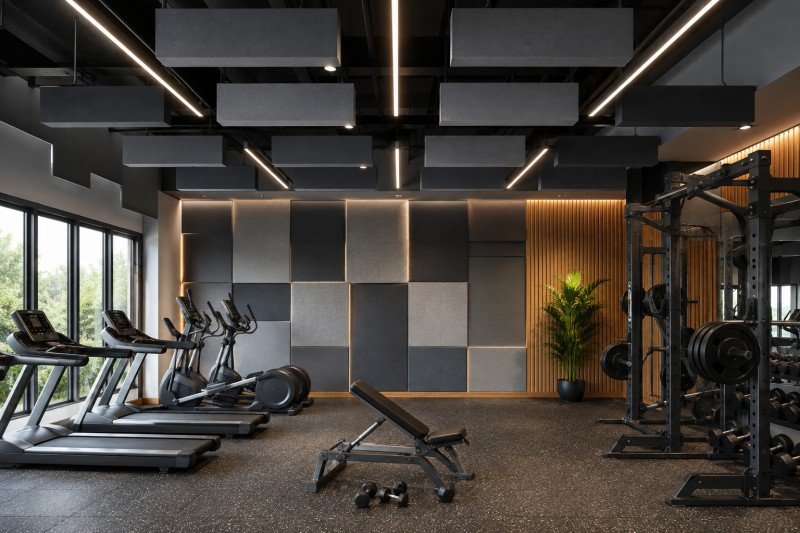
Not every zone needs the same treatment. Weight-drop areas benefit from thicker, high-density panels that manage low-frequency impact, while group fitness studios need wall coverage that controls mid and high frequencies from music and instruction. Combining wall panels with ceiling baffles is among the most reliable acoustic solutions for gyms with high ceilings.
How Does Fitness Studio Acoustic Treatment Improve Member Experience?
Fitness studio acoustic treatment directly affects how clear instructions sound and how relaxed members feel. Lower reverberation time, ideally between 0.8 and 1.2 seconds, keeps sound crisp rather than muddy. At Packsound.in, panel selection is guided by this benchmark to match each gym layout.
Also Check For: Acoustic Panels for Restaurants & Cafes.
Conclusion
Choosing the right acoustic panels for gym floors, studios, and weight rooms is no longer optional in today’s fitness industry. From reducing echo to improving trainer-client communication, proper gym soundproofing and fitness studio acoustic treatment create a calmer, safer, and more professional environment for everyone who walks in.
Frequently Asked Questions
1. Do acoustic panels actually reduce gym noise?
Yes, panels absorb reflected sound waves, cutting echo and lowering overall ambient noise inside the training area.
2. Are acoustic panels the same as soundproofing?
No, panels absorb sound inside a room, while soundproofing blocks sound from leaving or entering a space entirely.
3. Where should panels be installed in a gym?
Upper walls, ceilings, and areas near weight-drop zones typically need the most coverage for effective results.
4. Can acoustic panels handle gym humidity?
Quality panels use moisture-resistant materials so they perform well even in sweaty, high-activity environments.
5. How much wall coverage does a gym typically need?
Most fitness spaces need 25 to 60 percent coverage, depending on ceiling height and equipment noise levels.