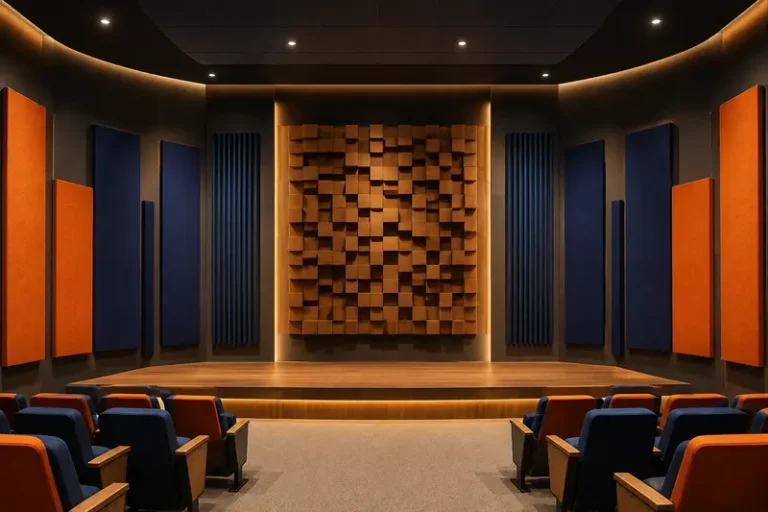

What Is Insulation Material?
Insulation material is any substance engineered to reduce the transfer of energy — most commonly sound, heat, or both — between two environments. In the context of building construction and interior design, insulation materials are installed within walls, ceilings, floors, and partitions to control how sound and thermal energy move through a space.
In India’s fast-urbanising built environment — from the dense commercial corridors of Gurugram to the expanding IT campuses of Bengaluru and Mumbai — effective insulation material is no longer a luxury. It is a fundamental requirement for health, productivity, regulatory compliance, and design quality.
Understanding what insulation material is, how it performs, and which type is appropriate for a given application is critical whether you are an architect, interior designer, facility manager, or building owner. The wrong choice leads to wasted budget, poor acoustic performance, and occupant discomfort. The right choice delivers a space that is quieter, more comfortable, more energy-efficient, and more productive.
This guide covers every major category of insulation material relevant to acoustic and noise control in India, with particular focus on 2026 best practices, Indian building standards, and real-world applications.
2. Types of Insulation Material
Insulation materials are broadly classified by their primary function (acoustic, thermal, or combined), their physical form (rigid panels, flexible rolls, loose fill, or spray), and their core composition (mineral, organic, synthetic, or composite). Here is a comprehensive breakdown:
2.1 Mineral Wool (Rockwool / Glasswool)
Mineral wool — including both rock wool (made from basalt) and glass wool (made from recycled glass) — is among the most widely used insulation materials in India for both acoustic and thermal applications. It is composed of randomly oriented fibres that trap sound waves and convert acoustic energy into heat through friction.
Acoustic performance: NRC 0.70–0.95 depending on density and thickness
Typical applications: Wall cavities, ceiling voids, HVAC duct lining, partition infill
Available density: 24 kg/m³ to 128 kg/m³
Key advantage: Non-combustible, thermally efficient, cost-effective
2.2 Acoustic Foam Panels
Polyurethane or melamine foam panels are open-cell structures that absorb sound energy, primarily in the mid and high frequency range. They are most effective as room-treatment insulation rather than as structural sound barriers.
Acoustic performance: NRC 0.50–0.85
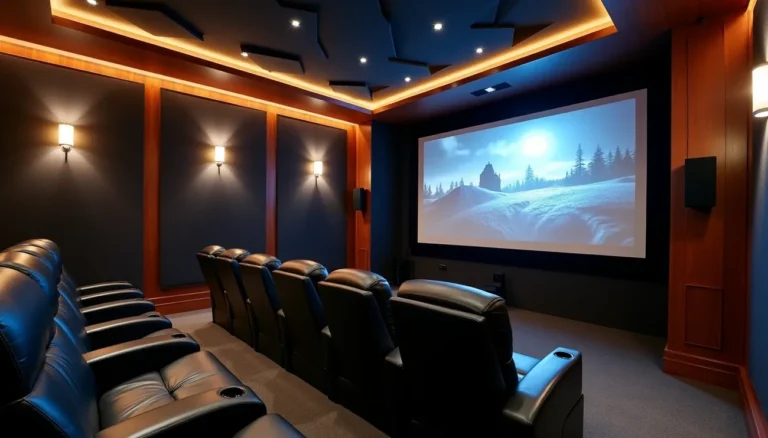
Typical applications: Recording studios, podcast booths, home theatres, control rooms
Key advantage: Lightweight, easy to install, available in wedge and pyramid profiles
Limitation: Low STC contribution; not suitable as a primary sound barrier
2.3 Mass-Loaded Vinyl (MLV)
Mass-loaded vinyl is a heavy, flexible sheet material that provides excellent sound blocking (not absorption). Its high density impedes the transmission of airborne sound between spaces.
STC performance: STC 25–32 per layer
Typical applications: Wall and floor liners, pipe lagging, partition reinforcement, automotive
Key advantage: Flexible, thin, can be layered
Limitation: Adds mass but not absorption; best combined with decoupling and absorption materials
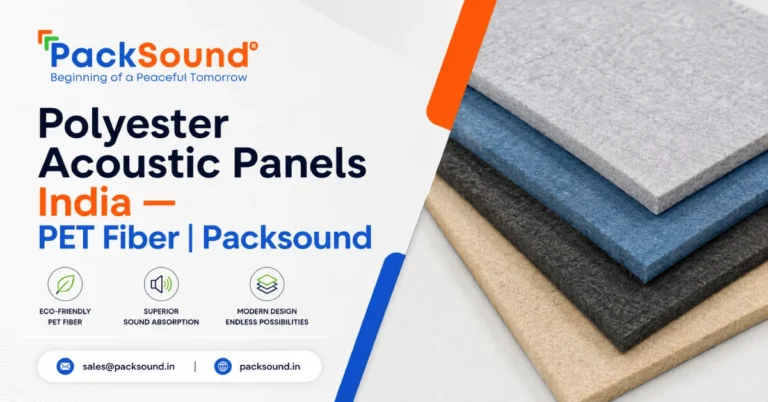
2.4 PET Acoustic Panels (Polyethylene Terephthalate)
PET felt panels, made from 60–100% recycled polyester fibres, are increasingly popular in India as a premium, eco-friendly insulation material. They offer excellent mid-high frequency absorption, are available in rich colour palettes, and can be CNC-cut into decorative shapes.
Acoustic performance: NRC 0.80–0.95
Typical applications: Offices, co-working spaces, retail showrooms, creative studios
Key advantage: 100% recyclable, no off-gassing, Class B fire rating, aesthetically versatile
PackSound’s CNC PET Panel exemplifies the modern generation of decorative PET insulation — combining NRC up to 0.95 with precision CNC-cut patterns available in 30+ colours.
2.5 Fabric-Wrapped Acoustic Panels
High-density rigid boards (typically glass wool, rock wool, or polyester fibre core) wrapped in premium acoustic fabric form one of the most effective and visually refined insulation solutions available. The fabric allows sound to pass through to the absorptive core, while the professional finish integrates with any interior scheme.
Acoustic performance: NRC 0.75–0.95
Typical applications: Corporate offices, conference rooms, board rooms, recording studios, hospitality
Key advantage: Dual function — high acoustic performance and premium aesthetics
2.6 Wooden Acoustic Panels (Slat & Perforated)
Engineered wood panels — including grooved/slat designs and perforated variants — combine hard-surface aesthetics with acoustic absorption through the Helmholtz resonator principle. The perforations or slots allow sound to enter an absorptive backing layer (usually glass wool or felt), converting acoustic energy and reducing reverberation.
Acoustic performance: NRC 0.60–0.95
Typical applications: Auditoriums, concert halls, cinemas, luxury offices, hospitality
Key advantage: Architectural beauty with certified acoustic performance; fire-rated options available
2.7 Spray Foam Insulation
Polyurethane spray foam expands to fill gaps and voids, providing both thermal insulation and a degree of acoustic sealing. It is excellent for eliminating flanking paths — small gaps around pipes, ducts, and junction boxes through which sound travels.
Acoustic performance: STC contribution 3–8 dB when sealing gaps
Typical applications: Construction joints, service penetrations, roof-wall interfaces
Limitation: Poor standalone acoustic performer; must be used as a complement to other materials
2.8 Composite Insulation Boards
Multi-layer composite insulation boards combine multiple mechanisms in a single panel — typically a dense mass layer, a decoupling air gap layer, and an absorptive surface layer. This mass-spring-absorption architecture addresses all three components of the acoustic insulation problem simultaneously.
PackSound’s Composite Panel uses a multi-layered wood, fabric, and PET construction to deliver wide-band absorption across all frequencies — making it ideal for premium offices and multipurpose halls.
2.9 Acoustic Ceiling Tiles and Baffles
Drop-in ceiling tiles and suspended baffles are ceiling-specific insulation materials designed to control reverberation in large spaces. Mineral fibre ceiling tiles, perforated metal tiles, and fabric-wrapped ceiling panels are all widely used in commercial and institutional applications.
PackSound’s acoustic ceiling panel range includes products engineered specifically for Indian commercial environments — from lightweight FeatherLite tiles for offices to high-performance metal ceiling tiles for sports and industrial facilities.
3. Acoustic vs Thermal Insulation — Key Differences
One of the most persistent points of confusion among buyers and specifiers in India is the relationship between acoustic and thermal insulation. While there is some overlap, the two serve distinct functions and should not be conflated.
| Property | Acoustic Insulation | Thermal Insulation |
|---|---|---|
| Primary goal | Reduce sound transmission or absorption | Reduce heat transfer |
| Key mechanism | Mass, absorption, decoupling | Conduction resistance (R-value) |
| Performance metric | NRC (absorption), STC (isolation) | R-value, U-value |
| Common materials | Mineral wool, PET, MLV, foam | XPS, EPS, PIR, glasswool |
| Indian standard | IS:1950 (sound insulation of buildings) | ECBC 2017 (energy conservation) |
Some materials — particularly mineral wool and glass wool — provide meaningful performance on both dimensions, making them popular choices for building envelopes where both noise control and thermal comfort are required.
However, materials excellent for thermal performance (such as extruded polystyrene/XPS or expanded polystyrene/EPS) are generally poor acoustic performers because they are rigid, non-porous, and transmit structure-borne vibration effectively. Always specify separately for acoustic and thermal performance unless a verified dual-performance product is selected.
4. Sound Insulation Material: How It Works
To make informed decisions about insulation material, it helps to understand the physics of how sound behaves in buildings. Sound travels in two fundamental forms in built environments:
Airborne sound — generated by voice, music, machinery, traffic, and other sources that cause pressure waves in the air. This sound transmits through walls, floors, and ceilings via vibration.
Structure-borne (impact) sound — generated by direct physical contact with a structure, such as footsteps, furniture dragging, or mechanical equipment vibration transmitted through the building fabric.
Effective acoustic insulation must address both, using one or more of the following mechanisms:
4.1 Mass
Adding mass to a partition makes it harder for sound to set it vibrating. The law of mass states that every doubling of mass increases the STC of a partition by approximately 6 dB. Mass-loaded vinyl, dense concrete blocks, and heavy composite panels all exploit this principle.
4.2 Absorption
Porous, fibrous, or foam materials convert sound energy into heat as sound waves pass through them. This reduces the acoustic energy available to transmit through the structure. Glass wool, mineral wool, PET felt, and acoustic foam all function primarily as absorbers.
4.3 Decoupling
Separating the two faces of a partition — using resilient channels, double-stud frames, or isolation clips — prevents vibration from conducting directly through the structure. Decoupling is especially important for impact noise and low-frequency sound.
4.4 Damping
Viscoelastic compounds (such as constrained layer damping materials) applied between rigid layers convert mechanical energy to heat when the assembly flexes. Damping treatments are common in floor systems and automotive applications.
The most effective acoustic insulation systems in practice combine all four mechanisms — a strategy known as the mass-spring-absorption model. This is exactly the approach taken in high-performance products like PackSound’s Composite Panel and the acoustic assemblies used in ThinkPod work pods.
5. Top Insulation Materials for Walls in India
Wall insulation accounts for the largest surface area treatment in most buildings and has the greatest impact on overall acoustic and thermal comfort. The following materials represent the best-in-class options available in India in 2026:
Glass Wool Wall Slabs
Available in densities from 24 to 96 kg/m³, glass wool slabs are the most cost-effective mineral insulation for wall cavity filling. They comply with IS:8183 for thermal insulation and are widely specified in lightweight partition systems across India.
Best for: Commercial partitions, corridor walls, HVAC-adjacent spaces
Fabric-Wrapped Wall Panels
Surface-applied fabric wrapped panels are the preferred insulation material for finished interior spaces where both performance and aesthetics are priorities. They can be installed on drywall, masonry, or direct adhesive applications.
PackSound’s Fabric Wrapped Panel in the EchoStop® Series offers premium acoustic fabric over a high-density core, available in solid colours, melange patterns, and custom-printed designs — making them the material of choice for corporate offices, conference rooms, and recording studios across India.
Wooden Slat and Perforated Panels
Where wall insulation must also function as an architectural feature — in hotel lobbies, auditorium walls, restaurant interiors, and premium office reception areas — wooden acoustic panels deliver the combination of visual sophistication and certified acoustic performance that neither plain mineral wool nor standard foam can provide.
PackSound’s Grooved Wooden Slat Panel achieves NRC up to 0.95, is fire-rated, and is fully customisable in dimension, groove pattern, and wood finish — making it one of the most versatile premium wall insulation materials available in India.
PET Felt Panels
Eco-conscious projects and sustainable interiors increasingly specify recycled PET felt panels as their primary wall insulation and treatment material. With up to 100% recycled content, CNC customisability, and NRC values matching premium mineral wool products, PET panels are the fastest-growing insulation material category in India’s commercial interiors market.
Micro-Perforated Panels
For the most demanding luxury environments — museum galleries, executive boardrooms, premium hospitality — micro-perforated panels offer near-invisible acoustic treatment. The sub-millimetre perforations absorb high-frequency sound while preserving a perfectly smooth, seamless wall surface.
PackSound’s Micro Perforated Panel is engineered specifically for these applications, combining invisible perforations with a seamless premium finish ideal for museums, executive offices, and luxury interiors.
6. Ceiling Insulation Material for Commercial Spaces
Ceilings represent the second most important surface for acoustic insulation in most commercial and institutional spaces. In large open-plan environments — offices, schools, hospitals, airport lounges, sports halls — the ceiling is frequently the primary treatment surface because walls are occupied by glazing, furniture, or equipment.
Mineral Fibre Ceiling Tiles
The most widely installed acoustic ceiling insulation globally, mineral fibre tiles offer a combination of sound absorption (NRC 0.55–0.85), fire resistance, and ease of installation in standard suspended grid systems. They are cost-effective, readily available, and well-suited to standard commercial office, retail, and educational environments.
Perforated Metal Ceiling Tiles
Perforated aluminium or steel ceiling tiles with acoustic backing provide a premium, durable ceiling insulation solution for environments where mineral fibre tiles are impractical — sports halls, airport terminals, industrial facilities, and wet areas. PackSound’s Metal Ceiling Tile delivers both acoustic performance and a sophisticated visual finish.
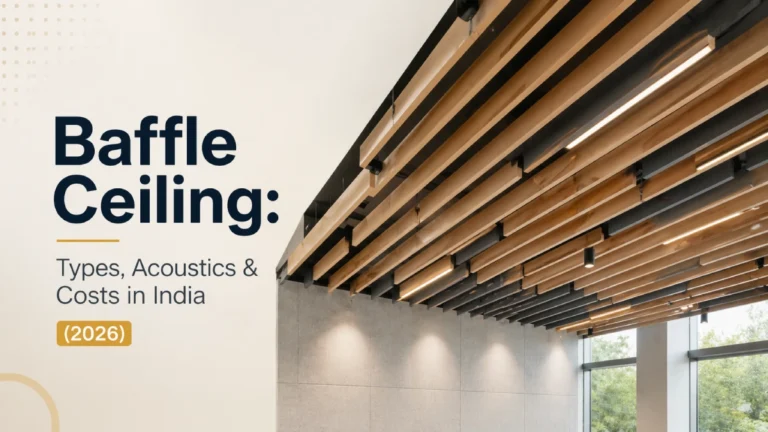
Acoustic Baffles
In spaces with very high ceilings where horizontal ceiling tiles provide insufficient surface area, vertical suspended baffles dramatically increase the effective absorptive area. Baffles are treated on all faces and are particularly effective at controlling flutter echo and low-frequency reverberation in atria, sports halls, and industrial spaces.
PackSound’s Acoustic Baffles are engineered for high NRC performance and are widely specified for schools, co-working spaces, and airport interiors across India.
Acoustic Cloud Panels
Acoustic cloud panels are horizontally suspended ceiling islands that combine the visual drama of a design feature with targeted acoustic treatment. They are particularly effective when positioned directly above primary noise sources (conference tables, workstation clusters) or reflection points.
The Acoustic Clouds from PackSound and the luxury AeroLoom Acoustic Clouds and 3D Ultra Luxury Acoustic Ceiling Clouds from the Auraluxe™ range represent the state of the art in ceiling insulation material for premium Indian commercial spaces.
Lightweight Ceiling Tiles
For applications where the structure cannot accommodate heavy ceiling loads — heritage buildings, lightweight steel construction, retrofits — ultra-lightweight acoustic tiles are the appropriate insulation choice. PackSound’s FeatherLite Ceiling Tile and AirLite Ceiling Tile are purpose-designed for these situations, combining high acoustic performance with minimal structural loading.
7. Floor Insulation and Impact Noise Control
Floor insulation is the most technically challenging aspect of acoustic insulation in multi-storey buildings. Impact noise — footsteps, furniture movement, dropped objects — travels through the structural slab and radiates as airborne sound in the space below. Controlling it requires a fundamentally different approach from airborne sound insulation.
Floating Floor Systems
A floating floor is decoupled from the structural slab by an intermediate resilient layer — typically a mineral wool slab, recycled rubber mat, or neoprene isolation pad. This decoupling breaks the vibration transmission path, dramatically reducing impact noise.
For high-performance applications such as recording studios, broadcast facilities, and premium residential floors, a fully floating concrete slab-on-resilient-mat system is the gold standard, achieving impact isolation class (IIC) ratings above 60.
Carpet and Textile Flooring
The simplest and most cost-effective floor insulation treatment, carpet significantly attenuates impact noise at the source. A carpet with a dense underlay can reduce impact sound levels by 25–35 dB, making it highly effective in residential and hospitality environments.
Acoustic Underlays
For hard floor finishes (timber, tile, stone, LVT), purpose-designed acoustic underlays — typically 5–10 mm dense mineral wool, recycled rubber, or cork boards — provide a degree of impact isolation beneath the finished floor.
8. Insulation Material for Studios, Offices & Auditoriums
The correct specification of insulation material varies significantly by application type. Here is a space-by-space guide:
Recording Studios & Podcast Booths
Recording facilities require the highest level of acoustic insulation, typically targeting STC 60–70 between the studio and adjacent spaces, with NRC values approaching 1.0 inside the studio for near-zero reverberation.
Recommended insulation stack:
- Outer structural shell: double-leaf masonry or double-stud timber frame with 100 mm glass wool cavity
- Room-within-a-room construction using resilient isolation clips and floating floor
- Interior wall treatment: fabric-wrapped panels (NRC 0.85+) plus bass traps in corners
- Ceiling: acoustic clouds or fabric-wrapped ceiling panels
- Doors and windows: specialist acoustic doors (STC 45+) and secondary glazing
PackSound has delivered complete studio soundproofing systems for premier podcasting studios in Mumbai, achieving professional-grade sound isolation and near-zero reverberation through combined insulation treatments.
Corporate Offices and Open-Plan Workspaces
Open-plan offices face a different acoustic challenge — not silence, but speech privacy and distraction control. Excessive reverberation and high background noise levels are the primary complaints in most Indian corporate interiors.
Recommended insulation approach:
- Ceiling: NRC 0.75+ mineral fibre or fabric-wrapped ceiling tiles throughout
- Focal areas (meeting rooms, pods): ThinkPod office work pods provide complete acoustic isolation without construction
- Wall treatment in collaboration zones: fabric-wrapped or PET panels (NRC 0.80+)
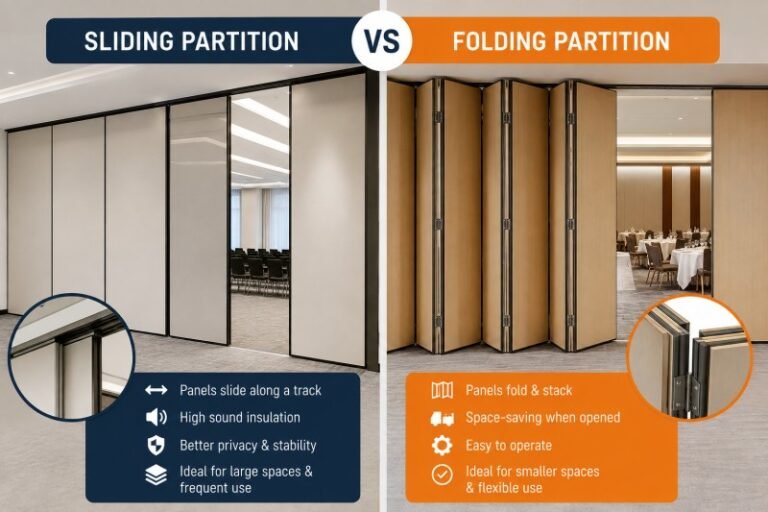
- Partition systems: Soundproof Partitions & Dividers for flexible zone definition
- Sound masking: white/pink noise generation to raise the ambient floor and increase speech privacy
PackSound’s work in a 12,000 sq. ft. open-plan office in Gurugram used fabric wall panels and suspended ceiling baffles to reduce ambient noise levels by over 8 dB and significantly improve speech clarity across all workstations.
Auditoriums and Performance Halls
Auditorium acoustics is the most complex application of insulation material, requiring a carefully balanced reverberation time (RT60) calibrated to the primary use — speech (0.6–0.9 seconds), orchestral music (1.6–2.2 seconds), or multi-purpose (0.9–1.3 seconds).
Recommended insulation material mix:
- Rear and side walls: perforated or grooved wooden acoustic panels (variable absorption via adjustable rear air gap)
- Ceiling: acoustic clouds and baffles for diffusion and controlled absorption
- Under-seat and rear: upholstered seating (significant absorption) plus rear wall diffusion panels
- Flanking paths: complete structural sealing with mineral wool and acoustic sealant
PackSound’s transformation of a 450-seat school auditorium in Bengaluru using perforated wooden acoustic panels and suspended baffles achieved the optimal RT60 target for both speech and musical performances as per IS:4954 guidelines — a benchmark project for institutional auditorium acoustics in India.
For deeper guidance on auditorium-specific insulation and acoustic treatment, visit the PackSound Auditorium Acoustics resource page.
Cinemas and Multiplexes
Cinema acoustic insulation must achieve two goals simultaneously: isolate each screen from adjacent halls (STC 60+ partition performance), and control reverberation within each hall for optimum film dialogue clarity and music impact.
PackSound’s work on a multiplex cinema in Pune achieved STC 60+ sound isolation between screens and NRC 0.90+ absorption within each auditorium — among the highest performance standards in the Indian cinema sector.
Hospitals and Healthcare Facilities
Patient privacy, stress reduction, and clinical communication all depend on effective acoustic insulation in healthcare environments. The World Health Organisation’s guidelines for hospital noise set daytime limits of 35 dB(A) in wards and 30 dB(A) at night — targets that require comprehensive insulation material specification.
Critical insulation zones in healthcare:
- Consultation rooms: STC 45+ partitions with full acoustic sealing at penetrations
- Ward ceilings: NRC 0.75+ mineral fibre with moisture resistance
- Corridors: acoustic absorption panels to reduce reverberation and noise propagation
- Plant rooms: floating floor and duct lining to control MEP noise
9. NRC vs STC: Which Rating Matters for Your Project?
Two performance metrics dominate acoustic insulation specification in India, and confusing them is one of the most common and costly mistakes in acoustic projects.
NRC — Noise Reduction Coefficient
NRC measures a material’s ability to absorb sound within a room. It is expressed as a value between 0 and 1, where 0 means perfect reflection (no absorption) and 1 means perfect absorption. An NRC of 0.85 means the material absorbs 85% of incident sound energy.
NRC is the right metric when your problem is:
- Excessive reverberation (long echo)
- High ambient noise levels in open spaces
- Poor speech clarity in meeting rooms, classrooms, or auditoriums
- Flutter echo between parallel hard surfaces
NRC values are measured as averages across 250 Hz, 500 Hz, 1000 Hz, and 2000 Hz frequency bands.
STC — Sound Transmission Class
STC measures a partition assembly’s ability to block sound from passing between two spaces. Higher STC = better sound blocking. A standard 115 mm brick wall achieves approximately STC 45; a specialist recording studio wall may target STC 65+.
STC is the right metric when your problem is:
- Noise from adjacent rooms, floors, or outside penetrating your space
- Privacy between meeting rooms, offices, or hotel rooms
- Isolation between cinema screens, recording studios, or industrial plant rooms
For a detailed technical breakdown of these ratings in the Indian context, see the PackSound guide on NRC vs STC ratings for Indian buyers.
Which to prioritise?
In most real-world projects, both matter. A corporate office needs high-NRC ceiling panels to control reverberation (NRC problem) and high-STC meeting room partitions to ensure speech privacy (STC problem). A recording studio needs both STC 65+ structural isolation and NRC 0.90+ interior treatment. Specify both metrics separately and explicitly for every major element of your acoustic insulation design.
10. How to Choose the Right Insulation Material
Choosing the correct insulation material for any project involves systematically evaluating six key criteria:
Step 1: Define the Problem
Is the issue too much noise coming into the space from outside (STC/isolation problem), too much echo and reverberation within the space (NRC/absorption problem), or both? The answer determines whether you need insulation material with high mass/STC, high porosity/NRC, or a combination.
Step 2: Identify the Frequency Range
Low-frequency noise (traffic rumble, bass music, HVAC hum) is the hardest to insulate against and requires mass and decoupling. Mid-frequency noise (speech, office equipment) is effectively controlled by standard mineral wool and fabric panels. High-frequency noise (HVAC fan noise, high-pitched equipment) is relatively easy to attenuate with most insulation materials.
Step 3: Assess the Space and Structure
The existing construction — masonry walls, lightweight steel partition, timber floor — significantly constrains which insulation materials can be specified. Heavyweight solutions may not be structurally feasible in retrofit situations; surface-applied acoustic panels may be the only practical option.
Step 4: Set Performance Targets
Define minimum NRC and STC targets for each surface and partition based on the intended use. Reference Indian standards (IS:1950, IS:4954) or international equivalents (ISO 140, ASTM E90) for guidance on target values by space type.
Step 5: Evaluate Aesthetic and Practical Constraints
In most commercial interiors, acoustic insulation materials are visible and must integrate with the design intent. Consider colour, texture, profile, fire rating, moisture resistance, maintenance requirements, and installation complexity alongside acoustic performance.
Step 6: Calculate Coverage and Budget
Acoustic insulation is most effective when surfaces are treated comprehensively. Patchy, partial treatments deliver significantly less than the theoretical performance. Budget for adequate coverage — typically 20–30% of room surface area as a minimum for reverberation control, rising to 50–70% for critical listening environments.
For personalised guidance, PackSound offers a free acoustic consultation including site assessment, acoustic design, product specification, and professional installation services across all major Indian cities.
11. Common Mistakes When Selecting Insulation Material
Even experienced designers make the following errors when specifying insulation material. Avoiding them saves significant cost and performance on every project.
Mistake 1: Confusing acoustic absorption panels with soundproofing Fabric wall panels and acoustic foam absorb sound within a room — they do not prevent sound from entering or leaving. This is perhaps the most widespread misconception in the industry. To block sound, you need mass, decoupling, and sealing — not just surface-applied panels.
Mistake 2: Treating only one surface Absorptive panels on one wall while all other surfaces remain untreated will have limited effect on overall reverberation. Treatment should be distributed across multiple surfaces — particularly the ceiling, which has the largest unobstructed area in most rooms.
Mistake 3: Ignoring flanking paths Even a perfectly designed partition will underperform if sound can travel around it via flanking paths — shared ceiling voids, gaps around pipe penetrations, or airborne paths through ventilation systems. All acoustic insulation designs must address flanking comprehensively.
Mistake 4: Specifying by appearance rather than performance Choosing an insulation material primarily because of its visual appeal without verifying its acoustic credentials with certified NRC or STC test data is a common and expensive mistake. Always request and verify laboratory test data from independent certified testing bodies before specifying.
Mistake 5: Underestimating low-frequency sound The thinly detailed, fashion-driven acoustic treatments popular on social media often perform only in the mid and high frequency range. If your space has a low-frequency noise problem (bass music, traffic, HVAC), standard foam and fabric panels will do virtually nothing. You need mass, cavity depth, and purpose-designed bass absorbers.
Mistake 6: Skipping professional acoustic design Acoustic insulation design is a specialist discipline. The difference between a professionally designed acoustic treatment and a DIY or poorly specified installation can easily be 10–15 dB in real-world performance. For any space where acoustic quality genuinely matters, engage a qualified acoustic consultant or an experienced provider such as PackSound from the outset.
12. Insulation Material Costs in India (2026)
Acoustic insulation material costs in India vary widely by type, performance level, and specification. The following are indicative 2026 market price ranges for supply-and-install:
| Material Type | Indicative Cost Range (per sq. ft.) | Performance Level |
|---|---|---|
| Acoustic foam panels (basic) | ₹60–₹120 | NRC 0.50–0.70 |
| Glass wool / mineral wool panels | ₹80–₹150 | NRC 0.70–0.85 |
| Fabric-wrapped acoustic panels | ₹250–₹600 | NRC 0.80–0.95 |
| PET felt / CNC PET panels | ₹300–₹700 | NRC 0.80–0.95 |
| Wooden slat / perforated panels | ₹400–₹1,200 | NRC 0.75–0.95 |
| Acoustic ceiling baffles | ₹350–₹800 | NRC 0.75–0.90 |
| Mineral fibre ceiling tiles | ₹100–₹250 | NRC 0.55–0.80 |
| Mass-loaded vinyl (MLV) | ₹150–₹350 | STC 25–32/layer |
| Composite / premium panels | ₹500–₹1,500 | NRC 0.85–0.95 |
Note: Prices are indicative and vary by project size, specification, installation complexity, and location. Larger projects typically attract volume discounts. Contact PackSound for a project-specific quotation.
The key principle in acoustic insulation budgeting is that the marginal cost of specifying the correct material from the outset is almost always lower than the cost of remedial treatment after occupancy. Retrofitting acoustic insulation into a completed space typically costs 2–3× the equivalent new-build specification.
13. PackSound’s Insulation & Acoustic Solutions
PackSound by Ecotone Acoustic Limited is India’s leading manufacturer and installer of acoustic insulation materials for commercial, institutional, and premium residential applications. With over a decade of delivery experience, 150+ completed projects, and a full product range from entry-level mineral fibre tiles to the ultra-luxury Auraluxe™ collection, PackSound offers a complete acoustic insulation ecosystem under one roof.
Product Range Overview
Wall Acoustic Insulation
- Grooved Wooden Slat Panel — NRC ≤ 0.95, fire-rated, fully customisable
- Perforated Panel — Balanced absorption and diffusion, 30+ finishes
- Micro Perforated Panel — Invisible perforations, seamless luxury finish
- Fabric Wrapped Panel — Premium fabric, custom colours, studios to boardrooms
- Composite Panel — Wide-band absorption, impact-resistant, 100% recyclable PET
- CNC PET Panel — Decorative, eco-friendly, 30+ colours, NRC up to 0.95
Ceiling Acoustic Insulation
- Acoustic Clouds — Targeted ceiling treatment above key zones
- Acoustic Baffles — High-performance vertical suspension for large spaces
- AirLite Ceiling Tile — Lightweight, durable, modern grid system
- FeatherLite Ceiling Tile — Ultra-light, high NRC for large commercial spaces
- Metal Ceiling Tile — Durable, acoustic, stylish for industrial and premium environments
Auraluxe™ Premium Collection
- 3D Luxury Acoustic Wall Panels — Architectural statement + premium acoustic performance
- 3D Acoustic Blades — Sculptural vertical fins with acoustic function
- 3D Ultra Luxury Acoustic Ceiling Clouds — Statement ceiling insulation for luxury interiors
- AeroLoom Acoustic Clouds — Woven textile ceiling clouds
- EchoGlow Acoustic Ceiling Lights — Integrated lighting and acoustic insulation
- Printed Wall Panels — Custom-printed imagery on acoustic panels
- Silenza Acoustic Panels — Premium soundproofing and noise control
ThinkPod™ Work Pods For organisations that need immediate, installation-free acoustic isolation in open-plan offices, ThinkPod™ work pods provide complete sound insulation without construction. Available in single and double occupancy configurations with optional e-learning technology integration.
Specialist Systems
- SonicGuard — Industrial and mechanical noise control insulation
- AcoFascia — Exterior acoustic facade treatment
- AquaSonic — Acoustic solutions for wet and humid environments
Service Offering
PackSound provides comprehensive end-to-end services — free site assessment, acoustic design consultation, CAD drawings, product supply, and professional installation — across Delhi NCR, Mumbai, Bengaluru, Hyderabad, Chennai, Pune, and other cities across India.
Book a Free Acoustic Consultation →
FAQs on Insulation Material
Q: What is the best insulation material for soundproofing a room in India?
For soundproofing (blocking sound between rooms), the best approach combines mass (dense partition construction), decoupling (resilient isolation), and absorption (mineral wool cavity fill). Mass-loaded vinyl, double-stud partitions with glass wool infill, and specialist acoustic doors are the primary materials. For interior acoustic treatment (reducing echo within a room), fabric-wrapped panels, wooden acoustic panels, or PET felt panels with NRC 0.80–0.95 are the best choice.
Q: Is acoustic foam enough to soundproof a room?
No. Acoustic foam treats the sound within a room by absorbing echo and reducing reverberation. It has virtually no impact on sound transmission between rooms. To block sound entering or leaving a space, you need mass-based insulation (dense walls, floors, ceilings) and decoupling. Acoustic foam is a treatment material, not a soundproofing material.
Q: What NRC rating should I look for in insulation material for an office?
For a standard corporate office, a minimum NRC of 0.75 for ceiling tiles and 0.80 for wall panels is recommended to achieve comfortable reverberation times and acceptable speech clarity. High-performance meeting rooms and conference spaces should target NRC 0.85+ on treated surfaces.
Q: What is the most eco-friendly acoustic insulation material?
Recycled PET felt panels made from post-consumer polyester fibres are the most environmentally sustainable acoustic insulation materials currently available. They contain up to 100% recycled content, produce no off-gassing, are fully recyclable at end of life, and achieve NRC values matching premium mineral wool products. PackSound’s CNC PET Panel is a market-leading example.
Q: How thick does insulation material need to be for good acoustic performance?
Thickness requirements depend on the target frequency range. For mid and high frequency absorption (voice, HVAC fan noise), 25–50 mm of mineral wool or PET felt typically provides excellent performance. For low-frequency absorption (bass, traffic rumble), thicker panels (75–100 mm+) or cavity-backed resonator systems (wooden perforated panels with 100–200 mm air gap) are required.
Q: Do acoustic insulation panels need professional installation?
For surface-applied acoustic panels in straightforward applications, experienced DIY installation is possible. However, for structural soundproofing (partition systems, floating floors, decoupled ceilings), professional installation by an experienced acoustic contractor is strongly recommended. Errors in structural acoustic installations — particularly gaps in seals, flanking paths, or incorrect decoupling — can reduce real-world performance by 10–20 dB or more. PackSound provides professional installation across India.
Q: What is the difference between a soundproof partition and an acoustic panel?
A soundproof partition is a structural element that blocks sound from passing between two spaces (STC function). An acoustic panel is a surface treatment that absorbs sound within a space (NRC function). Both are forms of insulation material but serve entirely different purposes. Most acoustic projects require both types.
Q: Can I use the same insulation material for sound and heat insulation?
Some materials — particularly mineral wool and glass wool — provide meaningful dual performance. However, for critical acoustic applications, acoustic insulation should always be specified and verified separately from thermal insulation. Materials excellent for thermal performance (XPS, EPS) are generally poor acoustic performers.
Conclusion
Selecting the right insulation material is one of the most impactful decisions in any building or interior design project. The difference between a thoughtfully specified acoustic insulation system and an ad-hoc selection is not incremental — it determines whether a space is comfortable, productive, and legally compliant, or plagued by noise, echo, and occupant complaints.
In 2026, Indian buyers have access to the widest range of acoustic insulation materials ever available — from advanced eco-friendly PET felt to ultra-luxury 3D architectural panels. The challenge is not availability; it is informed specification.
This guide has covered the full spectrum — from the physics of sound insulation through to material categories, performance metrics, application-specific guidance, cost benchmarks, and common pitfalls. Armed with this knowledge, you are equipped to specify acoustic insulation material with confidence.
For expert support on any acoustic insulation project in India — from a single meeting room to a 100,000 sq. ft. campus — PackSound offers free consultations, comprehensive product supply, and professional installation. Explore the full product range at packsound.in/products/ or contact the team today for a project-specific recommendation.
Published by PackSound | Ecotone Acoustic Limited, Greater Noida West, Uttar Pradesh, India
© 2026 PackSound. All rights reserved.
Related Reading from the PackSound Blog: