Walk into a new office tower in Gurugram, a hospital in Hyderabad or a college auditorium in Guwahati and you will often notice the same thing. The building looks finished, but people struggle to hear each other. Meetings feel tiring, lectures lose the back rows and open offices sound like a railway platform.
Good acoustic solutions fix that. This guide explains what commercial buyers in India should know before choosing products and a partner, from the basic science to the questions you should ask before you sign an order. It is written by the team at PackSound, which designs, manufactures and installs acoustic systems for commercial and institutional spaces across India.
What Do We Mean by Acoustic Solutions?
Acoustic solutions are the products and planning that control how sound behaves inside a building. They cover two different problems, and most projects need some of both.
- Room acoustics. This is about echo and speech clarity inside a room. Hard walls, glass and concrete ceilings bounce sound around, so speech blurs. Absorbing panels and ceiling systems reduce this.
- This is about stopping sound moving from one space to another, such as from a road into an office or from one meeting room into the next. It needs mass, sealing and well built walls, doors and partitions.
Many buyers mix these up. An acoustic panel on a wall will make a conference room sound clearer, but it will not stop a neighbour hearing your conversation. Knowing which problem you have is the first step to spending the budget well.
Why Commercial Spaces in India Need Acoustic Planning
Indian commercial buildings have changed fast. Glass facades, exposed concrete ceilings, open plan floors and large atriums look modern, but every one of them makes noise worse. At the same time, more work happens on video calls, more classrooms use audio systems and hotels sell the same hall to two events on one evening.
Poor acoustics have a real cost. Staff lose focus in noisy offices, students miss parts of lectures, and patients in hospitals rest less. A planned acoustic solution solves these problems for a fraction of what it costs to rebuild a space later.
Types of Acoustic Solutions for Commercial Spaces
Acoustic Wall Panels
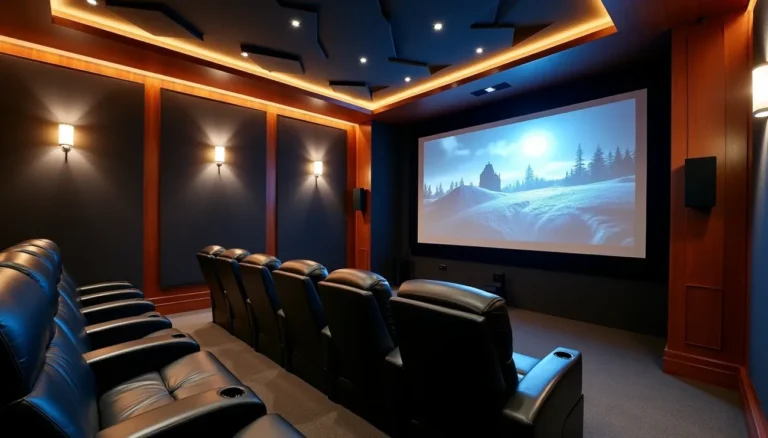
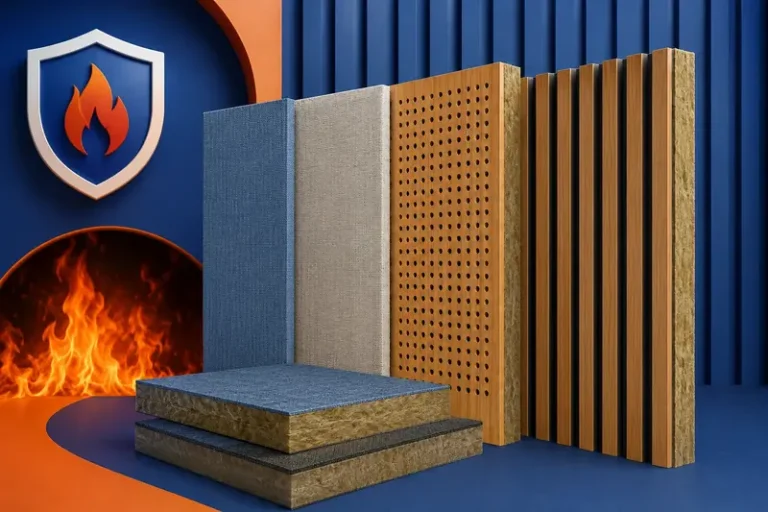
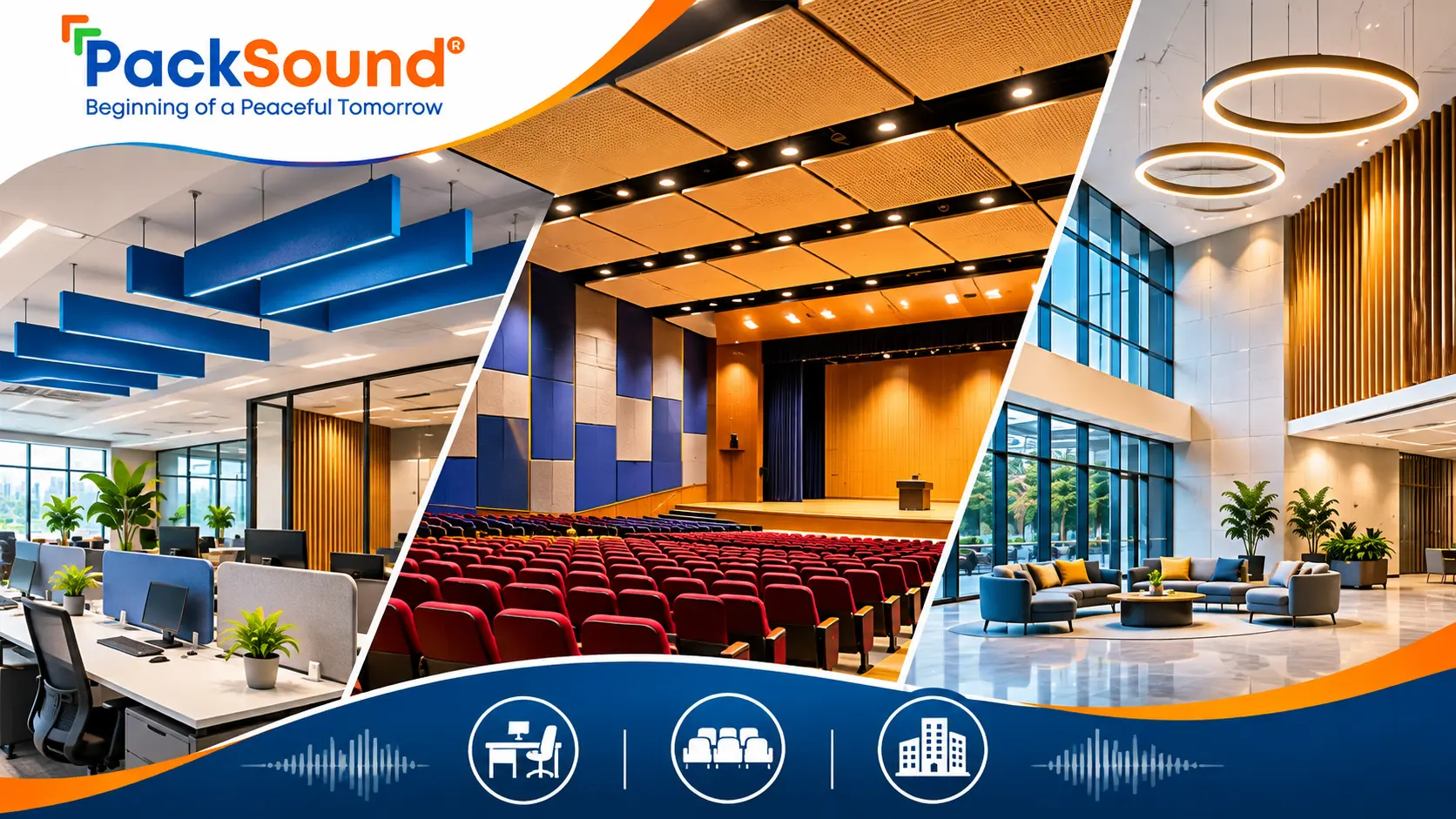
Acoustic wall panels are the most common starting point. Fabric wrapped, PET, wooden and perforated panels absorb sound at the wall and can be made in almost any colour or finish. Options like fabric wrapped panels and grooved wooden slats suit boardrooms, training rooms, reception areas and auditorium side walls.
Acoustic Ceiling Systems
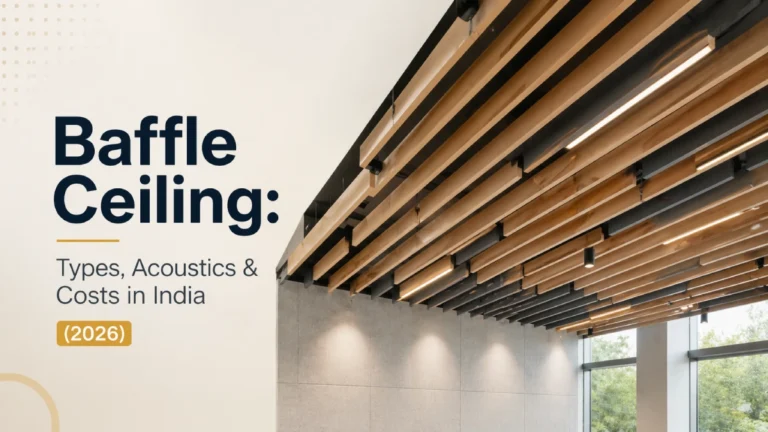
In large offices and schools, the ceiling is usually the biggest hard surface in the room. Acoustic ceiling tiles drop into standard T grid frames, while acoustic baffles and acoustic clouds hang below exposed ceilings in cafeterias, atriums and lobbies.
Acoustic Partitions
When one room has to become two, acoustic partitions do the job. A sliding folding acoustic partition lets a banquet hall, ballroom or training centre divide its space in minutes, with sound insulation of up to STC 55 between the two sides.
Office Pods
Open offices rarely have enough quiet rooms. ThinkPod office pods give staff a private place for calls and small meetings without any construction work, and can be moved when the layout changes.
Premium Design Acoustics
Hotel lobbies, corporate reception areas and showrooms often want acoustics that also act as a design feature. The Auraluxe 3D range combines sculpted forms with sound absorption.
Acoustic Solutions by Space
| Space | Main Problem | Typical Solution |
|---|---|---|
| Corporate offices | Open plan noise, poor call quality | Ceiling tiles or baffles, wall panels, office pods |
| Conference rooms | Echo, speech privacy | Fabric wall panels, acoustic ceiling, sealed doors |
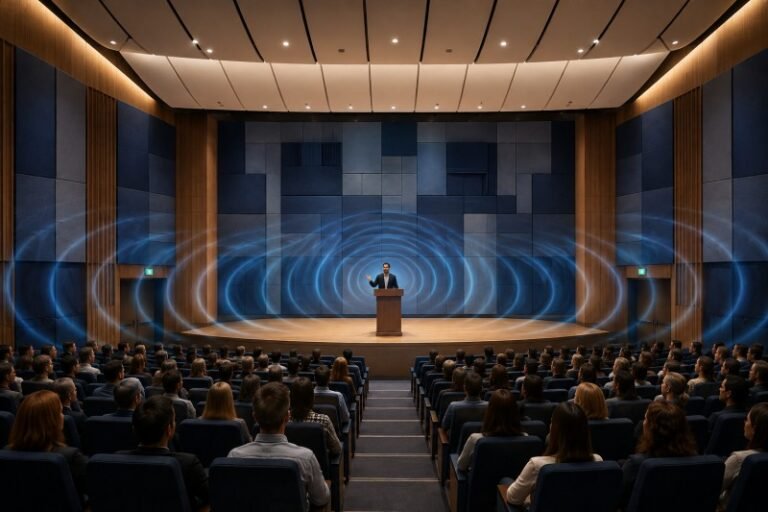
| Auditoriums | Speech clarity across all rows | Wall panels, ceiling clouds, stretch fabric, seating advice |
| Hospitals | Noise in wards and waiting areas | Washable, fire rated ceiling tiles and panels |
| Colleges and schools | Lecture halls lose back rows | Wall panels and ceiling clouds |
| Hotels and banquets | Two events side by side | Sliding folding partitions, wall panels |
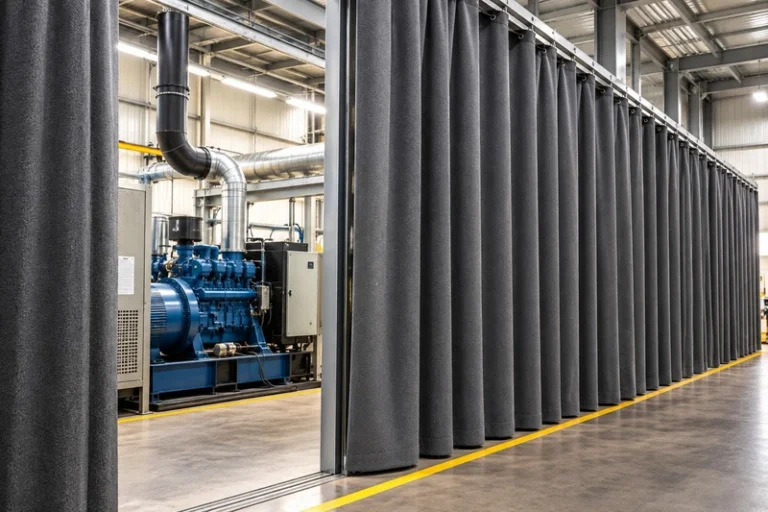
| Industrial offices | Machinery noise | Soundproofing of doors, windows and walls |
How to Judge Acoustic Products: NRC, STC and Fire Rating
Three numbers matter on almost every acoustic datasheet.
- NRC, the Noise Reduction Coefficient, tells you how much sound a surface absorbs. It runs from 0 to 1. A panel with NRC 0.8 absorbs about 80 percent of the sound that hits it. Higher is better for echo control.
- STC, the Sound Transmission Class, tells you how well a wall, door or partition blocks sound. Higher is better for privacy. Our guide on the STC rating of sliding partitions explains this in more detail.
- Fire rating matters for every commercial building. Ask for Class 1 fire rated products tested to a recognised standard such as BS 476, especially for hospitals, schools and public buildings.
India’s climate adds one more factor. In humid cities like Mumbai, Chennai, Kolkata and Guwahati, low quality boards can sag or grow fungus. Moisture resistant materials such as PET felt, metal and cement fibre tiles last much longer in these conditions.
How a Commercial Acoustic Project Works
A good acoustic project follows a simple order.
- Understand the problem. Is it echo, noise from outside or sound passing between rooms? Photos, drawings and a short description of how the room is used help a lot.
- Plan the treatment. The team works out how much absorption the room needs and where it should go, usually a mix of wall and ceiling treatment.
- Choose products. Products are selected for NRC, STC, fire rating, humidity and the look of the interior.
- Manufacture and deliver. Made to order products are produced in the required sizes and colours and delivered to site.
- Install and check. Panels and ceilings are fixed, partitions are aligned and sealed, and the finished room is checked against what was planned.
Questions to Ask Before You Choose an Acoustic Solutions Company
Search for acoustic solutions in India and you will find hundreds of suppliers. Many of them only trade products. Before you choose, ask these questions.
- Do you manufacture your own products, or do you buy and resell them?
- Can you share NRC, STC and fire test references for the products you are offering?
- Who does the installation: your own team, a partner or a sub contractor?
- Have you completed a project like ours, and can we see photographs or visit it?
- Is the quote for supply only, or for supply and installation?
- What warranty do you offer on products and workmanship?
A company that plans, manufactures and installs keeps responsibility in one place, which makes problems easier to solve if they come up.
Why Commercial Buyers Choose PackSound
PackSound works only on commercial and institutional spaces. Our products are made to order at our own factory in Greater Noida, so sizes, colours and finishes match each interior. We have delivered more than 1,900 projects across more than 15 states, including lecture hall acoustic treatment at AIIMS Guwahati. You can see more of our work on the projects page and learn about the team on our about us page.
We cover the full scope, from acoustic planning and product selection to delivery and installation, for offices, auditoriums, hospitals, colleges, hotels and industrial buildings.
Acoustic Solutions Across India
We work with clients across the country, from the corporate hubs of Delhi NCR and Maharashtra to Telangana and the Northeast, including our dedicated Assam and Guwahati pages. See every region we cover on our locations page.
Frequently Asked Questions
What are acoustic solutions?
Acoustic solutions are products and planning that control echo inside a room and stop noise moving between spaces. They include wall panels, ceiling systems, partitions, pods and soundproofing.
What is the difference between acoustic panels and soundproofing?
Acoustic panels reduce echo inside a room. Soundproofing blocks sound passing through walls, doors, windows and ceilings. Most commercial projects need some of both.
Which acoustic solution is best for an open office?
Start with the ceiling, using acoustic tiles or baffles, then add wall panels in meeting areas and office pods for calls.
Are acoustic panels fire rated?
Many are. For commercial buildings, choose Class 1 fire rated panels tested to a standard such as BS 476.
Does PackSound work across India?
Yes. PackSound supplies and installs acoustic solutions for commercial and institutional projects in more than 15 states.
How do I get a quote?
Share your drawings, room sizes and photos with our team through the contact page or on WhatsApp .
Plan Your Next Project
Whether it is a single boardroom or a full campus, the right acoustic solution makes a space easier to work, learn and meet in. Talk to PackSound about your next commercial project, and our team will suggest the right products, ratings and layout for it.