
Wooden Perforated Tiles for Acoustic Ceiling
Wooden perforated tiles are engineered acoustic ceiling panels crafted from high-density MDF or HDHMR boards, precision-drilled with a grid of micro or macro holes, and backed with an acoustic fleece or mineral wool layer. Unlike plain decorative wood panels, these tiles serve a dual function: they absorb mid-to-high frequency sound while delivering the warmth and visual richness of real wood grain.
At PackSound, our wooden perforated ceiling tiles combine pre-laminated MDF substrate (density 700-750 kg/m3) with CNC-perforated hole patterns and a black acoustic fleece backing. The result is an NRC value reaching up to 0.85, meaning the panel absorbs 85% of sound energy that strikes it. This makes wooden perforated ceiling tiles one of the most performance-efficient and aesthetically versatile acoustic solutions available in the Indian market today.
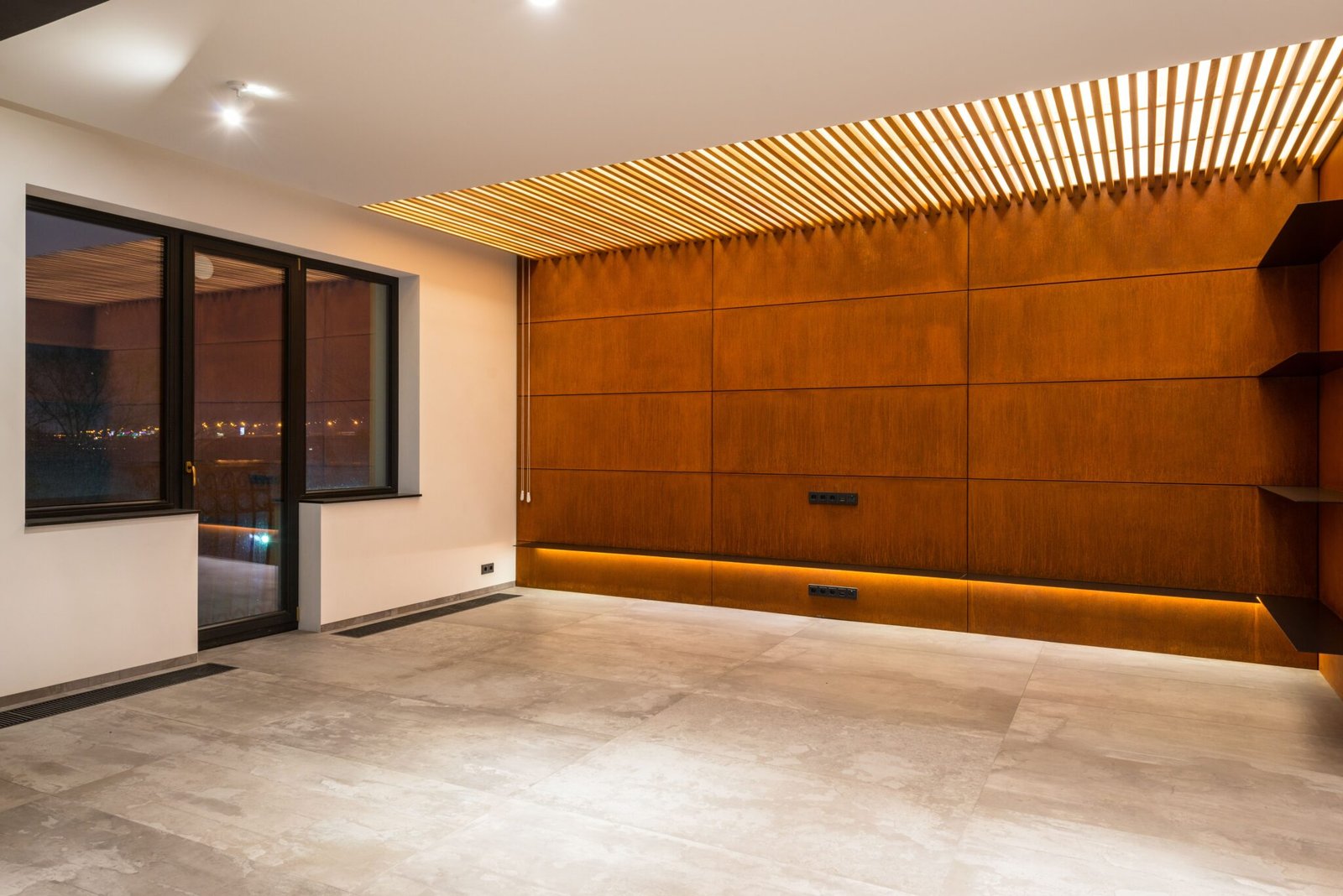
What Are Wooden Perforated Tiles and Why Do Architects Specify Them First?
Most product quote NRC values without explaining that the same panel gives different NRC readings depending on whether it was tested with or without the air plenum, and with or without infill insulation behind the fleece. An NRC of 0.85 tested with 100 mm Rockwool infill behind the panel will drop to 0.55 if installed with zero plenum over a concrete slab. Always ask the manufacturer for the NRC value corresponding to your actual site installation condition. PackSound provides NRC data across three installation configurations: bare panel, panel with fleece, and panel with fleece plus 50 mm Rockwool.
Wooden Perforated Ceiling Tile Specifications
| Specification | Details |
|---|---|
| Material | MDF / HDHMR |
| Density | 700–750 kg/m³ |
| Thickness | 12mm / 16mm / 18mm |
| Panel Size | 595×595, 600×600, 600×1200 |
| Hole Size | 1.5mm – 8mm |
| Pattern | Round, Slot, Square, CNC |
| Backing | Black Acoustic Fleece |
| NRC | 0.65 – 0.85 |
| Finish | Wood Grain, HPL, Digital Print |
| Moisture | 70%–90% RH |
| Fire Grade | Class 1 / E1 |
| VOC Level | Low VOC / E1 |
| Installation | T-Grid / Z-Clamp |
| Warranty | 1 Year* |
Key Benefits of Wooden Perforated Ceiling Tiles
Wooden Perforated Ceiling Tiles combine acoustic control with premium interior aesthetics for commercial and residential spaces.
1. Acoustic Performance
NRC up to 0.85 for better sound absorption and reduced echo.
2. Dual Function
Combines wood aesthetics with acoustic performance.
3. Thermal Insulation
Helps reduce heat transfer and improves energy efficiency.
4. Structural Strength
Durable MDF board with stable long-span ceiling support.
5. CNC Customisation
Supports custom patterns, designs, and decorative perforations.
6. Fire Safety
Made with Class 1 fire-rated material.
7. Moisture Resistance
Works efficiently in up to 90% humidity.
8. Low VOC
Supports healthy indoor air quality with E1 standards.
9. Easy Installation
Compatible with T-grid, concealed grid, and Z-clamp systems.
10. Durability
Scratch-resistant finish with long-lasting performance.
Applications of Wooden Perforated Panels
Wooden Perforated Panels improve acoustics and enhance interiors in modern spaces.
| Application | Benefit |
|---|---|
| Boardrooms | Reduces echo, clearer meetings |
| Auditoriums | Improves sound clarity |
| Hotels | Controls noise, premium finish |
| Schools | Better classroom speech clarity |
| Studios | Balanced sound absorption |
| Hospitals | Reduces corridor noise |
| Home Theatre | Better entertainment acoustics |
| Airport Lounge | Controls crowd noise |
| Open Offices | Less workplace distraction |
| Religious Spaces | Controls reverberation |
Wooden Perforated Ceiling Installation Process
Proper installation ensures durability, acoustic efficiency, and structural safety.
Step 1: Structural Check
Verify slab/frame load capacity. Standard 16mm panels weigh 12–14 kg/m².
Step 2: GI Frame Layout
Install 0.8mm GI channels with hangers at 1200mm spacing.
Step 3: Panel Cutting
Cut with fine-tooth saw and seal edges to prevent moisture damage.
Step 4: Fleece Positioning
Keep acoustic fleece upward with 50–100mm air gap for best NRC.
Step 5: Expansion Gap
Maintain 1mm gap between panels to avoid cracking and swelling.
Step 6: Z-Clamp Fixing
Alternative direct fixing with GI Z-clamps for grid-free ceiling design.
Myth vs Reality for Wooden Perforated Ceiling Tiles
Common Myths vs Reality About Wooden Acoustic Panels
| Myth | Reality |
|---|---|
| More holes = better absorption | Above 25% open area weakens panel without major NRC gain. |
| Wood fails in humid climates | Moisture-resistant MDF works up to 90% RH. |
| Only for premium projects | Standard grid tiles are cost-effective solutions. |
| NRC 0.85 blocks all noise | NRC absorbs sound, not full soundproofing. |
| Thicker panels absorb more | Air gap matters more for low-frequency absorption. |
| Wood panels are fire hazards | Fire-rated MDF meets commercial safety standards. |
Wooden Perforated Sheets vs Competing Ceiling Products
| Feature | Wooden Perforated Tiles | Mineral Fiber Tiles | Metal Perforated Tiles |
|---|---|---|---|
| NRC Range | 0.65 to 0.85 | 0.55 to 0.90 | 0.60 to 0.85 |
| Aesthetic Quality | High (wood grain warmth) | Low (clinical white) | Medium (industrial) |
| Moisture Resistance | Medium to High | Low | Very High |
| Customisation | CNC patterns, prints | Limited | Moderate |
| Impact Resistance | High | Low (crumbles) | Very High |
| Weight (kg/m²) | 10 to 14 | 4 to 6 | 5 to 9 |
| Ideal Use | Boardrooms, hospitality, studios | Budget offices, schools | Wet areas, airports |
| Price Range (INR/sqft) | ₹180 to ₹450 | ₹55 to ₹125 | ₹120 to ₹300 |
Frequently Asked Questions About Wooden Perforated Ceiling Tiles
Q1. Are wooden perforated ceiling tiles suitable for humid Indian climates?
Yes, moisture-resistant MDF-grade panels rated to 90% RH perform reliably in tropical conditions.
Q2. Can I install wooden perforated tiles directly without a suspended grid?
Yes, Z-clamp direct-fix method works on concrete soffits and steel structures with access for maintenance.
Q3. Do wooden perforated sheets reduce noise from the floor above?
They absorb room echo but do not block impact or airborne sound transmission between floors.
Q4. What perforation pattern gives the best NRC for a conference room?
Round holes at 3 mm diameter with 18 to 22% open area paired with acoustic fleece backing perform best.
Q5. How do I clean wooden perforated acoustic panels without damaging them?
Yse a dry microfiber cloth or low-pressure compressed air; avoid wet mopping laminate-finished panels.
Request a sample, NRC test report, or acoustic simulation for your project. Contact PackSound today.