table of contents
Acoustic Panels for Home Theater: Cinema-Quality Sound
Acoustic panels for home theater rooms make all the difference in creating truly immersive cinematic experiences at home. Most enthusiasts spend their money on high-end speakers and amplifiers, but your viewing space’s acoustics is a vital part of sound quality.
Sound waves bounce off hard surfaces in untreated rooms. This creates echoes and reverberations that make dialog unclear and distort audio details. Acoustic panels solve this issue by absorbing sound waves and cutting down unwanted reflections. These specialized panels turn sound energy into heat rather than letting it bounce back into the room. Your viewing space gets better clarity and a more balanced soundstage.
You should cover 30-40% of your wall space with acoustic panels to get the best results. The placement strategy matters more than random distribution. The biggest improvements come from focusing on first reflection points where sound waves bounce before reaching your ears. The side walls, front wall, and ceiling are the most important areas.
Home theaters can use several types of acoustic panels:
- Acoustic Foam Panels: Excellent for absorbing low-frequency sounds, often featuring pyramid or wedge shapes
- Fabric-Wrapped Panels: Match your décor while providing effective sound absorption
- Perforated Wood Panels: Add natural esthetics and minimize echoes
- Bass Traps: Handle tricky low frequencies and work best in corners
The Noise Reduction Coefficient (NRC) measures how well acoustic panels work. This rating shows what percentage of sound the panel absorbs – an NRC of 0.70 means the panel absorbs 70% of sound and reflects 30% back. Thicker panels usually have higher NRC ratings and perform better.
Acoustic panels do more than just improve sound quality. They block external noise and create a focused listening environment. Movies become more enjoyable with clearer dialog and crisper sound effects.
PackSound acoustic panels, especially their wood versions, are great for home theaters. These panels use high-density prelaminated MDF boards with grooved surfaces covering an absorptive core. They deliver premium results that look good and sound great.
Good acoustic treatment turns regular rooms into spaces where you hear crystal-clear dialog and immersive soundscapes. You won’t have to deal with boomy, unclear audio anymore.
What Are Acoustic Panels and Why They Matter in Home Theaters
Acoustic panels for home theater rooms play a key role in creating the best sound quality. You might have expensive speakers and amplifiers, but the room’s acoustics shape your listening experience. Let’s look at how sound interacts with your space.
How sound behaves in untreated rooms
Sound waves bounce off hard surfaces like walls, floors, and ceilings in untreated spaces. This creates too much reverberation and echo. “Room echo” makes everything sound less precise by smearing transients and muddying imaging. You can test this by clapping your hands in an untreated room – that bathroom-like ring you hear shows the reverb. Small rectangular rooms with hard walls have acoustic flaws and long reverberation times. The biggest problem comes from low-frequency waves that build up in corners, which leads to uneven bass response and “boomy” sound.
What acoustic panels actually do
We used acoustic panels to control sound reflections and absorb extra noise, which cuts down reverb in the room. These panels turn sound energy into heat instead of letting it bounce back. You’ll find two main types of acoustic treatment: absorption and diffusion. The absorption panels catch sound waves with materials like foam or fiberglass, while diffusers spread sound evenly through the room. The sort of thing I love about this is finding the sweet spot between these treatments – too much treatment can make a room sound unnaturally “dead”.
Why home theaters need acoustic treatment
Home theaters mix complex audio with dialog, music, and effects that just need clarity. Speech becomes hard to understand without acoustic treatment. On top of that, it helps balance frequency response so bass, mids, and treble spread evenly. So viewers feel more immersed as sound effects become lifelike and ambient noises wrap around them.
Understanding NRC, STC, and Sound Absorption Ratings
The Noise Reduction Coefficient (NRC) shows how well a material absorbs sound. An NRC of 0.0 means no absorption (like concrete), while 1.0 shows complete absorption (like an open window). Sound Transmission Class (STC) measures a material’s ability to block sound from passing through. These ratings serve different purposes – NRC controls echo within spaces, while STC stops sound from traveling between rooms. Materials with NRC ratings above 0.7 work well to reduce echo in home theaters.
Types of Acoustic Panels Used in Home Theater Rooms
Home theater acoustic treatment comes in many forms. Each type helps solve specific sound challenges in your viewing space. The right mix of panels can help you create that cinema-quality sound experience home theater enthusiasts love.
Sound absorbers and bass traps show the main difference in acoustic panels. Standard acoustic panels help with mid-range and high frequencies. Bass traps take care of low-frequency sounds like bass drums and cinematic thunder effects. You’ll need both types to create the best acoustic environment for truly immersive movie experiences.
Foam acoustic panels are among the most affordable and common choices. These lightweight panels come with pyramid, wedge, or egg-crate patterns. They work great at controlling echo and absorbing high-frequency reflections. This is a big deal as it means that their NRC (Noise Reduction Coefficient) can reach 0.90.
Fabric-wrapped panels look great and absorb sound well. These panels use sound-absorbing cores (usually fiberglass or mineral wool) with acoustically transparent fabric covering. They blend naturally into home décor while delivering professional-grade acoustic performance.
Wood acoustic panels mix functionality with premium looks. You’ll find perforated or slatted designs with sound-absorbing backing material in these panels. They both absorb and diffuse sound, making them perfect for spaces where looks matter as much as acoustic performance.
Panel thickness affects their frequency absorption capabilities:
- 25mm panels: Help control high frequencies and flutter echoes
- 50mm panels: Handle mid to high frequencies, perfect for general home theater use
- 100mm panels: Work with low to mid frequencies, ideal for bass traps
Material choice affects performance by a lot. Fiberglass leads the pack for sound absorption because of its porous nature, density, and broad frequency absorption. Mineral wool, polyester fiber, and acoustic foam work well too.
A complete home theater setup should include diffuser panels. They scatter sound waves instead of absorbing them and create a more spacious acoustic environment. This mix of absorption and diffusion keeps the room from feeling acoustically “dead” while maintaining clarity.
PackSound Acoustic Panels: Product Overview and Key Specs
PackSound makes acoustic panels for home theater that look great and work even better. Their products handle all kinds of sound issues and match your interior design priorities.
Panel Types: Foam, Wood, PET, Bass Traps
The foam panels are PackSound’s most affordable option. They use open-cell polyurethane or melamine foam to make these lightweight panels. You’ll find them in recording studios and home theaters, though they don’t work as well with low-frequency absorption. Each foam panel goes through precise CNC laser-cut manufacturing to ensure consistency in your acoustic setup.
The wooden acoustic panels add natural warmth and excellent sound control. These premium panels use high-density prelaminated MDF boards with grooved surfaces and an absorptive core. A black acoustic fleece backing creates an air gap to boost performance. You get both good sound absorption and high-end looks.
The PET felt panels give you an eco-friendly choice made from recycled polyester fibers. These panels come in more than 20 bright colors and work great for mid-frequency absorption. They resist moisture well and last a long time. As a bonus, they help with thermal insulation too.
Bass traps are PackSound’s solution for low-frequency control. Regular panels can’t handle these problematic sound waves. These traps work best in room corners where pressure nodes form. They help manage those tricky bass frequencies that make such a difference in home theater sound quality.
NRC Ratings and Material Density
The panels reach Noise Reduction Coefficient ratings up to 0.9, which means they absorb 90% of sound energy rather than bouncing it back. Fiberglass panels hit even higher NRC values (0.95+), making them perfect for critical listening spaces. PET panels handle mid-range absorption well (NRC 0.70-0.95).
Material density plays a huge role in how well these panels work. PackSound’s premium panels use high-density cores that last longer and absorb sound better. With proper care, these panels keep working for 10-25 years without warping, sagging, or losing their color.
Design Options and Sizes Available
You can choose from several panel sizes to fit your space. Standard sizes include 595x595mm, 600x600mm, 600x1200mm, and 1200x1200mm. Larger panels go up to 1800x1800mm. Panel thickness ranges from 12mm to 24mm – thicker panels absorb low frequencies better.
The design options include fabric-wrapped panels with special sound-transparent covers, perforated panels with tiny precision-engineered holes (0.5-1.2mm), and plain panels for a clean look. The premium Auraluxe® series offers 3D designer panels that combine great absorption with luxury textures.
How PackSound Panels Improve Home Theater Acoustics
Acoustic panels for home theater spaces do more than just improve sound quality. PackSound’s acoustic treatment targets three key areas that transform your home into a cinema-grade audio environment.
Reflection and Echo Control
Sound reflections need active control in your home theater room. Your audio clarity and quality suffer when you don’t have proper treatment because of unwanted echoes and noise. You’ll get better results when you place PackSound panels at strategic reflection points instead of random spots. These panels don’t let sound waves bounce around the room. They absorb them and turn that energy into heat.
The numbers tell an interesting story. Listeners only get 14% direct sound, while a whopping 88% comes from reflections – split equally between early and late reflections. Your sound clarity improves right away when you treat these reflection paths with acoustic wall panels.
Bass Management with BassBloc®
Low frequencies are the trickiest part of creating an immersive home theater experience. PackSound’s BassBloc® technology tackles this challenge head-on:
- Ultra-high density (100 kg/m³) polyurethane-based construction
- Superior NRC rating exceeding 1.20
- Available in multiple thicknesses: 25mm, 50mm, 75mm, 100mm
- Achieves up to 40 dB sound reduction on treated walls
Standard acoustic panels can’t handle low-frequency energy, but BassBloc® panels excel at it. You’ll get the best results by placing them in wall-to-wall corners. These spots address both length and width modes where bass problems typically build up.
Improved Dialog Clarity and Immersion
Your dialog clarity will improve dramatically after installation. This happens because PackSound panels target frequencies between 250Hz-2kHz – the range where most speech happens.
PackSound’s balanced approach suggests covering about 35-40% of side wall surface area. This strategy maintains acoustic dynamics while getting rid of problematic reflections. You get the perfect balance between sound absorption and diffusion. Your room won’t sound artificially “dead,” and every detail in your soundtracks stays crystal clear.
Where to Place Acoustic Panels in a Home Theater for Best Results
The right placement of acoustic panels for home theater matters as much as the panels you choose. Smart positioning will improve sound quality better than covering walls randomly.
Your home theater acoustic design needs panels at first reflection points—spots where sound waves bounce before reaching your ears. The mirror trick helps find these spots: sit in your main listening position while someone slides a mirror along the walls. Any place where you see a speaker reflected marks your reflection points. This simple method will give you the best acoustic results instead of just making your walls look nice.
These key areas need acoustic treatment the most:
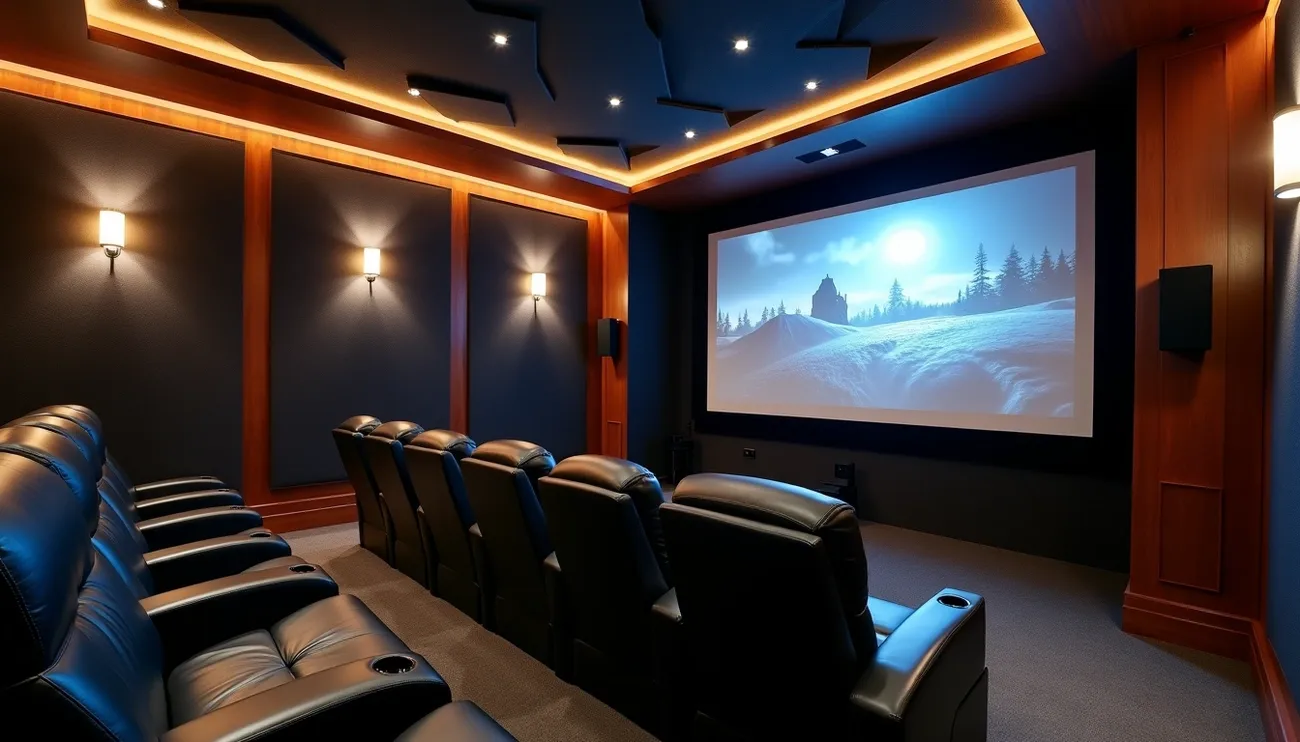
- Side walls: Mount panels at ear/speaker height between you and your speakers. This catches early reflections. These panels maybe give the most important improvement because our ears sit closest to these bouncing sounds.
- Front wall: Put absorptive panels near or behind the screen to cut reflections. Panels behind a perforated projector screen will improve sound quality even more.
- Rear wall: Add diffusion panels to scatter sound waves without making the space too quiet. This creates better sound while managing reflections.
- Ceiling: A “ceiling cloud” works well above where people sit, especially with ceilings 6-8″ higher than needed. This helps control sound bouncing down.
- Corners: Bass traps work best in room corners where low-frequency sound builds up.
Here’s a good rule: measure your side walls’ total area and cover about 35-40% with acoustic panels. This balanced approach keeps the room from sounding too dead while handling problem reflections.
Smart panel placement ended up changing how you experience sound. Panels in the right spots work nowhere near as well as random coverage.
Installation and Placement: Getting the Most Out of Your Panels
Proper acoustic panel installation techniques will make a substantial difference in your home theater acoustic design results. Your panel placement needs attention to both position and mounting methods to maximize performance.
Sidewall and Rear Wall Placement Tips
The “mirror trick” remains the quickest way to identify exact reflection points on sidewalls. You can sit in your listening position while someone slides a mirror along the wall—wherever you see speakers reflected marks an ideal panel location. These first contact spots need immediate treatment because they cause the most noticeable distortion. Mounting panels at ear/speaker height works best and will give a more focused sound interception at the most critical listening plane.
Your rear walls need a balanced approach. Complete absorption can deaden the space too much, but Primacoustic Scatter Blocks provide general area absorption without removing all energy and excitement. This keeps some liveliness in your home theater while maintaining clarity.
Ceiling and Floor Considerations
Sound quality improves substantially with ceiling treatment, especially when you have rooms with hard surfaces that increase reflections. “Cloud panels” work best for optimal results—these suspended acoustic panels hang above primary listening positions. You’ll need ceiling hooks or brackets plus suspension cables to position them at your desired height. The panels should remain level and evenly spaced throughout the installation to maintain consistent performance.
Thick padded rugs work well as floor treatments to control reflections from hard surfaces. These rugs should cover all main reflection points on the floor.
DIY vs Professional Installation
DIY installation makes sense when you have straightforward projects with rectangular walls and minimal obstructions. You can achieve professional-looking results in smaller spaces like home theaters with simple tools and careful planning. The cost advantage is clear—creating eight acoustic panels yourself costs about £270.66 (around £33.83 per panel) compared to professional installation.
Professional installation becomes worth the investment for complex rooms with challenging angles, high ceilings, or architectural features. Professionals use specialized tools like laser levels and moisture meters while placing panels optimally based on room geometry. Large-scale projects or rooms needing precise acoustic calibration benefit from this expertise.
PackSound Pricing and Value for Money
A clear understanding of acoustic panel for home theater pricing helps you make affordable decisions while maintaining quality. PackSound provides options at different price points. Their cinema-grade acoustics are available whatever your budget.
Entry-Level vs Premium Panel Sets
PackSound’s entry-level soundproof foam panels cost between ₹55-75 per square foot with NRC ratings below 0.60. These work well for simple home theater setups. Most home theaters need mid-range acoustic panels that cost ₹75-200 per square foot. These panels deliver better NRC values between 0.70-0.85. Audiophiles who want professional-grade home theater acoustic design can choose premium panels. These panels start at ₹220 per square foot and this is a big deal as it means that their NRC ratings are above 0.85.
Cost per Square Foot Comparison
PackSound matches the market’s competitive pricing:
- <>Mass Loaded Vinyl (MLV) panels: ₹50 per square foot
- PVC ceiling panels: ₹50-70 per square foot
- Rubber sound dampening sheets: ₹125 per square meter
- Fabric-wrapped panels: Starting at ₹400 per square foot
- Composite solutions: ₹60-100 per square foot based on density
PackSound’s acoustic wall panels for home theater with custom sizes cost 10-15% more than standard sizes.
Best Value Bundles for Home Theaters
PackSound’s volume-based pricing works great for complete theater room treatments. Projects over 500 square meters qualify for special rates. The company takes a comprehensive approach and balances performance with esthetics. Their 250+ finish options are the foundations of superior materials and craftsmanship, offering excellent value.
Real Benefits You’ll Notice After Installation
Acoustic panels for home theater spaces deliver immediate and dramatic improvements to your viewing experience. The benefits go well beyond technical specs and make the investment worth every penny.
You’ll notice the difference in dialog clarity right away. Words that used to sound muffled become crystal clear. Now you can understand every word without reaching for the volume control. This happens because the panels manage the mid-range frequencies where human speech lives.
The bass sounds better too. Instead of loose, boomy low frequencies, you get tight and controlled bass that packs a punch without drowning everything else. This means you’ll feel those big explosion effects in action movies and still catch all the dialog.
The sound’s spatial placement gets a major upgrade. The panels manage sound reflections properly, so you hear sounds coming from exact spots around the room. This creates a true 3D audio experience that matches what’s happening on screen.
The best part? You won’t feel mentally drained anymore. A properly treated room lets you watch movies longer without the exhaustion that comes from processing messy, echo-filled sound.
Here’s something interesting – many people find that these improvements make even basic speaker systems sound much better. This often removes the need to buy expensive new gear. Your current audio setup just works closer to what it should when the room’s acoustics aren’t fighting against it.
Fabric, PET, or Wooden Acoustic Panels – Which Should You Choose
The material you pick for your acoustic panels for home theater will make a huge difference in how they look and work. You have three main choices: fabric, PET, and wooden panels. Each one shines in different ways based on what matters most to you.
Fabric-wrapped acoustic panels do an amazing job soaking up sound, with NRC ratings between 0.7–1.0. These panels cost less than wood and come in any color you can imagine. All the same, they might show some wear as time goes by and don’t stand out visually like other options.
PET acoustic panels give you an eco-friendly choice that really works, hitting NRC ratings up to 0.9. These panels are light, tough, and handle moisture well. You won’t spend much time keeping them clean. More and more home theater enthusiasts choose these panels because they’re good for the environment.
Wooden acoustic panels add natural beauty and elegance to any room. These panels work double duty – they absorb sound and spread it around, which creates better acoustics. They cost more and weigh more than other options, but wooden panels last forever and look fantastic.
Here’s what should guide your choice:
- Fabric panels make sense if you want to save money, need serious sound absorption, or want specific colors
- PET panels are perfect if you care about the environment, deal with moisture, or want middle-range pricing
- Wooden panels work best if you want top-tier looks, balanced sound, and something that lasts decades
The right choice comes down to what works best with your sound needs, style, and budget.
Who Should Use PackSound Panels and When They Work Best
Acoustic panels for home theater applications don’t follow a one-size-fits-all approach. Your space’s unique requirements will determine the best configuration and coverage you need.
Ideal Room Sizes and Shapes
Rectangular rooms create better acoustics than square ones naturally. Square spaces produce standing waves and uneven bass distribution that damage sound quality. Standard rectangular rooms work best with even coverage on all but one wall – the screen wall. You need at least three panels on each wall. Rooms with irregular shapes or high ceilings need different approaches. These spaces often need ceiling panels to treat areas that would otherwise remain untouched.
Best Use Cases: Studios, Theaters, Gaming Rooms
Critical listening environments like studios and theaters need the most treatment—about 25%+ surface coverage. Home theaters start with 15-25% wall coverage as a baseline. Gaming rooms look great with acoustic wall art that absorbs sound while showing off your personal style. PackSound’s solutions excel in auditoriums, recording studios, educational institutes, and homes that need echo control.
Limitations and When to Add More Treatment
Bass traps work best in corner areas because these spots affect every room mode at once. We focused on high-end home theaters with multiple subwoofers and Dolby Atmos. These setups need more acoustic panels, including ceiling treatment.
Conclusion
Acoustic panels for home theater rooms transform ordinary viewing spaces into truly immersive cinematic environments without doubt. PackSound’s acoustic solutions show that strategic panel placement works better than random distribution. First reflection points, where sound bounces before reaching your ears, need immediate attention to maximize sound quality.
PackSound delivers exceptional value whatever your budget might be. Their product lineup tackles acoustic challenges of all types while matching your interior design priorities. The right mix of absorption and diffusion keeps your room from sounding artificially “dead” and maintains crystal-clear audio reproduction.
You’ll notice real benefits beyond technical specs right after installation. The dialog becomes clearer, so you understand every word without touching the volume. The bass tightens up instead of staying boomy and undefined. The sound placement also improves as audio comes from exact spots around the room, which creates a true three-dimensional experience.
Your choice between fabric, PET, or wooden panels depends on how you balance acoustic performance with visual priorities and budget. Fabric panels work best for sound absorption and cost less, while wooden options add natural warmth and visual elegance at a higher price. PET panels give you an eco-friendly choice with impressive tech specs.
Building a dedicated theater room, upgrading a gaming space, or improving a critical listening environment? Acoustic treatment gives you immediate returns in audio quality. People often skip this step and buy expensive equipment instead, but good acoustic panels usually improve sound more than pricier speakers or amplifiers.
PackSound’s approach matches performance with looks through various finish options, quality materials, and expert craftsmanship. Their panels turn sound energy into heat instead of letting it bounce back into your space. This creates the balanced soundstage you need for immersive movie experiences. Acoustic panels are not just optional add-ons – they are the foundations of exceptional audio reproduction that brings cinema-quality sound to your home.
FAQs
Q1. What NRC rating should I look for in acoustic panels for my home theater?
For effective sound absorption in a home theater, look for acoustic panels with an NRC (Noise Reduction Coefficient) rating between 0.70 and 0.95. This range indicates that the panels can absorb 70-95% of sound, providing excellent echo and reverberation control.
Q2. How much wall coverage do I need for acoustic panels in my home theater?
As a starting point, aim to cover 15-25% of your wall surface area with acoustic panels in a home theater. This provides a good balance of sound absorption without over-dampening the room. For more critical listening environments, you may want to increase coverage to 25% or more.
Q3. Are wooden acoustic panels effective for home theaters?
Yes, wooden acoustic panels can be very effective for home theaters. They offer a balance of sound absorption and diffusion properties, creating a more balanced acoustic environment. While typically more expensive than fabric options, wooden panels provide superior durability and timeless esthetic appeal.
Q4. Where should I place acoustic panels in my home theater for the best results?
Focus on first reflection points – areas where sound waves initially bounce before reaching your ears. Use the mirror trick to identify these spots on side walls. Also consider treating the front wall (behind the screen), ceiling, and room corners for bass traps. Aim to cover about 35-40% of side wall surface area for optimal results.
Q5. Will acoustic panels improve dialog clarity in movies?
Yes, properly installed acoustic panels can significantly enhance dialog clarity. By managing mid-range frequencies where human speech resides and reducing unwanted reflections, acoustic panels help voices sound clearer and more distinct. This allows you to understand every word without constantly adjusting volume levels.