
Perforated Ceiling Tile for Acoustic Noise Control | PackSound
If you are comparing a Perforated Ceiling Tile for an office, studio, or auditorium, the open area percentage (not just the material) decides how much noise it actually absorbs. PackSound’s PerfoAudile range covers perforated gypsum board and Metal Perforated Grid Ceiling Tiles, engineered for NRC 0.60 to 0.90 depending on backing and pattern. Below is everything you need to specify the right tile the first time, not after a costly redo.
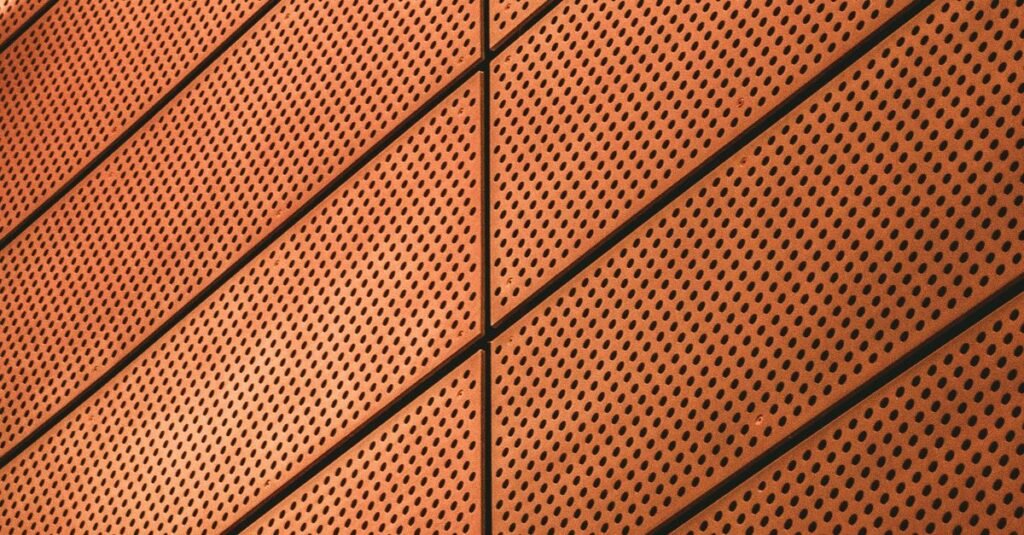
What Is a Perforated Ceiling Tile
A Perforated Ceiling Tile uses precision-punched holes backed by acoustic fleece or mineral wool to trap sound waves before they bounce back into the room. PackSound offers this in two core substrates: perforated gypsum board for standard commercial interiors, and Metal Perforated Grid Ceiling Tiles for high-humidity or fire-rated zones like hospitals and airports.
| Parameter | Detail |
|---|---|
| Size | 600x600mm, 600x1200mm |
| Thickness | 9.5mm to 15mm (gypsum), 0.5-1.0mm (metal) |
| Perforation | Round, square, slotted |
| NRC | 0.60 to 0.90 |
| Open Area | 11% to 23% |
| Edge | Tegular, lay-in |
| Fire Rating | Class A / non-combustible (metal) |
Benefits of Perforated Ceiling Tiles
| Benefit | Detail |
|---|---|
| Noise Reduction | Cuts reverberation, sharpens speech clarity |
| Aesthetic Finish | Seamless, paintable, modern look |
| Fire Safety | Non-combustible options available |
| Humidity Resistance | Metal range resists sag, corrosion |
| Lightweight | Easy load on grid systems |
| Customisation | Pattern, size, colour on request |
| Hygiene | Smooth, easy-clean surface |
| Space | Use Case |
|---|---|
| Corporate Offices | Open-plan noise control |
| Auditoriums | Speech clarity, RT60 compliance |
| Hospitals | Hygienic, humidity-resistant ceilings |
| Studios | Echo and reverb management |
| Hotels | Acoustic comfort, premium finish |
| Schools | Classroom speech intelligibility |
| Malls | Ambient noise reduction |
Perforated Ceiling Tile Installation Process
| Step | Action |
|---|---|
| 1 | Survey ceiling height and grid layout |
| 2 | Install suspension rods and main runners |
| 3 | Fix cross tees to form grid |
| 4 | Level and align the grid |
| 5 | Lay or clip tiles into position |
| 6 | Cut and fit edge tiles |
| 7 | Inspect alignment and finish |
| Myth | Reality |
|---|---|
| All perforated tiles sound the same | Open area percentage changes NRC sharply |
| Painting holes does not affect sound | Paint clogs holes and reduces NRC performance badly |
| Gypsum works everywhere | Metal tiles perform better in humid and high fire zones |
| More holes always means quieter spaces | Backing material matters just as much as perforation design |
| Perforated tiles are fragile | Metal perforated ceiling tiles resist impact and corrosion well |
| Installation needs no expertise | Misaligned grids affect appearance and acoustic performance |
| Cheapest tile saves money | Poor NRC can increase long term replacement and correction costs |
Perforated Gypsum Board vs Metal Perforated Grid Ceiling Tiles
Gypsum suits offices and classrooms needing budget-friendly NRC 0.60 to 0.75. Metal Perforated Grid Ceiling Tiles suit kitchens, labs, and coastal cities where humidity causes gypsum to sag over time, holding NRC up to 0.90 with zero moisture degradation.
Also Read : Micro Perforated Ceiling Tile
Frequently Asked Questions about Perforated Ceiling Tile
Yes, holes plus backing absorb sound waves effectively.
No, use metal tiles in humid areas instead.
Yes, it lowers reverberation for clearer audio.
Above 0.70 NRC works well for open offices.
Yes, but thick paint coats reduce sound absorption.
Yes, metal tiles are largely non-combustible.
Yes, standard T-grid systems support most tiles.
Metal costs more, but lasts longer overall.
Yes, the plenum space conceals services easily.
No, backing is essential for real sound absorption.